


.png)
News:
Construction Design & Engineering
Posted: January 16, 2008
"Building a tip means being able to say no"
One of my favorite publications is The Zweig Letter, a weekly newsletter for architects, engineers and environmental consultants published by Zweig White & Associates, Natick, Mass., the preeminent consulting firm to the design community.
In one issue, Mark Zweig discussed how the price competition we so often see in the construction industry is beginning to have an impact on design firms. I'm sure you all regularly scratch your head, wondering how a competitor can do a particular job for so much less than your estimators say you can.
The fact is, they probably can't—at least not if they plan to make money. But how do you compete in those situations? It's simple. You walk away from the job!
I know you're all reading this, saying to yourselves, "Sure, that's easy for him to say. He's not in my shoes! I need the work to keep my people busy and pay my bills."
Well, you know what? I've got bills to pay too! Yet I walk away from clients and projects all the time. Sometimes it's because they're unwilling to pay me what I think the job is worth. Other times a big red flag goes up, warning me this is a client/project fraught with danger—an indecisive or abusive client, one with financial difficulties, one whose business ethics conflict with mine, or a host of other reasons.
How did I get in a position where I'm not afraid to walk away from a client—and more importantly, how can you get there? By over-marketing!
By over-marketing, I mean investing more time, effort and money in your marketing effort than might be considered "normal." If the industry average for your trade is to spend 2% of gross sales on marketing, spend 4% or 5%. If your business development person is devoting one day a week to calling on architects, make it two! You get the idea.
As a college kid, I used to work summers running an amusement park at Coney Island in Brooklyn. One of our key objectives was to always maintain a "tip," or a line waiting to get on the ride. The point was that if people saw a line at a ride, they assumed it was because the ride was fun, so they, too, wanted to try it. When it was slow, we'd even extend the rides a little longer in order to build the tip.
And that's exactly what over-marketing can do for you. By having a "line" of clients wanting to do business with you, you can have the confidence to walk away from the client who wants to beat down your price, but still expects a Rolls Royce building and service. You don't need him any more because there's someone else right behind him, wanting to talk with you about another, probably better (more profitable) job. And someone behind him too!
Ultimately, what you're doing is simply creating a demand that exceeds your capacity, then cherry-picking those clients and/or jobs that best meet your company's objectives. Of course it's going to raise your marketing costs to generate that demand, but don't you think the added margins you'll see from these better jobs is going to more than compensate for that? You bet it will! And don't forget to factor in the value of the headaches you're going to avoid.
Over time, you'll also find that your reputation will improve because you'll be able to do the quality work possible when you're adequately compensated. And remember those clients who chased the low dollar? They may indeed return later—after they've been burned by your lowball competitors.
David Wood is a marketing consultant, Deering, N.H.
MORE FROM Construction Design & Engineering
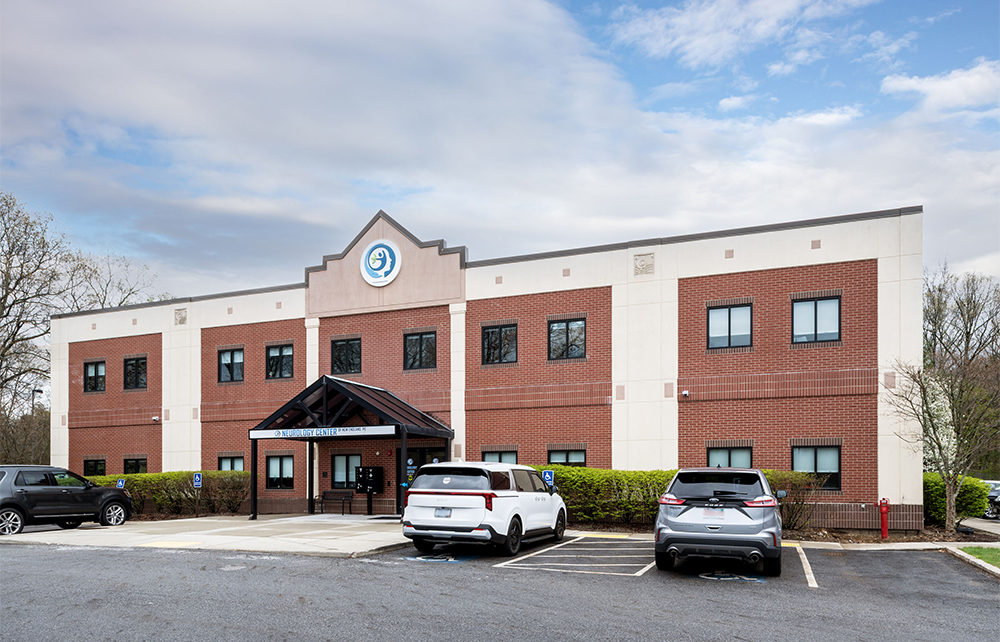
Timberline Construction Corp. completes renovations for Neurology and Infusion Center of New England
Foxborough, MA Timberline Construction Corp. (Timberline) has completed a 20,000 s/f healthcare construction project for the Neurology and Infusion Center of New England at 18 Washington St. The full interior renovation transforms an existing two-story medical office building into a purpose-built outpatient care environment that doubles the center’s clinical footprint, expands services and positions the growing practice for its next chapter.
.jpg)



Quick Hits


Columns and Thought Leadership

ABC-Mass. chairman’s message: Rent control isn’t the answer to our housing crisis - by Luiza Mills
As you may know, Massachusetts voters will be weighing in on a number of ballot initiatives in November. Among them is a proposal to impose the nation’s strictest statewide rent control policy. I’d like to tell you why the ABC MA Board

Greenwood Credit Union City Hall Plaza nears completion - by Frank Picozzi
After several years of planning, construction, and anticipation, the community is eagerly awaiting the opening of the Greenwood Credit Union City Hall Plaza and outdoor skating rink later this month.

It’s time to lead: Confronting mental health in construction - by David Watts
As we close Mental Health Awareness Month, we must be clear: May isn’t just about ribbons, hashtags, or lunchtime mindfulness apps. It’s about responsibility to confront hard truths that linger in silence, and to challenge ourselves, as leaders in our industry, to do more.

Navigating tariffs and material uncertainty in today’s construction market - by Karl Ginand and Tiffany Gallo
As headlines around tariffs seem to dominate the news daily, many considering construction projects have anticipated major cost escalations and widespread supply issues. While tariffs haven’t driven pricing spikes to the extent once feared, the lasting impact has been a new layer of uncertainty, affecting more than just budgets.