



News:
Owners Developers & Managers
Posted: April 9, 2008
Where have all the boomers gone?
There are troubling signs on the horizon regarding the development of age-restricted housing in Mass. There appears to be a significant oversupply of units under construction and those in the permitting pipeline. How have we come to this?
A little background is important. Between 2005 and 2020, it is estimated approximately 1.8 million Mass. residents of the baby boom generation will turn 55. As we know, the boomer demographic bubble continues to move through our population with significant economic effects. This would seem to provide a large pool of demand for specialized age-restricted housing.
The Citizens' Housing and Planning Association (CHAPA), in their landmark study (2005), reported that some 24,000 units were either under construction or in the development approval pipeline in 2005. This provides some perspective in terms of a pending oversupply which may, in fact, have occurred.
The question is asked why haven't age-restricted developments been able to sustain the early success of the first wave of such projects? Several things should be noted from the CHAPA study. They report that only 10-12% of age 55+ buyers choose to locate in age-restricted projects. As we have seen in the past, the development community may have again overreacted with the help of local permitting authorities. The result may be a significant excess supply.
Furthermore, a number of these developments may not have paid sufficient attention to fundamentals. Such issues as location, proximity to amenities and services and unit designs have wandered from the basic formula of success. Location should be convenient and within walking distance of amenities, shopping and services. Unit designs must respond to the unique requirements of this buyer group. And, finally, the general market slump in housing certainly has had an impact.
Solutions are currently being proposed, including several good possibilities. The solution receiving the most publicity is to lift the age restrictions on these developments. There are many sides to this approach, as detailed in the Boston Globe Article of March 30, 2008. Other alternatives include slowing of development where possible, in particular, if phasing is an economic alternative. Finally, the creation of mixed-use developments with portions that are age-restricted and portions that are not.
This is clearly one of the significant current challenges in our real estate market. It will be interesting to see how developers, lenders and purchasers respond.
Jonathan Avery, MAI, CRE is president of Avery Associates, Acton, Mass.
MORE FROM Owners Developers & Managers

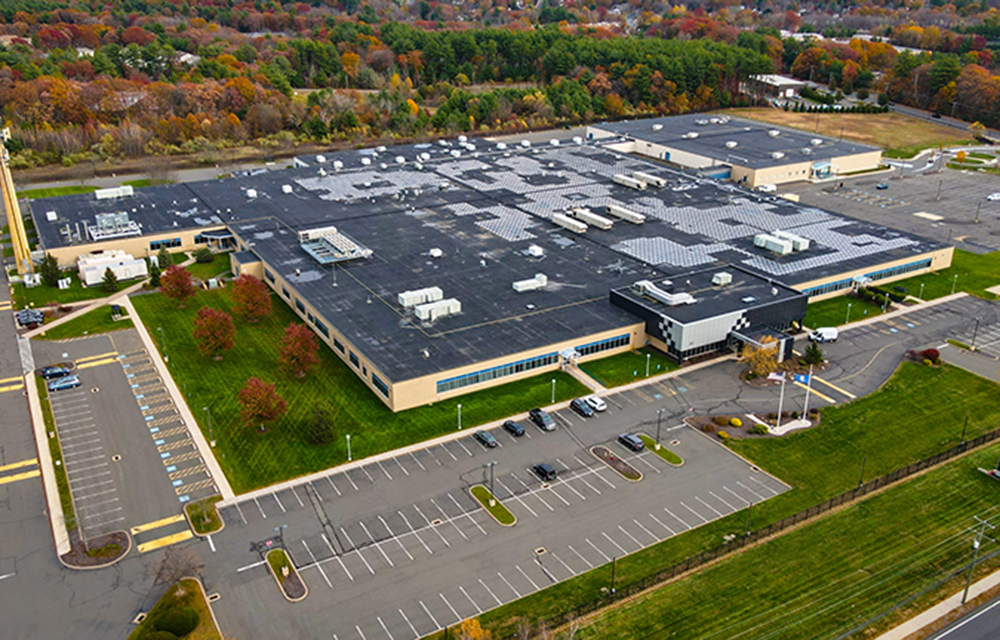
Windsor approves redevelopment of 500 Day Hill Rd. for mixed-use residential community
Windsor, CT The town has granted approvals for the redevelopment of 500 Day Hill Rd., clearing the way for a mixed-use residential community that will convert a former office campus into a housing development totaling approximately 300 residential units


.png)




Columns and Thought Leadership

Revitalized Town Centers: Retail??? - by Carol Todreas
It is now widely accepted that customers want to shop in person at physical stores. Brands know that they do better business in a physical store than just on line so they want to open stores. Demand for retail space by digital merchants, local entrepreneurs, and newly developed national chains

Florida ruling raises bar for condo terminations and buyouts - by Michael Karsch
On October 14, 2025, in a landmark decision with significant implications for the Florida real estate market, the Supreme Court of Florida formally denied Two Roads Development’s (TRD Biscayne LLC) petition for review in its long-running case against unit owners of Biscayne 21,

Retail infill strategy to activate Pawtucket’s Conant Thread District - by Gaetan Kashala
Until recently, the Conant Thread District consisted of approximately 150 acres of underutilized industrial land spanning Pawtucket and Central Falls. Today, the area is one of the most significant

IREM president’s message: Our new reality - Staying ahead of supply chain delays - by Yoany Vargas
Supply chain delays are slowing construction, ratcheting up operating costs, and extending turnover timelines across Greater Boston, directly reducing revenue and increasing the workload for multifamily and
 (1).png)