


 (1).png)
News:
Owners Developers & Managers
Posted: May 27, 2008
Federal tax laws provide preferential tax treatment to REITs
Federal tax laws provide preferential tax treatment to real estate investment trusts ("REITs"), provided that such entities adhere to a variety of requirements under the Internal Revenue Code. Any missteps in following the rules can be catastrophic, because a non-qualifying entity will lose its tax favored status. In such an event, corporate level tax on the REIT will be triggered, resulting in taxation of REIT income at both the entity and the shareholder levels.
Two chief requirements of REIT status are that a REIT derive 75% of its gross income from rents from real property and that 75% of the value of a REIT's total assets constitute real estate assets, cash and cash items (including receivables and government securities). Two recent developments, one actual and the other potential, should help REITs meet these requirements and maintain their tax favored status.
The IRS recently issued a private letter ruling confirming that real estate intangibles may constitute real estate assets. The IRS addressed the situation in which a REIT purchased a resort hotel for sum that included a goodwill associated with the resort's name. While, on the face of the REIT rules, such goodwill is not a real estate asset, the IRS concluded that the goodwill associated with the resort had no value independent of the actual real estate assets to which it related. Thus, the intangible goodwill qualified as a real estate asset and any rental payments attributable to such intangible would be treated as rent from real property.
In addition, the New York State Bar Association Tax Section sent a letter to the IRS, requesting several updates be made to a safe harbor created in Revenue Procedure 2003-65. The safe harbor allowed loans secured by an interest in a disregarded entity or partnership that owns real estate to be treated as a loan secured by real estate. Many mezzanine or subordinate loans fail to qualify under the technical requirements of the Revenue Procedure 2003-65. Because of this, REITs are steering away from purchasing such loans, which in turn means that market for these mezzanine loans is less liquid. The Tax Section asserts that revising the technical requirements would make such subordinate loans more liquid, because they could be purchased by REITs without fear of jeopardizing their tax favored status. Taxpayers should watch for further developments in this arena.
Amy Naughton is a real estate attorney with Lourie & Culter, Boston, Mass.
MORE FROM Owners Developers & Managers

Windsor approves redevelopment of 500 Day Hill Rd. for mixed-use residential community
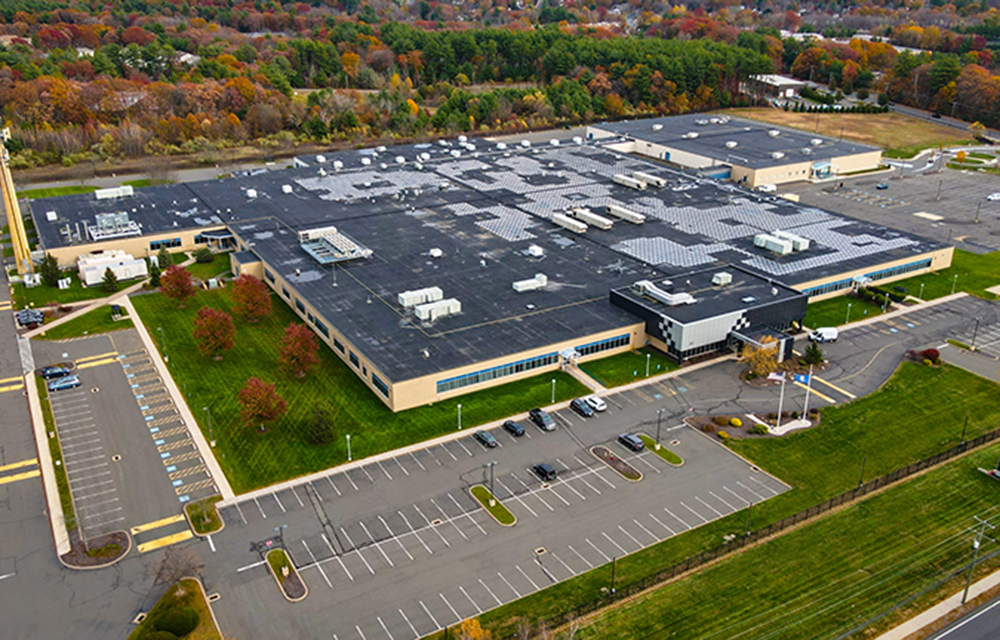
Windsor, CT The town has granted approvals for the redevelopment of 500 Day Hill Rd., clearing the way for a mixed-use residential community that will convert a former office campus into a housing development totaling approximately 300 residential units


.png)


 (1).png)

Columns and Thought Leadership

Retail infill strategy to activate Pawtucket’s Conant Thread District - by Gaetan Kashala
Until recently, the Conant Thread District consisted of approximately 150 acres of underutilized industrial land spanning Pawtucket and Central Falls. Today, the area is one of the most significant

Revitalized Town Centers: Retail??? - by Carol Todreas
It is now widely accepted that customers want to shop in person at physical stores. Brands know that they do better business in a physical store than just on line so they want to open stores. Demand for retail space by digital merchants, local entrepreneurs, and newly developed national chains

Florida ruling raises bar for condo terminations and buyouts - by Michael Karsch
On October 14, 2025, in a landmark decision with significant implications for the Florida real estate market, the Supreme Court of Florida formally denied Two Roads Development’s (TRD Biscayne LLC) petition for review in its long-running case against unit owners of Biscayne 21,

IREM president’s message: Our new reality - Staying ahead of supply chain delays - by Yoany Vargas
Supply chain delays are slowing construction, ratcheting up operating costs, and extending turnover timelines across Greater Boston, directly reducing revenue and increasing the workload for multifamily and