



News:
Owners Developers & Managers
Posted: June 26, 2008
Cooperatives and condominiums
The Boston Globe has covered the recent problems between a housing coop board and a potential buyer of a portion of a luxury building on Beacon St. in Boston. According to the Globe, the board wants to exclude a buyer who has the financial resources to be a tenant-shareholder in the coop.
Notwithstanding the buyer's financial resources the tenant-shareholders on the board do not want this individual as a neighbor. There is a dispute between "old money" and "new money," according to the Boston Globe. Apparently the coop documents prohibit a resale without the board's "approval" of the buyer.
A tenant-shareholder in a coop is bound by the common requirement that the board must consent to any sale in the building. Coops want to be more like exclusive country clubs than multi-family housing.
Such a veto power would probably not be legal in a condo where each unit owner owns his own space and pays his own mortgage and real estate taxes.
In a coop, the justification of such a veto power is that owners have one real estate tax bill and one blanket mortgage. Therefore, so the argument goes, the tenant shareholders in a coop are dependent on the financial strength of each other.
While our state legislature is attempting to correct the exclusionary powers of a coop board, a better answer would be to convert from a cooperative to a condo or at the outset to form a condo rather than a coop.
With interest rates low, preserving a blanket mortgage is less compelling. Also, real estate taxes will in all likelihood be the same with either form, unless there is a Ch. 121A tax agreement in place. Chp. 121A is a special law applicable to the City of Boston. Therefore, normally there is no good reason to opt for a cooperative. The condoform of ownership is the better choice. While there are at present over 200,000 individual condo units in Mass., there are few coops.
Saul Feldman is a real estate attorney with Feldman & Feldman, PC Boston, Mass.
MORE FROM Owners Developers & Managers
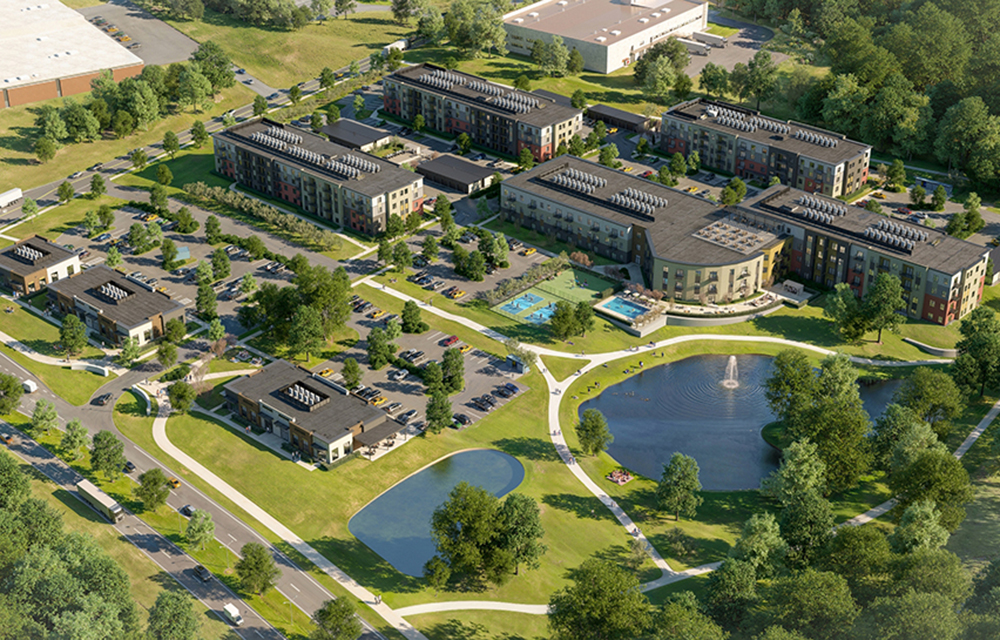
Windsor approves redevelopment of 500 Day Hill Rd. for mixed-use residential community
Windsor, CT The town has granted approvals for the redevelopment of 500 Day Hill Rd., clearing the way for a mixed-use residential community that will convert a former office campus into a housing development totaling approximately 300 residential units


.png)




Columns and Thought Leadership

IREM president’s message: Our new reality - Staying ahead of supply chain delays - by Yoany Vargas
Supply chain delays are slowing construction, ratcheting up operating costs, and extending turnover timelines across Greater Boston, directly reducing revenue and increasing the workload for multifamily and

Florida ruling raises bar for condo terminations and buyouts - by Michael Karsch
On October 14, 2025, in a landmark decision with significant implications for the Florida real estate market, the Supreme Court of Florida formally denied Two Roads Development’s (TRD Biscayne LLC) petition for review in its long-running case against unit owners of Biscayne 21,

Retail infill strategy to activate Pawtucket’s Conant Thread District - by Gaetan Kashala
Until recently, the Conant Thread District consisted of approximately 150 acres of underutilized industrial land spanning Pawtucket and Central Falls. Today, the area is one of the most significant

Revitalized Town Centers: Retail??? - by Carol Todreas
It is now widely accepted that customers want to shop in person at physical stores. Brands know that they do better business in a physical store than just on line so they want to open stores. Demand for retail space by digital merchants, local entrepreneurs, and newly developed national chains
 (1).png)