


 (1).gif)
News:
Finance
Posted: August 7, 2008
A zoning option for land developers
An appraiser researches the use of the land and describes zoning characteristics when completing an appraisal report.
Properties I have appraised include within their site description for zoning a land use type that requires special approval because of its characteristics. Although communities vary in naming this concept, often it is referred to as planned unit development or cluster zoning.
A significant purpose of a planned unit residential development or a planned conservation development is to allow residential development which encourages and promotes the permanent protection of common land. This enables a community to develop its land in clusters and villages, in harmony with New England rural tradition of integrating with the environment.
A planned unit development is a type of land development in which buildings are clustered or set on lots that are typically smaller than usual. Large, open, park-like areas and recreational facilities are included within the developments. In exchange for the right to build on smaller lots, the developer agrees to set aside some vacant land to be used by the community or a homeowners' association. (Source: Appraising Residential Properties, fourth edition, Appraisal Institute)
Cluster zoning is a type of residential zoning designed to preserve open space by permitting houses to be built in groups or clusters on less land than normally would be permitted under the zoning ordinances. (Source: The Dictionary of Real Estate Appraisal, fourth edition, Appraisal Institute)
Three appraisals I completed approximately 25 miles west of Boston in Middlesex county were located in subdivisions. They were identified as a detached single-family condominium unit and are similar to my description of the property after an appraisal inspection. A condominium is a special type of ownership where the owner holds ownership title to the unit and joint ownership of the common areas. Each of these single-family condominium properties had an exclusive use area (EUA). An EUA in this context has the same meaning as a lot which is a distinct piece of land. This lot is the smaller portion of a subdivision identified in the general description. Common areas of land vary depending on the development but typically include conservation land and open space with passive recreation like hiking trails.
Three appraisals I completed 30 miles west of Boston in Middlesex county were located in subdivisions. They were identified as a detached single-family unit and are similar to my description of the property after an appraisal inspection. These units were built on smaller lots than normally would be permitted under their community's zoning by-laws. These single-family properties like most are owned in fee simple. The owner of a fee simple title possesses complete rights of the property. In addition these homeowners have a joint ownership in the common land which varies according to the development but typically includes conservation land and open space with passive recreation like hiking trails.
The six residential properties I appraised above were similar in that they were part of a subdivision plan allowed to be developed according to an approved zoning option. Owners are responsible for the common land areas unless they have been accepted by the community such as roads and open space. A homeowner's association is established to maintain efficiency and to pay for certain costs in the subdivision.
When establishing zoning ordinances or by-laws, a community follows Mass. General Laws (MGL) Chapter 40A Section 9 on zoning and special permits. There are further procedural requirements and restrictions for subdivisions in MGL 41. Although an appraiser most likely reviews and notes these and other documents in an appraisal, it is beyond the scope of this article.
Special thanks to Kristen Alexander, a planner from Acton, for her understanding on this topic.
Teresa MacNutt is owner of Terri Mac Co., Belmont, Mass.
MORE FROM Finance
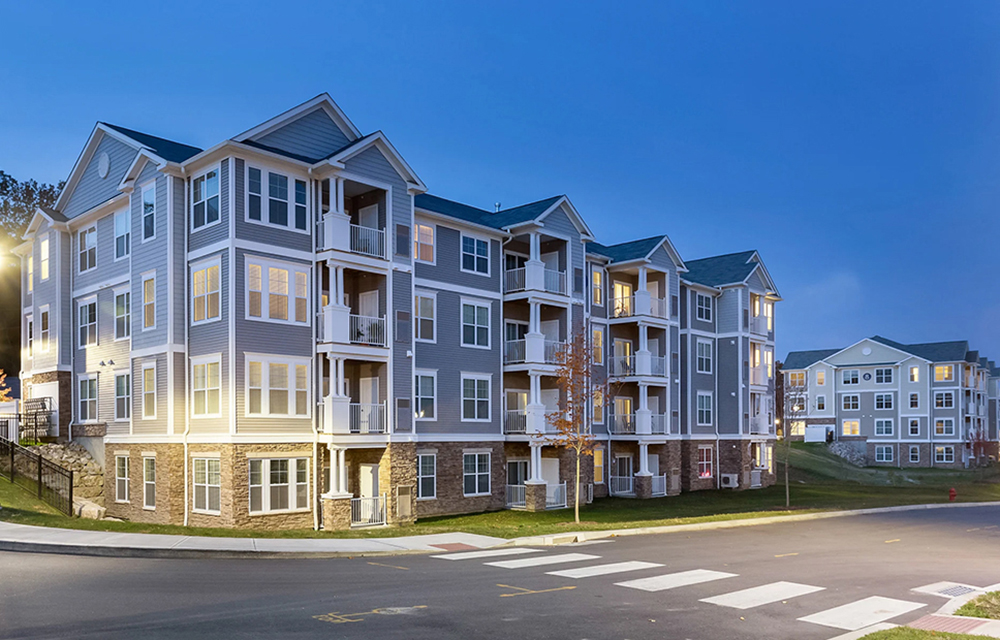
Kozlowski of Newmark Capital Markets secures $115.6 million financing for two properties in CT
East Lyme, CT Newmark has arranged $115.6 million in financing on behalf of the sponsor to refinance The Cove at Gateway Commons and Sound at Gateway Commons. Newmark Capital Markets Strategies managing director Avi Kozlowski secured the financing through Freddie Mac.




 (1).gif)




Columns and Thought Leadership

Reverse exchanges and the challenges of a competitive real estate market - by Michele Fitzpatrick
Our current, highly competitive real estate market poses specific challenges for investors who are considering taking advantage of a tax-deferred 1031 exchange. In this market, investors will have no problem selling their current property if priced properly, but they may find it difficult to find a suitable replacement property

Are appraisers on the same page as the assessor? - by Richard Seman
The purpose of this article is to address problematic or confusing issues which may help assessors and appraisers to better understand how to value real estate for tax assessment purposes.

Massachusetts real estate transfers over $1 million face new tax rules as of November 1st - by Daniel Meyer
Attention to owners of real estate in the Commonwealth (and the title companies and other professionals who advise them), the Massachusetts Department of Revenue (the “DOR”) recently adopted a new “millionaire’s tax” via 830 CMR 62B.2.4

The focus on price per s/f compared to the comparable sales used in the appraisal report - by Dennis Chanski
Over the past several weeks, I have completed appraisal assignments for private clients. Interestingly, after submitting these appraisals, I received several phone calls – not to question the value, content, or any incorrect information, but rather to discuss the price per s/f compared to the comparable sales used in the report.
