News:
Northern New England
Posted: March 3, 2010
New Hampshire thinks "outside the box" when it comes to under utilized or vacant buildings
The day of reckoning was due to come for many national and regional markets that demonstrated overbuilding of large "big box" stores and fortress or regional shopping centers and excessive office building construction over the last decade and a half.
Although it was "heady" times for corporate America, large developers and yes, our own brokerage community, what is often said, but is mostly right, "What goes up, must come down." Over the years, that saying has been applied mostly to "averages" of all kinds, the fact of the matter is, it actually may make sense from a "literal" point of view, but more on that later.
New Hampshire, to a certain degree, did not participate in the overbuilding binge of the last decade, we understood that having a Home Depot and a Lowe's, side by side in a market of 50,000, would probably not be a good idea, so we are not dealing with many closed "big box" stores that need alternative uses. That is not to say that we, in New Hampshire, do not suffer from higher vacancies, caused by lack of retail sales or downsizing or weaker high tech industry use, creating large space or building vacancies.
In my research of the New England Commercial Property Exchange, it was obvious that New Hampshire does offer several examples of buildings that need a creative reuse, because the use they were built for, probably won't be in demand for several years, if ever again! Several examples of buildings that were built with quality but are now vacant, would be car dealerships. For example, there is a 35,000 s/f stand alone in Exeter that clearly could be reused as a possible, private technical school or a religious organization, or perhaps a medical clinic but probably not a new car dealership. New Hampshire brokers need to be thinking out of the "big box" mentality and using the quality inventory we have for creative new use.
My own experience has provided filling traditional retail space for my clients, when traditional retail is struggling, with creative uses such as a regional college, an outpatient clinic and an indoor play space for toddlers; uses that still provide a nice flow of customers to the plaza, supporting those retailers that are surviving, which makes a nice mix for the entire property and occupied properties for my clients. What is the alternative? Sitting on vacancies, waiting for national retail tenants to appear, which in my opinion are going to be slow in coming back into the market. Even if they do, they will most likely try and negotiate a discounted rental rate. So, take your poison now or later, but if you take it now, to fill a vacancy with a locally grown use or business, you have provided a great local service, and the present value of the cash flow will be greater for your client.
Not all vacant buildings should be reused, especially some of the older buildings that might actually be sitting on an "A" location.
Given the attitude of many municipalities, cities or towns and their propensity not to rezone or expand commercial zones, it may be best not to wait or fight the tide with local zoning boards, but simply raze older buildings and wait for new demand or new uses for the land.
Even though it may take money out of an owner's pocket to raze the buildings, the total economic impact is reduced by continuing vacancy, maintenance and property taxes if the facility were to remain on the tax roll and vacant. Wait for the supply and demand curve to kick in again, knowing that "the" vacant parcel will be the only game in town. Additionally, new uses may be thought more favorably by the municipalities when being permitted, knowing that the city or town will gain in a higher and better quality tax base. They should be motivated when collecting taxes only on the vacant land for several years. So as mentioned above, the adage of "What goes up, must come down", may not be a bad strategy over the next 2 - 3 years until higher and better use is evident. If you don't want to take such a radical approach, start thinking of alternative uses to place under vacant roofs; your owners and clients will be very pleased.
Bruce Waters, CCIM is the senior broker for McLaughry Commercial, West Lebanon, NH.
Tags:
Northern New England
MORE FROM Northern New England
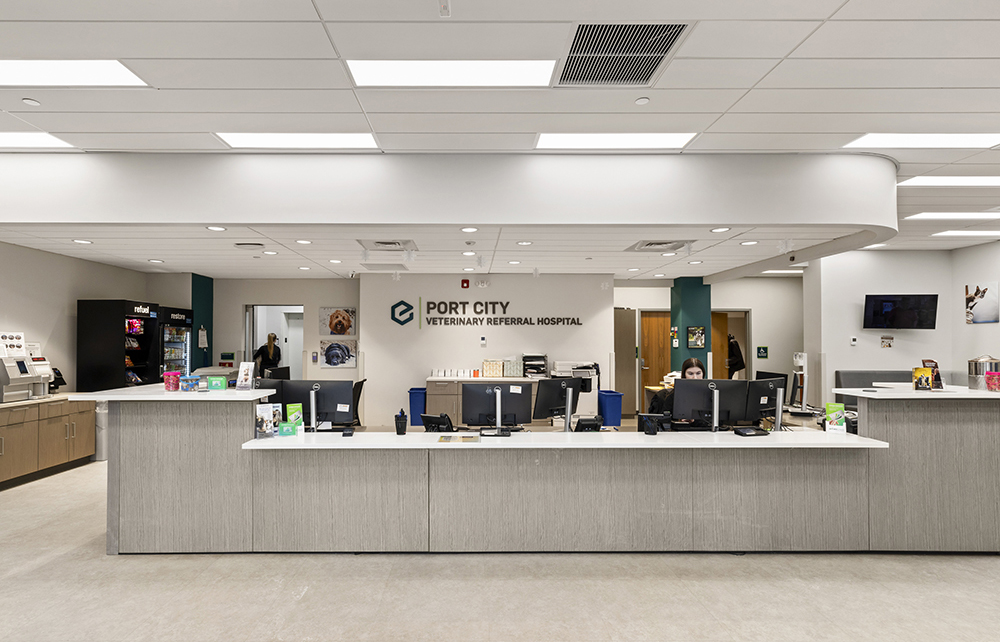
Project of the Month: Timberline Construction Corp. delivers advanced veterinary facility for Ethos Port City in Portsmouth, NH
Portsmouth, NH Ethos Port City Veterinary Hospital (Ethos) is redefining what advanced animal care looks like – and Timberline Construction Corp. (Timberline) played a key role in bringing that vision to life.

.png)


Quick Hits