



News:
Owners Developers & Managers
Posted: February 2, 2012
Tax abatements for contaminated property
Many contaminated properties are assessed for more than their fair market value. The use of a capitalization of income method often does not work for property that is contaminated. The capitalization of income method of valuation does not take into account the fact that a potential buyer will be reluctant to buy a contaminated property because of the stigma that hazardous materials have on property value. Likewise, the sales comparison approach may not work for valuation of a contaminated property. A buyer of contaminated property is taking the chance that the dollar cost of the remediation and monitoring will far exceed the amount by which the purchase price was discounted because of the contamination.
There are other things to consider in addition to stigma: the reluctance of lenders to lend on contaminated property, the liability to third parties, the requirement of indemnification in connection to selling the property. These are in addition to the clean up costs, the costs of monitoring, and the stigma.
For example, if the cost of remediation is estimated at $100,000, a buyer who buys contaminated property for $500,000 and has it under agreement to eliminate the contamination and sell it for $850,000 has the chance of making $250,000 less closing and carrying costs. However, if the remediation costs $350,000, the buyer will end up taking a loss when he resells the property for $850,000. Because of this risk, the buyer of the contaminated property may not be willing to pay more than $250,000. Therefore, the assessment should be $250,000 rather than $500,000. Assessors fail to take this into consideration.
Even if a licensed site professional says that the contamination has been removed, the public may not be convinced. Therefore, the fair market value of the property could continue to be depressed even though it is no longer contaminated.
Saul Feldman is a real estate attorney with Feldman & Feldman, P.C., Boston.
MORE FROM Owners Developers & Managers
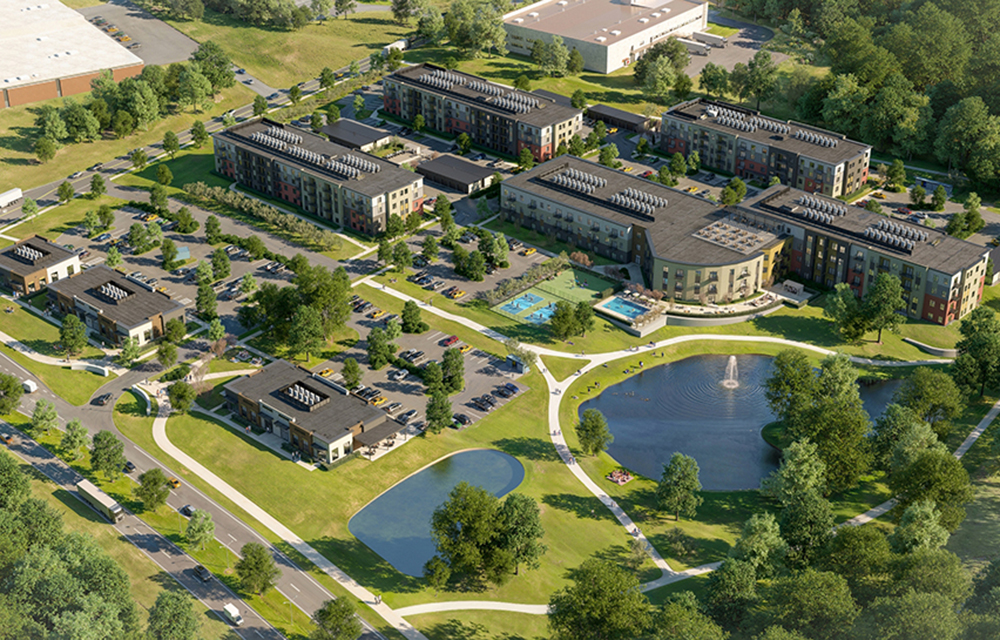
Windsor approves redevelopment of 500 Day Hill Rd. for mixed-use residential community
Windsor, CT The town has granted approvals for the redevelopment of 500 Day Hill Rd., clearing the way for a mixed-use residential community that will convert a former office campus into a housing development totaling approximately 300 residential units


.png)


Quick Hits
 (1).png)

Columns and Thought Leadership

Retail infill strategy to activate Pawtucket’s Conant Thread District - by Gaetan Kashala
Until recently, the Conant Thread District consisted of approximately 150 acres of underutilized industrial land spanning Pawtucket and Central Falls. Today, the area is one of the most significant

Revitalized Town Centers: Retail??? - by Carol Todreas
It is now widely accepted that customers want to shop in person at physical stores. Brands know that they do better business in a physical store than just on line so they want to open stores. Demand for retail space by digital merchants, local entrepreneurs, and newly developed national chains

IREM president’s message: Our new reality - Staying ahead of supply chain delays - by Yoany Vargas
Supply chain delays are slowing construction, ratcheting up operating costs, and extending turnover timelines across Greater Boston, directly reducing revenue and increasing the workload for multifamily and

Florida ruling raises bar for condo terminations and buyouts - by Michael Karsch
On October 14, 2025, in a landmark decision with significant implications for the Florida real estate market, the Supreme Court of Florida formally denied Two Roads Development’s (TRD Biscayne LLC) petition for review in its long-running case against unit owners of Biscayne 21,
 (1).png)