



News:
Owners Developers & Managers
Posted: March 1, 2012
Planning a renovation? Add PCBs to hazardous materials list
Architects, engineers, contractors and building managers routinely manage the presence of hazardous materials such as asbestos during renovation projects. Less is known about managing PCBs in building renovation projects.
What are PCBs?
PCBs, or polychlorinated biphenyls, are a class of organic compounds that were added to caulking and sealants to increase durability and flexibility. These sealants were used in commercial, institutional, and industrial buildings including schools and colleges constructed in the 1950s through 1970s and are found around window frames, in expansion joints, or in joints in roof construction. Sometimes, due to weathering, leaching, or deterioration, PCB's can also be found in adjacent building materials, such as concrete, brick or metal.
Why are they a problem?
PCBs are a health risk. They are considered a potential carcinogen to humans via direct contact or inhalation. They are regulated by the Environmental Protection Agency and are prohibited from being used above certain concentrations. If PCB's are found in building materials the cost of abatement can increase project costs and impact construction schedules.
How Should PCB-containing materials be managed?
If renovations or capital improvement projects are planned, the presence of PCBs should be evaluated as part of the initial hazardous materials assessments. Proactive steps are essential to avoid potential delays in schedule and added costs.
The first step in evaluating a building for the presence of PCBs is to identify the type and history of the building. If the date of original construction or renovation was during the 1950's through the 1970's then there is a greater likelihood of finding PCBs in the caulking. Samples can be collected for laboratory analysis. The EPA website has extensive information on PCBs in caulking, including testing recommendations and fact sheets.
The means for dealing with PCBs in buildings can vary dramatically, ranging from removals by a qualified contractor to in-place management options with a goal of integrating them into the existing project scope. Proper management, removal and disposal of these materials is required.
In order to deal effectively with the issues surrounding the presence of PCBs in buildings, a strong project team, including an expert in the field of PCB remediation, should be assembled at the early stages of a project. This will ensure that the schedule and budget can be planned to minimize scope expansions, project delays and cost overruns at later stages.
Lisa Reindorf is a principal at Goldman Reindorf Architects, Newton, Mass. George Franklin is a certified hazardous materials manager and expert in PCB remediation at Woodward &Curran, Andover, Mass.
MORE FROM Owners Developers & Managers
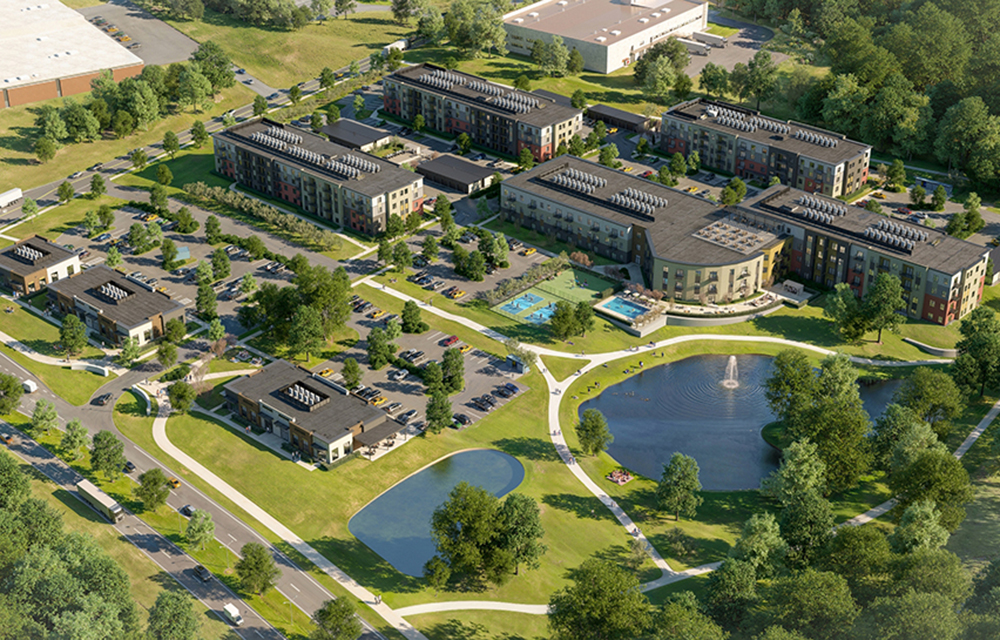
Windsor approves redevelopment of 500 Day Hill Rd. for mixed-use residential community
Windsor, CT The town has granted approvals for the redevelopment of 500 Day Hill Rd., clearing the way for a mixed-use residential community that will convert a former office campus into a housing development totaling approximately 300 residential units


.png)


Quick Hits
 (1).png)

Columns and Thought Leadership

Retail infill strategy to activate Pawtucket’s Conant Thread District - by Gaetan Kashala
Until recently, the Conant Thread District consisted of approximately 150 acres of underutilized industrial land spanning Pawtucket and Central Falls. Today, the area is one of the most significant

Florida ruling raises bar for condo terminations and buyouts - by Michael Karsch
On October 14, 2025, in a landmark decision with significant implications for the Florida real estate market, the Supreme Court of Florida formally denied Two Roads Development’s (TRD Biscayne LLC) petition for review in its long-running case against unit owners of Biscayne 21,

IREM president’s message: Our new reality - Staying ahead of supply chain delays - by Yoany Vargas
Supply chain delays are slowing construction, ratcheting up operating costs, and extending turnover timelines across Greater Boston, directly reducing revenue and increasing the workload for multifamily and

Revitalized Town Centers: Retail??? - by Carol Todreas
It is now widely accepted that customers want to shop in person at physical stores. Brands know that they do better business in a physical store than just on line so they want to open stores. Demand for retail space by digital merchants, local entrepreneurs, and newly developed national chains
 (1).png)