


 (1).png)
News:
Owners Developers & Managers
Posted: May 3, 2012
Website organization 201: Taking it to the next level
The value of an informative web site targeted to the needs of prospects and customers can never be underestimated. But real estate professionals who take site development a step further - and create a simple system of web links and tools tailored to the industry and their own businesses - will enjoy continuous site traffic and the intake of qualified leads.
In my last column, I discussed the importance of producing email campaigns featuring links to web sites, blogs, and social media pages to complement real estate marketing strategies. These campaigns are a critical piece of a successful web site matrix. Think of your real estate business web site as the hub of the system. Your email marketing campaigns promote content you create for your customers and prospects, and they drive traffic to the hub. If you are not currently using this strategy to promote your business, it's time to add email marketing to the mix.
Your blog is also a source of unique content that showcases your knowledge - and by posting links to it on your email campaigns, advertisements, and using real estate blog sites like Activerain.com - your web site will receive more hits. In addition, branded social media accounts on Facebook, Twitter, LinkedIn, and Flickr demonstrate your expertise and develop inbound traffic.
Everything else that connects and enriches the information on the hub will be content driven by external web sites. Examples include listing syndication services that update and promote market listings on your site, web sites that provide reviews of real estate agents and brokers, and sites that share press releases you've distributed or posted.
Using this organized and consistent approach to web site development will ensure that your site is content-rich and consistently updated. Not only does it encourage you to blog about current trends and design fresh email campaigns, but it also demonstrates your connectivity to the industry-at-large and to your target market.
By making your web site the hub of information about local listings, industry developments, tips for buyers and sellers, insights and commentary, your site will achieve high search engine rankings and online referrals that lead to increased traffic, leads, and sales. To learn more about developing a web site matrix for your real estate business, contact an integrated marketing firm.
Linda Fanaras is the president and founder of Millennium Integrated Marketing, Manchester, NH and Boston, Mass.
MORE FROM Owners Developers & Managers
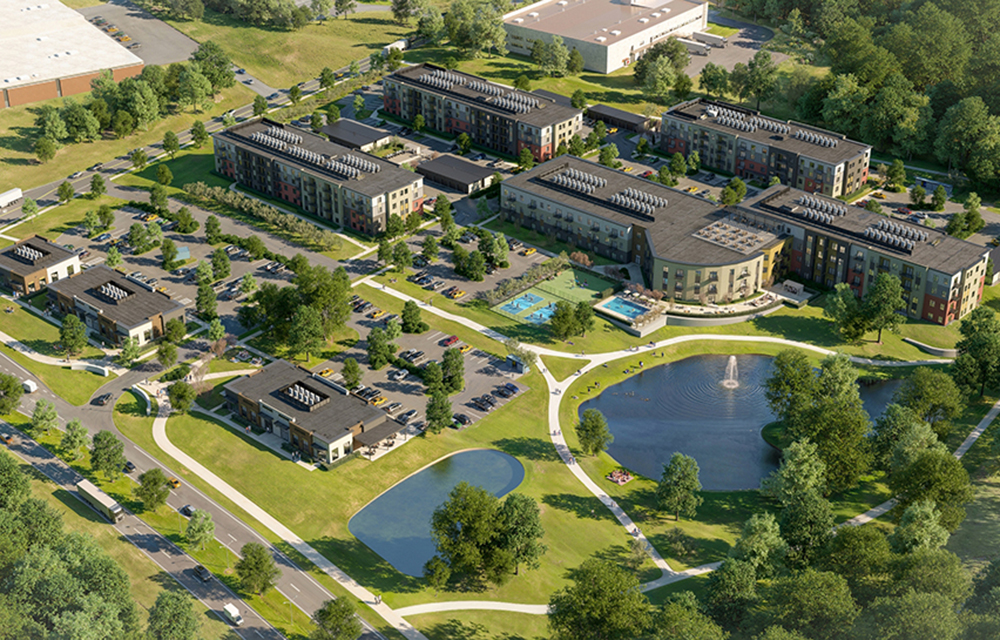
Windsor approves redevelopment of 500 Day Hill Rd. for mixed-use residential community
Windsor, CT The town has granted approvals for the redevelopment of 500 Day Hill Rd., clearing the way for a mixed-use residential community that will convert a former office campus into a housing development totaling approximately 300 residential units


.png)




Columns and Thought Leadership

Retail infill strategy to activate Pawtucket’s Conant Thread District - by Gaetan Kashala
Until recently, the Conant Thread District consisted of approximately 150 acres of underutilized industrial land spanning Pawtucket and Central Falls. Today, the area is one of the most significant

Florida ruling raises bar for condo terminations and buyouts - by Michael Karsch
On October 14, 2025, in a landmark decision with significant implications for the Florida real estate market, the Supreme Court of Florida formally denied Two Roads Development’s (TRD Biscayne LLC) petition for review in its long-running case against unit owners of Biscayne 21,

IREM president’s message: Our new reality - Staying ahead of supply chain delays - by Yoany Vargas
Supply chain delays are slowing construction, ratcheting up operating costs, and extending turnover timelines across Greater Boston, directly reducing revenue and increasing the workload for multifamily and

Revitalized Town Centers: Retail??? - by Carol Todreas
It is now widely accepted that customers want to shop in person at physical stores. Brands know that they do better business in a physical store than just on line so they want to open stores. Demand for retail space by digital merchants, local entrepreneurs, and newly developed national chains