


.png)
News:
Construction Design & Engineering
Posted: March 15, 2013
Trends in senior housing/healthcare market as owners and operators adapt to changing landscape
The United States is in the early stages of a major demographic shift as the generation of baby-boomers enters retirement. The following discusses some of the trends noted in senior housing as owners and operators adapt to the constantly changing landscape.
Acuity levels are increasing for prospective residents of senior housing facilities, which in turn increase the cost of providing care. Many seniors have delayed entrance to senior housing for economic reasons, and they've become more accustomed to utilizing other resources such as family, technology, medicine and community support to remain in their current homes. Providers of senior housing may need to raise their costs as a result of increased risk, or change their policies altogether to avoid the consequences of residents with higher demand for care.
The shift in resident profiles is resulting in a migration of communities. With the implementation of home and community-based service initiatives, seniors in apartment complexes, or communities of 55+, will see greater levels of available a-la-carte services . As a result, these independent living communities will begin to have more of an "assisted living feel," but at a lower cost as services will be offered unbundled.
Skilled nursing facilities are starting to care for the "sickest"of seniors and will continue to do so in the future as an alternative to hospital care. Traditional nursing care will likely migrate to assisted living facilities that offer different levels of care. As a result, many of these assisted living communities are seeing the average age of entry of their residents increase since people are living longer and often with less care.
Standalone Alzheimer's care facilities will begin to re-appear in the next 12-24 months, a trend that similarly occurred in the early 2000s when many dedicated memory care communities were established—;but at that time, there were funding problems and development of these facilities was somewhat ahead of its time. However, the supply of ALZ/dementia care communities remains low while the demand is steady and increasing.
Relocation trends for the elderly are decreasing as the economics of moving are more burdensome than previously thought, which leads to seniors remaining in their local communities longer. It is important to note that the definition of "local community" is expanding. The term was previously defined as a 10-15 mile radius, but in some cases it can now encompass an expanded area of almost 100 miles, based on supply, demand and costs.
Home and community-based services and networks are growing, predominantly in major metropolitan markets. Senior living facilities and acute care hospitals are tending to work more closely in order to offer a full continuum of care as an extension of their brick and mortar campuses. These marketing efforts are designed to ease seniors into the system of care, starting at home and providing opportunities to expose individuals to the different levels of care and communities they'll be able to choose from when it becomes necessary to move. The links from home health care, clinic, and rehabilitation centersto assisted living and skilled nursing facilities will blur more as the power of the network of care becomes greater. Once in the network individuals may find themselves to be "customers for life."
As individuals and families learn more about the costs of senior housing, options such as multigenerational housing, the Greenhouse Project, senior villages, co-housing, homes built with in-law apartments and other communal living solutions will continue to appear and evolve. Increasingly, seniors will move in with their families or another senior as the economics of co-housing/co-habitation make a strong case for multigenerational housing.
Capital investment in single-family homes will increase as more parents move in with their adult children. The use of home office spaces, basements, attics and other existing spaces will make way for more formal renovations including the in-law apartment as either an add-on or standalone. Others may opt for pre-fabricated cottages as solutions that can be moved, stored or re-sold when a senior moves to a more comprehensive care community.
While the housing market stays stuck in neutral, making the home more of a multi-generational dwelling will occur out of necessity. Renovation will be an important factor in adaptation for senior housing in single-family homes. The key will be the return on the investment (ROI), but given the uncertainty of the amount of time that an elder may live with their children, it's difficult, if not impossible to have a sense of certainty with respect to time. The resale value of these types of enhancements or modifications will have negligible effect on the value of the home, unlike more popular renovations such as kitchens and baths.
Michael Bertrand, MAI, is the healthcare and senior housing practice leader and is a director with CBRE|Valuation & Advisory Services-South Central Region, New Orleans, LA
MORE FROM Construction Design & Engineering
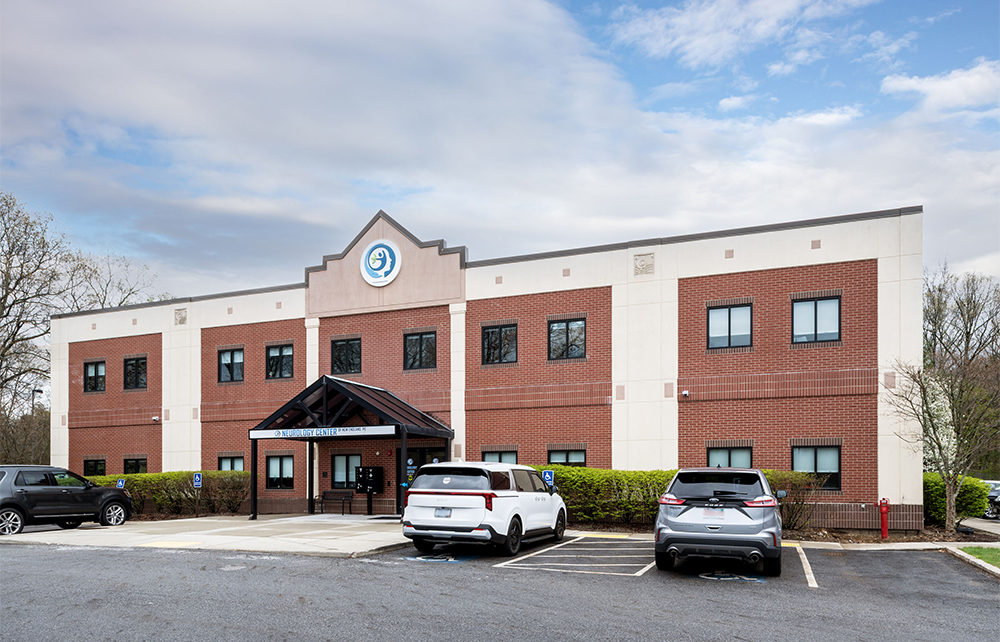
Timberline Construction Corp. completes renovations for Neurology and Infusion Center of New England
Foxborough, MA Timberline Construction Corp. (Timberline) has completed a 20,000 s/f healthcare construction project for the Neurology and Infusion Center of New England at 18 Washington St. The full interior renovation transforms an existing two-story medical office building into a purpose-built outpatient care environment that doubles the center’s clinical footprint, expands services and positions the growing practice for its next chapter.
.jpg)




Columns and Thought Leadership

Navigating tariffs and material uncertainty in today’s construction market - by Karl Ginand and Tiffany Gallo
As headlines around tariffs seem to dominate the news daily, many considering construction projects have anticipated major cost escalations and widespread supply issues. While tariffs haven’t driven pricing spikes to the extent once feared, the lasting impact has been a new layer of uncertainty, affecting more than just budgets.

ABC-Mass. chairman’s message: Rent control isn’t the answer to our housing crisis - by Luiza Mills
As you may know, Massachusetts voters will be weighing in on a number of ballot initiatives in November. Among them is a proposal to impose the nation’s strictest statewide rent control policy. I’d like to tell you why the ABC MA Board

It’s time to lead: Confronting mental health in construction - by David Watts
As we close Mental Health Awareness Month, we must be clear: May isn’t just about ribbons, hashtags, or lunchtime mindfulness apps. It’s about responsibility to confront hard truths that linger in silence, and to challenge ourselves, as leaders in our industry, to do more.

Greenwood Credit Union City Hall Plaza nears completion - by Frank Picozzi
After several years of planning, construction, and anticipation, the community is eagerly awaiting the opening of the Greenwood Credit Union City Hall Plaza and outdoor skating rink later this month.