



News:
Spotlight Content
Posted: September 26, 2025
2025 Women in CRE: Rosa Zhang, Keller Williams Realty
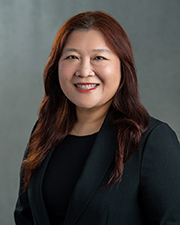
Commercial Agent
Keller Williams Realty
What drew you to commercial real estate, and what keeps you passionate? I was drawn to commercial real estate because it combines my business and investment background with my passion for helping people and companies grow. With experience across industries and advanced training in real estate investment, I enjoy solving complex challenges – from structuring deals to navigating zoning and development. What keeps me passionate is seeing how the right project can transform communities and create opportunities, while also allowing me to bridge cultures and connect clients from the U.S. and abroad.
What’s a challenge you faced early in your career, and how did you overcome it? Early in my career, my biggest challenge was entering commercial real estate without a local network. As an immigrant woman, I had to prove myself in a competitive field. I leaned on my academic foundation – earning an MBA, completing Harvard’s graduate certificate in real estate investment, and pursuing the CCIM designation. By combining this training with persistence and a client-first approach, I built credibility, earned trust, and turned barriers into opportunities for growth.
What advice would you give to a woman considering a career in commercial real estate? My advice is to be confident, invest in your education, and build a strong network. Commercial real estate can feel intimidating at first, but knowledge is power – pursue training, designations, and stay curious. Don’t be afraid to take on challenging deals, because that’s how you grow. Most importantly, find mentors and allies who support your journey. Your unique perspective as a woman is a strength – use it to connect, innovate, and create opportunities for yourself and others.
Tags:
Spotlight Content
MORE FROM Spotlight Content

New England Real Estate Journal's 2026 Women in Commercial Real Estate Spotlight
NEREJ's Women in CRE Spotlight celebrates the women making an impact across commercial real estate and the companies that recognize, support and champion them.





Quick Hits


Columns and Thought Leadership

Shallow-bay wins on 495/128: A renewal-driven market with a thin pipeline - by Nate Nickerson
The Boston industrial market entered mid-2025 in a bifurcated state. Large-block vacancy remains elevated, while shallow-bay along the 495/128 corridor continues to prove resilient. Fieldstone’s focus on this geography positions us squarely in the middle of a renewal-driven, supply-constrained

How do we manage our businesses in a climate of uncertainty? - by David O'Sullivan
These are uncertain times for the home building industry. We have the threat of tariffs mixed with high interest rates and lenders nervous about the market. Every professional, whether builder, broker, or architect, asks themselves, how do we manage our business in today’s climate? We all strive not just to succeed, but

As legacy names recalibrate, new entrants are moving in with fresh capital, new technologies, and business models tailored to today’s supply-chain needs - by Michael Harrington
Southern New Hampshire’s industrial market has always punched above its weight. For decades, the region has attracted a mix of advanced manufacturing, beverage and food producers, logistics operators, and specialty

Limited supply fuels landlord‑friendly conditions in Rhode Island’s industrial market - by Julie Freshman and George Paskalis
As we enter the spring of 2026, the Rhode Island industrial real estate market stands on stable footing, following several years of resilience fueled by constrained supply, steady demand, and dynamic economic conditions.
