


 (1).gif)
News:
Finance
Posted: June 10, 2009
Appraisers: This time around, where is the love? It's the market, times, and profession
Doom and gloom in the real estate markets. Commercial and residential.
The residential markets are still in it, but showing some modest vital signs. When will that be and what will it look like when it comes, exactly? Or, are we in recovery but it just doesn't feel like one, and we don't want to admit that it won't be nearly as dramatic as we would like it to be?
Commercial markets are in the midst of a period of "stabilization," to use a well worn euphemism, or in their own kind of "deleveraging," or readjustment. Whatever it may be called, many commercial property classes are in for not a pretty ride.
The signs have been clear for a couple of years. Rental demand staggered, companies closed up locations, transaction volumes cratered, lenders pulled on the reins. Many observers chose to ignore or minimize the signs or just wait for the inevitable.
After the cataclysm of last Fall, no one would deny that we were in the midst of billions in commercial loans coming due upside down, transactions taking place well below the smudge on the wall signifying the high water mark.
Banks, developers, owner occupants, tenants - all in trouble and all in need of help. This should be a time for real estate appraisers to shine. We should be embraced by clients large and small, near and far, warm and fuzzy.
Some of us remember the early 90's. Those were the days, the old timers say. All I remember is work, endless amount of work, generated by the FDIC, RECOLL management, among others. Groundhog Day for appraisers......
Not only in New England, but everywhere, the work was challenging and difficult with limited data availability. Unfinished projects, projects never begun, projects built with no one to occupy them, projects that should never have been approved, started, or even considered. Residential and commercial, a total real estate wasteland.
New England felt more pain in the 1990s, or so its seemed. New England didn't overbuild as much as other places. There just wasn't that much more land and there was the difficult in getting things approved. Less demand. The region keeps losing to high growth areas to the south and west. Given what has happened, losing may not have been all that bad in terms of the subsequent real estate fallout.
Certainly there are some notable areas of embarrassment, of mass delusion. These would include "over 55" housing, high end single family housing, 40Bs, retail development based on strained demographics, and a lot of highly overleveraged Main St. property.
Ultimately, is it worth comparing yesterday and today? Other than making for good party conversation, probably not. We didn't really learn very much from the last one if the current crisis is examined in context. Same results, slightly different sets of causes.
This time around, though, it doesn't quite feel right. Appraisers aren't in the conversation. Even the HVCC works to marginalize appraisers. Valuation issues generally play little part in the discourse in this crisis. Maybe that's good, but I suspect not. Appraisers are not being blamed, not being praised, are barely being recognized. Practitioners were taken advantage of by the origination industry, worked through the real estate bubble. Ultimately no one cares much what appraisers do or donn't do: it 's not important enough for them to be taken to task. We go about our work with a feeling that what we do is nothing more than what is minimally necessary. Appraisers feel as if they add little to to the process.beyond fulfilling the basics.
There's nothing fundamentally wrong with appraisal theory. The consensus is that it's sound, it's logical. The practice of appraisal is flawed, however. Practitioners, educators, users, regulators have missed some important trends, particularly in residential appraising and are stuck, in essence, in a feedback loop devised by our peers and clients. Overhaul of what we do and how we communicate it is essential. We have embraced those aspects of technology which allow us to continue to do more efficiently familiar and outmoded things.. We have not embraced - and even spurned - technology and techniques that would allow to refine and expand our analyses and the credibility of our opinions and reports.
To be sure, many appraisers are pushed and pulled by clients, by the next new thing, and, by irrelevant (and dangerous) reporting formats. While essential to a wide variety of transactions from lending, probate, taxes, and eminent domain, appraisers are often minimized, trivialized, and demeaned for how they practice their craft.
The general perception is that appraisal licensing and regulation hasn't worked. We've produced cadres of minimally educated and barely competent practititioners. Enforcement is underfunded and is simply not taken seriously. Reform is desperately needed. The industry is not capable of policing itself.
So, when we wonder, where is the love out there for appraisers, those go-to types who can give right answers to that most critical of questions, "what's it worth?" we know that it's the market, the times, and the profession. We haven't made the leap: we need to or we run the very real risk of being even less relevant than we are now.
William Pastuszek, Jr., MAI, SRA is principal of Shepherd Associates, Newton Mass.
MORE FROM Finance
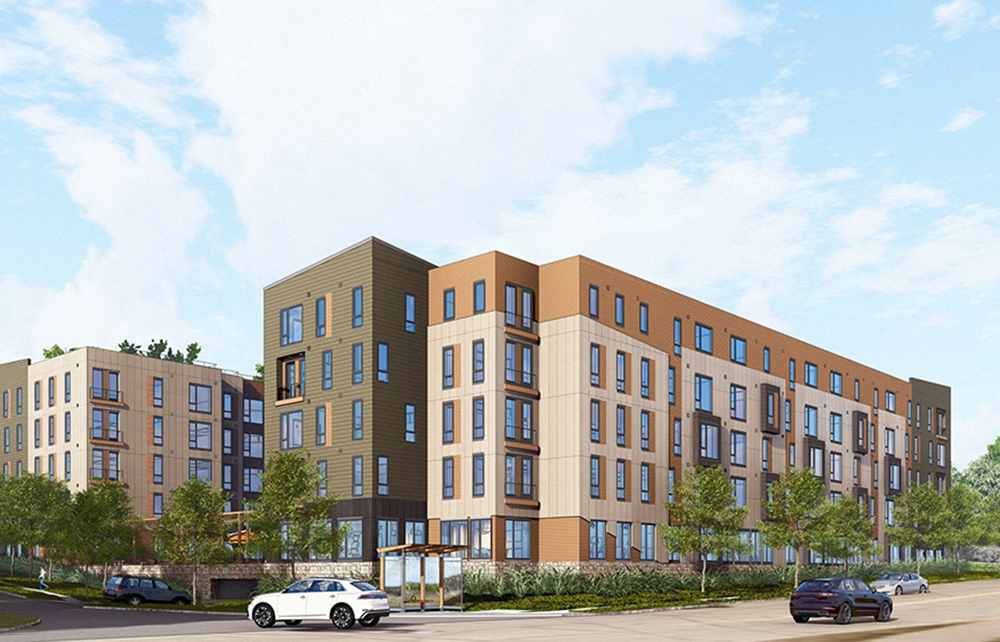
Affinius Capital and Axonic Capital provide $45.8 million construction loan for 130-unit multifamily
Lexington, MA Affinius Capital LLC (Affinius Capital), in partnership with Axonic Capital LLC (Axonic), originated a $45.8 million loan to finance the ground-up development of 7 Hartwell Ave., a to-be-built, 130-unit, Class A multifamily property with 400 s/f of retail.




 (1).gif)


Columns and Thought Leadership

Reverse exchanges and the challenges of a competitive real estate market - by Michele Fitzpatrick
Our current, highly competitive real estate market poses specific challenges for investors who are considering taking advantage of a tax-deferred 1031 exchange. In this market, investors will have no problem selling their current property if priced properly, but they may find it difficult to find a suitable replacement property

Massachusetts real estate transfers over $1 million face new tax rules as of November 1st - by Daniel Meyer
Attention to owners of real estate in the Commonwealth (and the title companies and other professionals who advise them), the Massachusetts Department of Revenue (the “DOR”) recently adopted a new “millionaire’s tax” via 830 CMR 62B.2.4

Are appraisers on the same page as the assessor? - by Richard Seman
The purpose of this article is to address problematic or confusing issues which may help assessors and appraisers to better understand how to value real estate for tax assessment purposes.

The focus on price per s/f compared to the comparable sales used in the appraisal report - by Dennis Chanski
Over the past several weeks, I have completed appraisal assignments for private clients. Interestingly, after submitting these appraisals, I received several phone calls – not to question the value, content, or any incorrect information, but rather to discuss the price per s/f compared to the comparable sales used in the report.
