


 (1).gif)
News:
Finance
Posted: October 10, 2007
Arbor closes $7.2 million refinancing of Highland Ridge Apartments
Arbor Commercial Funding, LLC, a wholly-owned subsidiary of Arbor Commercial Mortgage, LLC, has recentlyclosed on funding of a $7.2 million loan using Fannie Mae's DUS program to refinance the 147-unit complex known as Highland Ridge Apartments.
The 10-year loan amortizes on a 30-year (five years interest-only) schedule and carries a note rate of 5.60%.
The loan was originated by John Edwards, director, in Arbor's full-service Boston lending office.
"We provided great flexibility for this acquisition financing given the timing required in connection with a 1031 exchange," said Edwards. "Further, our ability to secure an early rate lock allowed this repeat Arbor client to secure an attractive 10-year fixed-rate interest rate."
Tags:
Finance
MORE FROM Finance
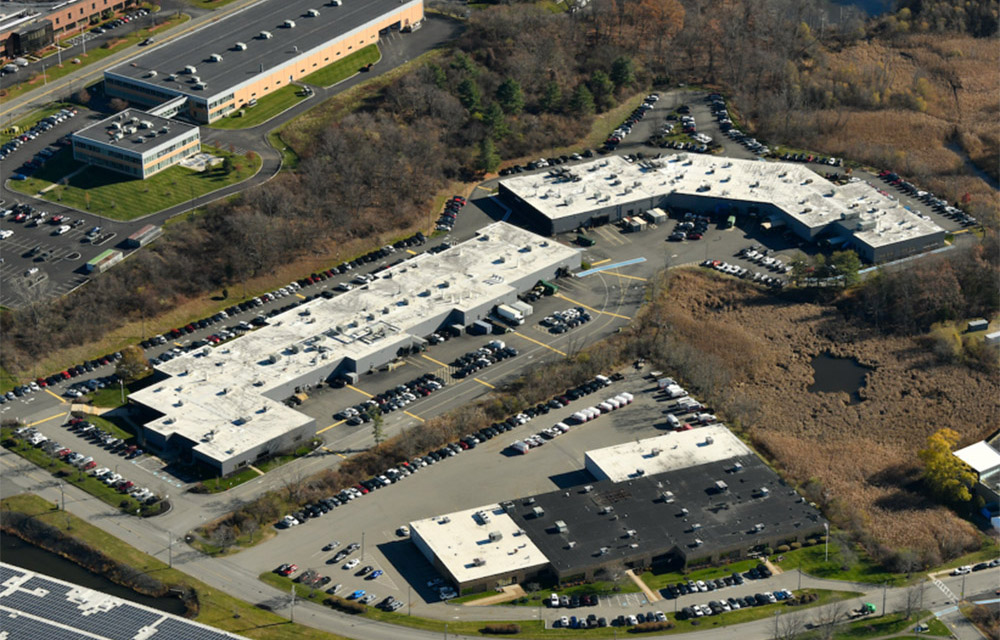
Northwest Bank finances Luzern Associates’ $47.75m acquisition
Danvers, MA Northwest Bank provided $34.5 million in financing to support Luzern Associates LLC’s $47.75 million acquisition of the Cherry Hill industrial portfolio, a three-building campus totaling 200,000 s/f.


 (1).gif)


Quick Hits

Columns and Thought Leadership

Are appraisers on the same page as the assessor? - by Richard Seman
The purpose of this article is to address problematic or confusing issues which may help assessors and appraisers to better understand how to value real estate for tax assessment purposes.

Reverse exchanges and the challenges of a competitive real estate market - by Michele Fitzpatrick
Our current, highly competitive real estate market poses specific challenges for investors who are considering taking advantage of a tax-deferred 1031 exchange. In this market, investors will have no problem selling their current property if priced properly, but they may find it difficult to find a suitable replacement property

Massachusetts real estate transfers over $1 million face new tax rules as of November 1st - by Daniel Meyer
Attention to owners of real estate in the Commonwealth (and the title companies and other professionals who advise them), the Massachusetts Department of Revenue (the “DOR”) recently adopted a new “millionaire’s tax” via 830 CMR 62B.2.4

The focus on price per s/f compared to the comparable sales used in the appraisal report - by Dennis Chanski
Over the past several weeks, I have completed appraisal assignments for private clients. Interestingly, after submitting these appraisals, I received several phone calls – not to question the value, content, or any incorrect information, but rather to discuss the price per s/f compared to the comparable sales used in the report.
