


 (1).gif)
News:
Finance
Posted: January 13, 2011
Are we in recovery from the Great Recession yet?
All of us are all too familiar with the Great Recession and what that looks like - job loss, falling real estate prices, increasing vacancy, declining retail sales, and the like. But would we recognize a recovery? The seeds of the recession were planted well before any symptoms surfaced, and even the seeds were unrecognizable as portents of a crisis in the making at the time of planting. In fact, they seemed like a great idea when first devised. Take for example, mortgage backed securities recognized as one of the major contributors to the recession.
When first offered, mortgage backed securities were a hot item with investors clamoring for the opportunity to purchase these products. The reasoning was that because so few mortgages defaulted, these investments were fool-proof guarantees of return. The demand became so great, funds so available for mortgages, and so much profit to be made that caution was thrown to the wind. Properties appreciated at totally unsustainable rates and mortgages were given to very risky buyers who did not have the ability to repay the loan. Like the vast majority of man-made crises, the problem is not one specific event but the accumulation of many insignificant occurrences. As the saying goes, it was death by a thousand paper cuts.
The seeds of a recovery are also planted well before symptoms become obvious, and these seeds are also not always recognized as such. When a business financial crisis hits such as the loss of a major client or the reduction in demand for a service, the business must take steps to cope with the crisis or go out of business. These steps may involve cutting staff, decreasing benefits, renegotiating rent, increasing marketing efforts and reducing non-essential expenses. No matter what steps are taken, some pain is inflicted but necessary to endure in order to survive. Now take this situation to a national and global level and it describes the economic realities of the last two years.
The good news is that the symptoms of a recovery are beginning to become obvious. The stock market is slowly edging upward signaling investors' willingness to once again buy equities on a meaningful scale. The private sector, after many quarters of jobs loss, has begun to add more jobs. The December 2010 jobs report indicated 297,000 jobs were created, adding more than two times the number of jobs economists anticipated. One of the most encouraging signs is the resumption of real estate development. I was thrilled to see an actual building under construction in downtown Portland (a new hotel on the former Jordan Meats site) and multi-family new construction underway in South Portland.
The recession did not happen overnight nor will the recovery. A full recovery is not anticipated until sometime in 2013 when the number of jobs lost during the Great Recession is regained. In any event, we are definitely moving in the right direction. The sobering news for the real estate profession is that real estate values will not start to increase until personal income from employment increases, and that may take some time.
Pat Amidon, MAI, is president of Amidon Appraisal, Portland, ME.
MORE FROM Finance
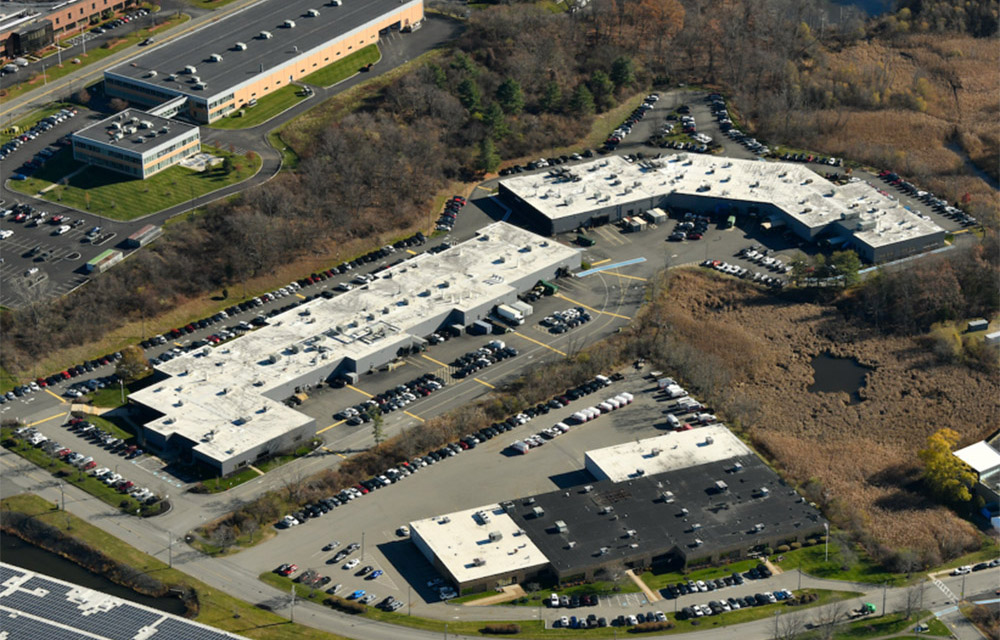
Northwest Bank finances Luzern Associates’ $47.75m acquisition
Danvers, MA Northwest Bank provided $34.5 million in financing to support Luzern Associates LLC’s $47.75 million acquisition of the Cherry Hill industrial portfolio, a three-building campus totaling 200,000 s/f.




 (1).gif)


.png)
Columns and Thought Leadership

Are appraisers on the same page as the assessor? - by Richard Seman
The purpose of this article is to address problematic or confusing issues which may help assessors and appraisers to better understand how to value real estate for tax assessment purposes.

The focus on price per s/f compared to the comparable sales used in the appraisal report - by Dennis Chanski
Over the past several weeks, I have completed appraisal assignments for private clients. Interestingly, after submitting these appraisals, I received several phone calls – not to question the value, content, or any incorrect information, but rather to discuss the price per s/f compared to the comparable sales used in the report.

Reverse exchanges and the challenges of a competitive real estate market - by Michele Fitzpatrick
Our current, highly competitive real estate market poses specific challenges for investors who are considering taking advantage of a tax-deferred 1031 exchange. In this market, investors will have no problem selling their current property if priced properly, but they may find it difficult to find a suitable replacement property

Massachusetts real estate transfers over $1 million face new tax rules as of November 1st - by Daniel Meyer
Attention to owners of real estate in the Commonwealth (and the title companies and other professionals who advise them), the Massachusetts Department of Revenue (the “DOR”) recently adopted a new “millionaire’s tax” via 830 CMR 62B.2.4
