


 (1).gif)
News:
Finance
Posted: October 11, 2024
Boston Residential Group secures $90 million in financing to develop 55 India St. on the Greenway in downtown Boston
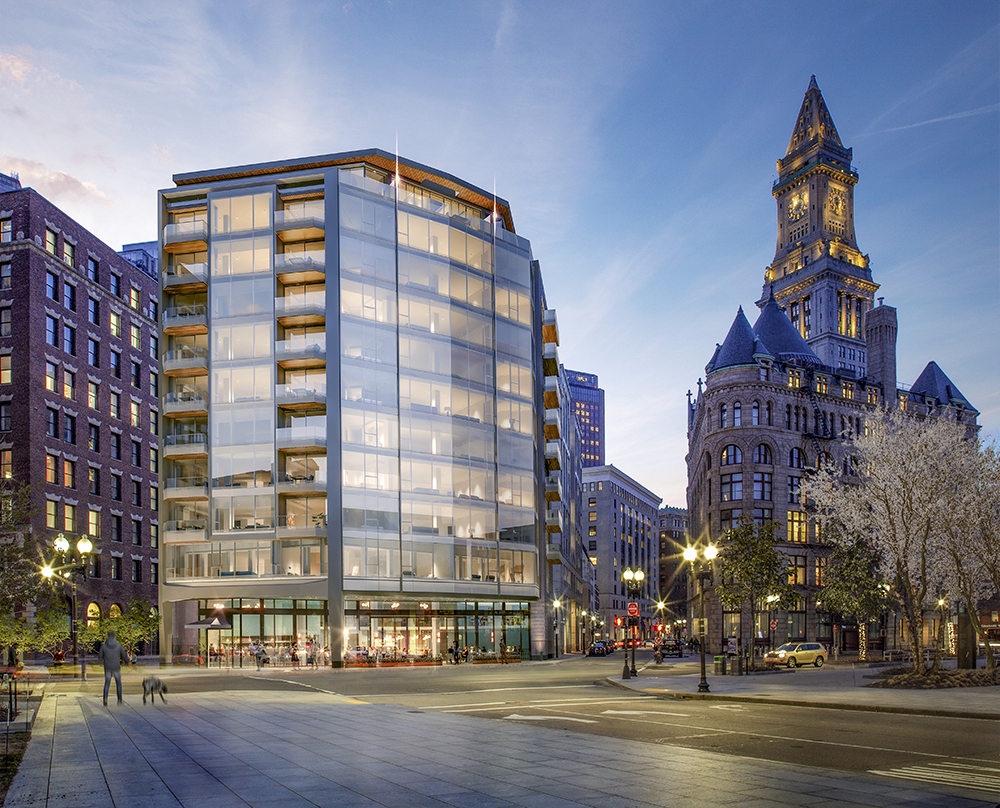
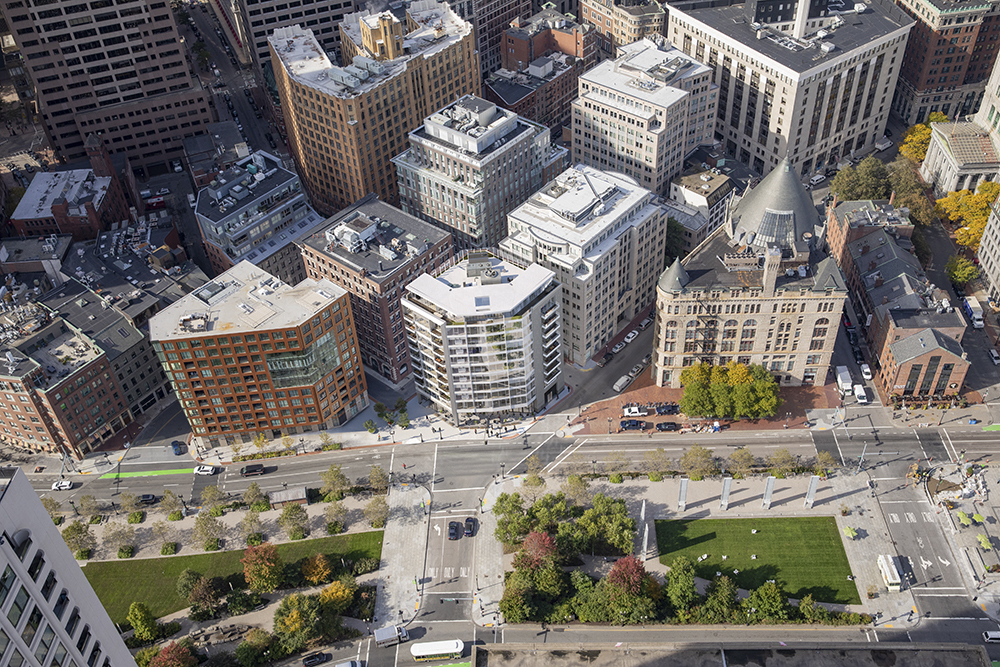
Boston, MA Boston Residential Group (BRG) has secured $90 million in financing to develop 55 India St., the last open development site on the Greenway in downtown. BRG will build a 12-story, glass-facade condominium tower at the site, featuring 29 two- and three-bedroom units – including five one- and two-bedroom affordable artist’s lofts – with outdoor space. The 76,000 s/f building will also feature a 4,000 s/f restaurant space on street level, and 30 owned parking spots directly adjacent to the site.
Boston Residential Group’s updated project plan was submitted in 2019 and ultimately permitted, but the project was put on hold due do the pandemic. 55 India will enhance the residential character of the waterfront market at the edge of the Financial District at a time that the city is eager to see development move forward in the commercial section of downtown.
“We are thrilled to be moving ahead with the development plan for 55 India, which includes providing home ownership opportunities for the artist community,” said Curtis Kemeny, president and CEO of Boston Residential Group. “The market conditions for construction costs and financing have been an obstacle to construction starts post-COVID, but the downtown Boston condominium market, including the waterfront and directly adjacent Seaport area, is under-supplied and has never been stronger. This step demonstrates our confidence in downtown Boston and is representative of the city of Boston’s commitment to support projects that contribute to mayor Wu’s agenda to spur residential development downtown.”
Construction financing for 55 India is being provided by the real estate specialties group at Bank OZK; mezzanine financing is being provided by Hickory CRE.
The project, designed by Hacin Architects, will sit on what was part of Charles Bulfinch’s original India Wharf project – a center of trade during the clipper ship era. The original wharf was eventually demolished and truncated into the current site when the elevated southeast expressway was built in the 1950s. Further alterations to the site were made during the Big Dig.
“Our building reconnects the iconic Custom House Tower with the Greenway and, in turn, the waterfront, completing the last piece of the puzzle envisioned by city planners for the Greenway,” Kemeny said.
Rendering credit: Hacin Architects.
MORE FROM Finance

What if you can’t find a replacement property in time for your 1031 exchange? - by Dwight Kay
The 1031 exchange is potentially one of the most powerful wealth-building tools in real estate. It allows investors to sell a property, defer capital gains taxes, and roll every dollar of equity into a new, like-kind asset. Simple enough on


 (1).gif)


Quick Hits

Columns and Thought Leadership

The focus on price per s/f compared to the comparable sales used in the appraisal report - by Dennis Chanski
Over the past several weeks, I have completed appraisal assignments for private clients. Interestingly, after submitting these appraisals, I received several phone calls – not to question the value, content, or any incorrect information, but rather to discuss the price per s/f compared to the comparable sales used in the report.

Massachusetts real estate transfers over $1 million face new tax rules as of November 1st - by Daniel Meyer
Attention to owners of real estate in the Commonwealth (and the title companies and other professionals who advise them), the Massachusetts Department of Revenue (the “DOR”) recently adopted a new “millionaire’s tax” via 830 CMR 62B.2.4

Are appraisers on the same page as the assessor? - by Richard Seman
The purpose of this article is to address problematic or confusing issues which may help assessors and appraisers to better understand how to value real estate for tax assessment purposes.

Reverse exchanges and the challenges of a competitive real estate market - by Michele Fitzpatrick
Our current, highly competitive real estate market poses specific challenges for investors who are considering taking advantage of a tax-deferred 1031 exchange. In this market, investors will have no problem selling their current property if priced properly, but they may find it difficult to find a suitable replacement property
