


 (1).gif)
News:
Finance
Posted: August 12, 2016
Fed watch: Now, international concerns - by Daniel Calano
 Daniel Calano, Prospectus, LLC
If you follow this column, you’ve heard me warn about low interest rates over several years. Articles go back to 2012, 2014, update in August 2015, last November, and finally my frustrating “faux letter” to Janet Yellen herself pleading the case. The case was that most of the goals which were set to justify a rate hike have been met, yet no hike. Coupled with purchase of government bonds, as in quantitative easing, low long-term interest rates had seemingly done their job. Unemployment is now lower than the set goal of 5%; new jobs are being created faster than the population growth that would absorb them; inflation is a non-event; and GDP, while tepid, is adequate.
On the other hand, the risks of prolonged interest rate repression are well known and still here. First, Baby Boomers are relying on abysmally low fixed income opportunities. In 2005, a retiree wanting to generate as little as $40,000 of annual income needed to invest about $940,000 in safe US ten year Treasury notes. Today, with Treasury yields so low, the same retiree would have to invest over $2.5 million in savings. Moreover, pension funds, banks and insurance companies are finding it difficult to meet payment obligations, and the potential for bubbles in all asset classes, including real estate, is palpable, all caused by this prolonged stimulus.
Back in March, my article was an imaginary tongue-in-cheek letter to Janet Yellen asking when we could expect a modest rise in rates and a slow path back to “normality.” At the time, we were expecting something in June and perhaps even July. A friend of mine, in the know, assured me that his contacts assured him a modest rise would occur. Obviously, it did not happen. According to an article in the Wall Street Journal, “the Fed missed its chance.” It explained that, normally during the later stages of a recovery from recession, economic stimulation would subside about two years before the peak of the recovery. The writer’s point was that all indicators have put us at the peak, or at least at a plateau near the peak, and interest rates have stayed low. Thus, if the Fed tightens now, it runs the risk of dismantling our modest recovery. Too little too late.
What we missed is that the Fed is now as worried about the International economy as it is the U.S. one. Thus, occurrences such as “Brexit” will have as much impact on Fed policy as our own U.S. unemployment rate. Other European issues, like Italian banks, are also showing weakness. Besides the obvious international activity within U.S. corporate growth, the rest of the world is both invested in, and expects, a stable US dollar. The Fed is now, or has been all along, well aware of these relationships. When the Fed tries to tighten, the dollar starts to strengthen, and global credit markets seize up, thus causing the Fed to pull back. As a result, even though the U.S. economy meets the metrics for slightly bumping interest rates, the global economy does not.
We real estate people have been assuming for almost a decade that interest rates would have to rise. Each time the Fed starts to move, but pulls back unexpectedly, depending upon our perspective, we see more prosperous years ahead… or more warning signs that the world’s economies are not firing on all cylinders. Most of us do not have the information or the analytical skills to even second guess. However, it appears that the Fed will continue to have a difficult time ahead increasing rates, and thus from a borrower’s perspective, we are happy. That said, if there were a slight rise, it would also signal a return to non-manipulated economy, indicating that we are strong enough to endure tapering stimulus. What do you wish?
Daniel Calano, CRE, is the managing partner and principal of Prospectus, LLC, Cambridge, Mass.
MORE FROM Finance
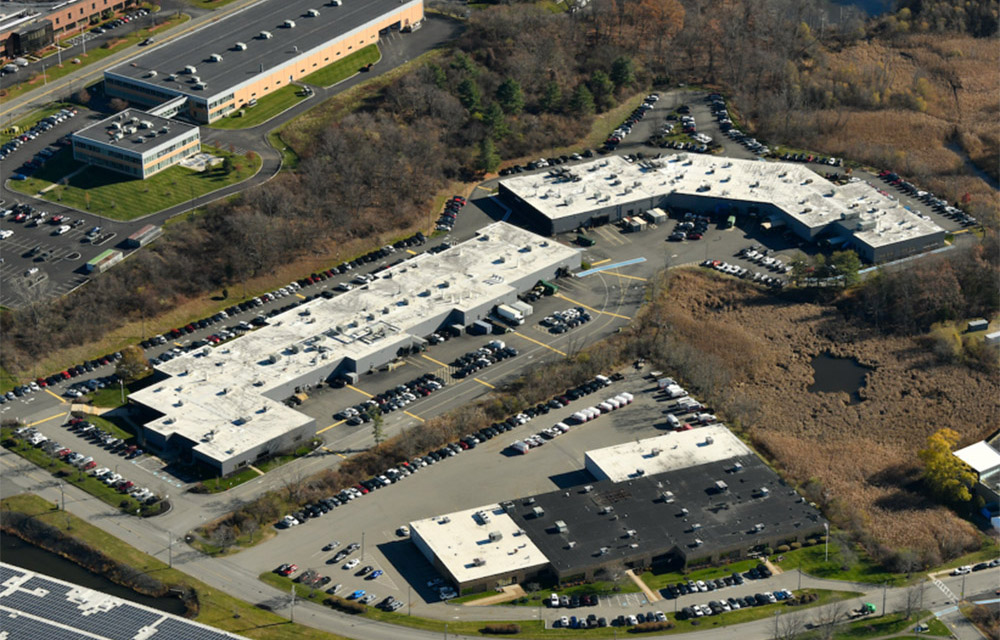
Northwest Bank finances Luzern Associates’ $47.75m acquisition
Danvers, MA Northwest Bank provided $34.5 million in financing to support Luzern Associates LLC’s $47.75 million acquisition of the Cherry Hill industrial portfolio, a three-building campus totaling 200,000 s/f.



 (1).gif)


Quick Hits

Columns and Thought Leadership

The focus on price per s/f compared to the comparable sales used in the appraisal report - by Dennis Chanski
Over the past several weeks, I have completed appraisal assignments for private clients. Interestingly, after submitting these appraisals, I received several phone calls – not to question the value, content, or any incorrect information, but rather to discuss the price per s/f compared to the comparable sales used in the report.

Are appraisers on the same page as the assessor? - by Richard Seman
The purpose of this article is to address problematic or confusing issues which may help assessors and appraisers to better understand how to value real estate for tax assessment purposes.

Massachusetts real estate transfers over $1 million face new tax rules as of November 1st - by Daniel Meyer
Attention to owners of real estate in the Commonwealth (and the title companies and other professionals who advise them), the Massachusetts Department of Revenue (the “DOR”) recently adopted a new “millionaire’s tax” via 830 CMR 62B.2.4

Reverse exchanges and the challenges of a competitive real estate market - by Michele Fitzpatrick
Our current, highly competitive real estate market poses specific challenges for investors who are considering taking advantage of a tax-deferred 1031 exchange. In this market, investors will have no problem selling their current property if priced properly, but they may find it difficult to find a suitable replacement property
