


 (1).gif)
News:
Finance
Posted: May 8, 2026
Greystone provides $215.5 million in HUD financing for Care New England Health System in R.I.
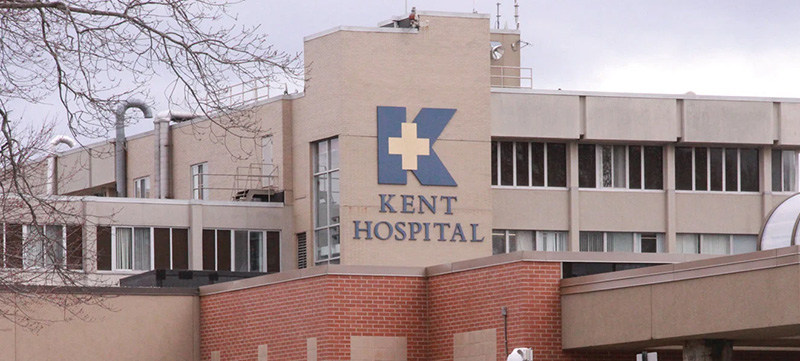
Warwick, RI Greystone has provided a $215.5 million FHA 242 GNMA financing for Care New England Health System (CNE). CNE was advised by Cornerstone Health Advisors LLC and the transaction was originated by Greystone managing director Brett Southworth.
CNE operates a three-hospital system totaling 749 beds across the state. Loan proceeds will be used to refinance CNE’s existing Series 2016B & C bonds and fund renovations and new construction projects — including ambulatory facilities at Kent Hospital and renovations at Women & Infants Hospital.
The transaction is one of the largest FHA 242 loans in the program and features a first-of-its-kind co-borrower structure designed to preserve CNE’s existing obligated group, similar to structures commonly used in traditional markets.
“We are thrilled that we were able to execute a financing that will help further the growth of Care New England,” said Southworth. “This transaction underscores Greystone’s leadership in healthcare finance and our ability to deliver innovative capital solutions in complex market environments.”
“The HUD structure was perfect for our needs. In traditional markets, CNE was a sub-investment grade credit. HUD insurance allowed CNE to refinance its outstanding debt and access substantial new money that would be expensive in traditional markets, but affordable with HUD insurance. This loan will expand care in Rhode Island and improve our capital structure. We are grateful for the support of our dedicated board, and the teams at HUD, Cornerstone, and Greystone,” said Todd Conklin, executive vice president & CEO of Care New England Health System.
MORE FROM Finance

Berkeley Garbe secures $35.4 million debt financing with MetLife Investment Management
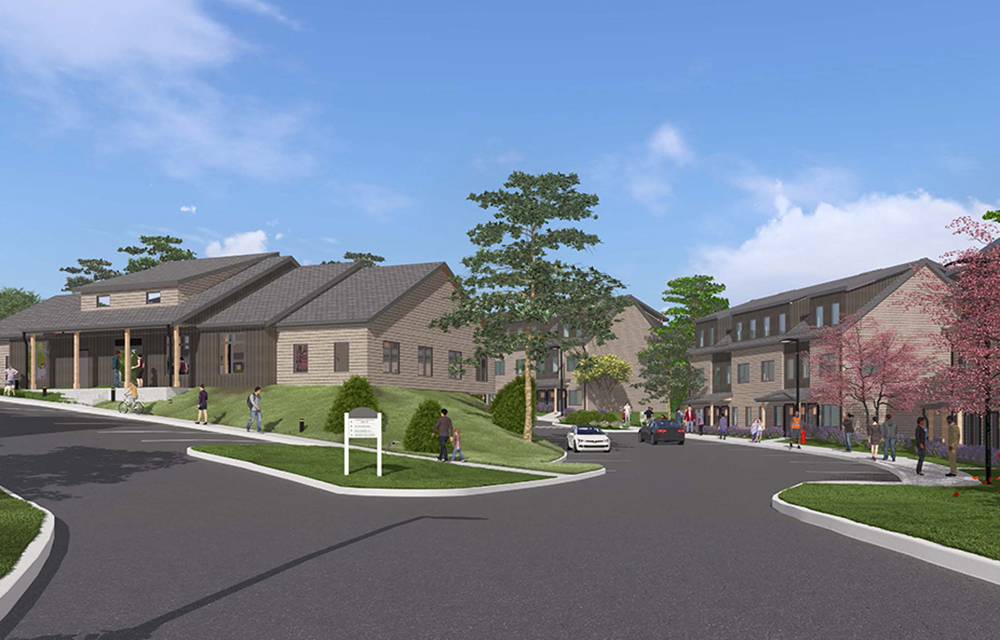
Billerica, MA Berkeley Garbe has secured a $35.4 million financing package for 161 Concord Rd., a new advanced manufacturing and innovation hub that is 30% complete following the start of construction in June. The project is on track to be completed in April 2027.



 (1).gif)


Quick Hits

.png)
Columns and Thought Leadership

Massachusetts real estate transfers over $1 million face new tax rules as of November 1st - by Daniel Meyer
Attention to owners of real estate in the Commonwealth (and the title companies and other professionals who advise them), the Massachusetts Department of Revenue (the “DOR”) recently adopted a new “millionaire’s tax” via 830 CMR 62B.2.4

The focus on price per s/f compared to the comparable sales used in the appraisal report - by Dennis Chanski
Over the past several weeks, I have completed appraisal assignments for private clients. Interestingly, after submitting these appraisals, I received several phone calls – not to question the value, content, or any incorrect information, but rather to discuss the price per s/f compared to the comparable sales used in the report.

Reverse exchanges and the challenges of a competitive real estate market - by Michele Fitzpatrick
Our current, highly competitive real estate market poses specific challenges for investors who are considering taking advantage of a tax-deferred 1031 exchange. In this market, investors will have no problem selling their current property if priced properly, but they may find it difficult to find a suitable replacement property

Are appraisers on the same page as the assessor? - by Richard Seman
The purpose of this article is to address problematic or confusing issues which may help assessors and appraisers to better understand how to value real estate for tax assessment purposes.
