


 (1).gif)
News:
Finance
Posted: February 13, 2026
North Easton Savings Bank welcomes Barbour Corp. as new commercial banking partner

commercial lender, NESB; Matt Pearson, CEO, Barbour; and Mike Casey, president, Barbour.
Brockton, MA According to North Easton Savings Bank (NESB) a cornerstone of New England’s manufacturing industry, Barbour Corp., has chosen NESB as their new financial partner and bank.
Barbour Corp. is a privately held, family-owned manufacturer with over 130 years of market defining production and operations. Barbour is a reminder that advanced, specialized manufacturing continues to thrive in Southeastern Massachusetts: supporting skilled jobs, vendor networks, and the kind of durable know-how that keeps regional industry competitive.
Founded in 1892 (originally known as the Brockton Rand Co.), Barbour’s story is deeply woven into the region’s manufacturing heritage; growing from leather shoe components into an industry innovator known for its welting, including patented advancements that helped power the growth of the U.S. shoe industry in the last century.
Over the years, Barbour evolved with the industry, incorporating plastics as an alternative to leather welting. expansion and innovation continued over the following decades led to Barbour Plastics now offering the most extensive line of extruded moldings, trims, and components for the boat-building industry. In addition to their success with marine OEMs, Barbour is also a leader in servicing the refrigeration, environmental, furniture, and international footwear industries.
“Innovation has always been central to the company’s success, from our earliest advancements in footwear components to the diverse custom fabrication solutions we deliver today,” stated Matt Pearson, CEO of Barbour Corporation. “Partnering with North Easton Savings Bank allows us to work with a financial institution that shares our long-term perspective, understands manufacturing, and values the stability of enduring partnerships.”
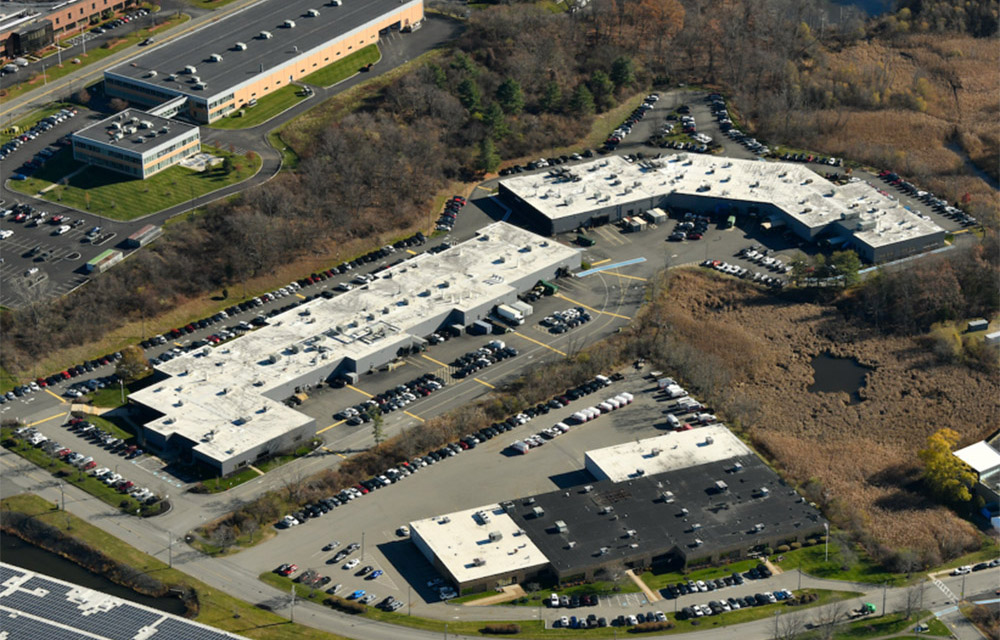
To put over a century of know-how into action, the company operates a 127,000 s/f facility in Brockton and an additional 60,000 s/f site in Atlanta, Georgia. With the backing of strong leadership, a seasoned workforce, and specialized in-house tooling, Barbour enjoys a significant competitive advantage in their marketplace.
“Barbour Corporation represents the very best of what we want to champion as a community bank: a company with deep roots, world-class expertise, and a commitment to building and making things right here in our region of New England,” said Cate Adams, Chief Commercial Banking Officer of NESB. “On our end, Brett Meader (SVP, Commercial Banking) led the way in earning this new relationship and we’re incredibly proud to now be Barbour’s financial partner. The Bank is looking forward to supporting their next chapter of excellence.”
Tags:
Finance
Massachusetts
MORE FROM Finance

What if you can’t find a replacement property in time for your 1031 exchange? - by Dwight Kay
The 1031 exchange is potentially one of the most powerful wealth-building tools in real estate. It allows investors to sell a property, defer capital gains taxes, and roll every dollar of equity into a new, like-kind asset. Simple enough on


 (1).gif)



.png)
Columns and Thought Leadership

Massachusetts real estate transfers over $1 million face new tax rules as of November 1st - by Daniel Meyer
Attention to owners of real estate in the Commonwealth (and the title companies and other professionals who advise them), the Massachusetts Department of Revenue (the “DOR”) recently adopted a new “millionaire’s tax” via 830 CMR 62B.2.4

The focus on price per s/f compared to the comparable sales used in the appraisal report - by Dennis Chanski
Over the past several weeks, I have completed appraisal assignments for private clients. Interestingly, after submitting these appraisals, I received several phone calls – not to question the value, content, or any incorrect information, but rather to discuss the price per s/f compared to the comparable sales used in the report.

Reverse exchanges and the challenges of a competitive real estate market - by Michele Fitzpatrick
Our current, highly competitive real estate market poses specific challenges for investors who are considering taking advantage of a tax-deferred 1031 exchange. In this market, investors will have no problem selling their current property if priced properly, but they may find it difficult to find a suitable replacement property

Are appraisers on the same page as the assessor? - by Richard Seman
The purpose of this article is to address problematic or confusing issues which may help assessors and appraisers to better understand how to value real estate for tax assessment purposes.
