
Shawmut advances construction on American Repertory Theater’s new home with integration of reclaimed materials
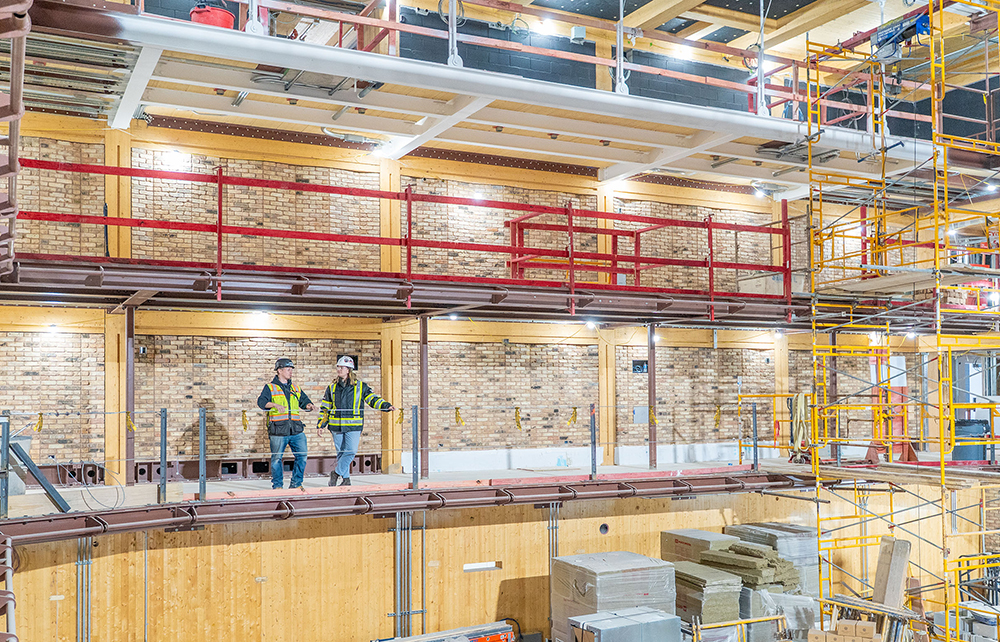
Cambridge, MA Shawmut Design and Construction continues construction on the new home of the American Repertory Theater at Harvard University, with the integration of reclaimed materials as part of David E. and Stacey L. Goel Center for Creativity & Performance’s regenerative design strategy.
Reclaimed brick is a cornerstone of the Goel Center’s regenerative design framework to shift from simply minimizing damage to actively doing good by giving more back to its community, ecosystem, and occupants than it takes across its lifespan. Approximately 190 tons of light-colored Chicago Common Brick was reclaimed for the Goel Center’s construction to support the project’s aim to lower its overall embodied carbon impact.
A signature red brick from Harvard Square’s historic “Pit” – presented to A.R.T. by the Harvard Square Business Association as its 2026 Cornerstone Award – will be installed among bricks salvaged from two residential buildings in Chicago’s West Pullman neighborhood that were slated for demolition. The reclaimed brick is being installed on the interior walls of the center’s west and east stages, public lobby, circulation walkways, and gathering areas.
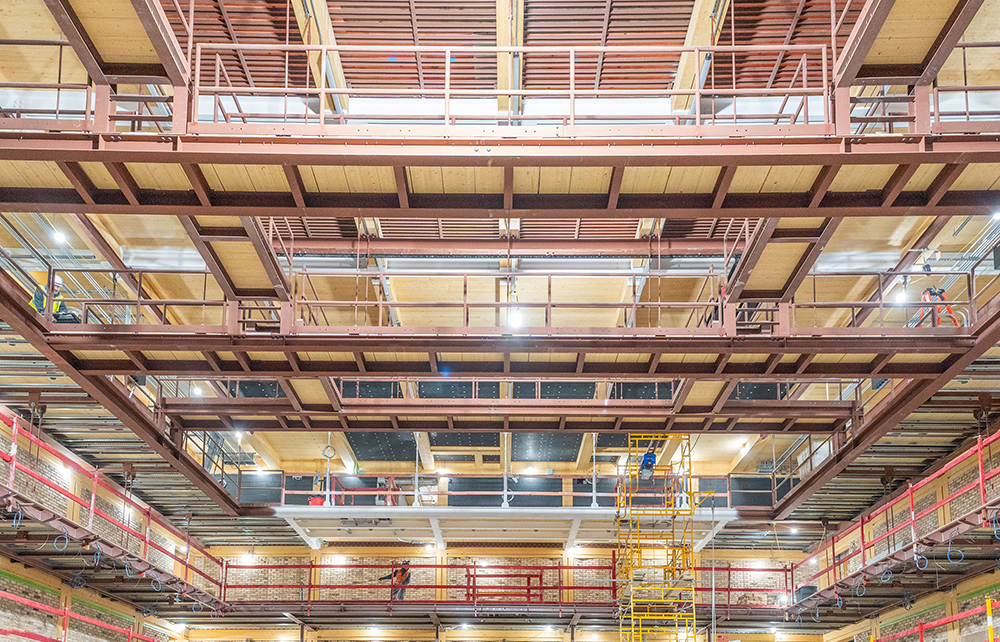
As construction manager, Shawmut Design and Construction is overseeing the integration of reclaimed materials alongside other low-carbon building strategies. The project incorporates a range of design and construction approaches, including a mass timber structural system, responsibly sourced materials, natural ventilation, and connection to Harvard’s lower-carbon district energy infrastructure—contributing to a holistic strategy to reduce both embodied and operational carbon.
Designed by Haworth Tompkins (architect and design lead) and ARC/Architectural Resources Cambridge (architect of record), in collaboration with Charcoalblue, the project reflects a highly coordinated effort to deliver a next-generation performing arts facility rooted in sustainability and adaptability. A blend of peer consultation and scientific contributions from across Harvard University informed a rigorous design process. Members of The Harvard Healthy Buildings Academy, the Harvard Office for Sustainability, the Harvard T. H. Chan School of Health, the Arnold Arboretum, and the Harvard Graduate School of Design each contributed to the project.
Conceived through core principles of openness, artistic flexibility, collaboration, sustainability, and regenerative design, the Goel Center will provide interconnected, adaptable, multi-use spaces that support creativity and embrace future change. It will include two flexible performance venues – one seating 700 where large-scale productions will be produced, and a versatile and intimate 300-seat black box – light-filled rehearsal studios and teaching spaces, a spacious public lobby, a modest café, and an outdoor performance yard to host ticketed and free programming. The building will also include dressing rooms, technical shops, and administrative offices. Construction of the David E. and Stacey L. Goel Center for Creativity & Performance will continue through fall 2026, and A.R.T. plans to welcome audiences in early 2027.