
Chapman Construction/Design completes renovations to Mass Audubon’s Wildlife Center
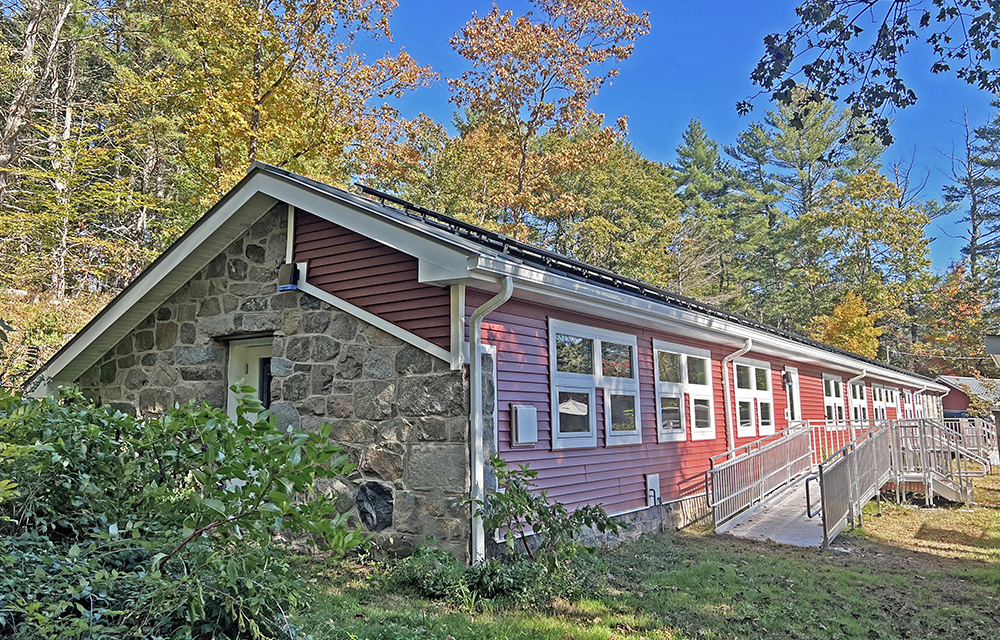
Lincoln, MA Chapman Construction/Design has completed renovations to Mass Audubon’s Wildlife Care Center building at Drumlin Farm Wildlife Sanctuary. The 1950s-era structure, which supports the critical work of Drumlin Farm’s wildlife and education teams, required extensive upgrades to modernize the facility into a fully electric, high-performance space while maintaining its essential operations. The building serves as a private, behind-the-scenes hub for animal care and is not open to the public.
Recognizing that the facility needed a major overhaul but faced tight budget and schedule constraints, the team saw an opportunity to demonstrate what they call “scrappy high performance,” proving that sustainability, durability, and efficiency are achievable even on a modest budget. Chapman developed a plan to significantly modernize the structure as a fully electric, high-performance, and sustainable building that met Mass Audubon’s goals.
The team was able to preserve and reuse significant portions of the original structure while integrating high efficiency mechanical, electrical, and plumbing systems, triple glazed windows, and ZIP System R-sheathing to greatly improve air tightness and overall building performance. Blower door testing verified an air tightness of 0.07 CFM/ft² at 75 Pa, surpassing the PHIUS certification threshold of 0.08 CFM/ft² at 75 Pa for this building type, an impressive result that underscores the quality of the building envelope and air sealing work.
The Chapman team also addressed site drainage challenges by managing bulk water through weather-resistive barriers and flashings, adding gutters and downspouts, regrading, and installing ground gutters to direct water away from the stone foundation. HVAC systems were selected for both energy efficiency and occupant comfort, supporting the needs of staff and animals alike. The all-electric heating system and adjustable-spectrum lighting with custom wavelength settings were chosen to promote wildlife health and well-being.
Beyond the structure itself, Chapman worked hard to introduce circularity into the project, reusing deconstructed components and salvaged materials from other buildings. Donated millwork was installed in the Wildlife Care Center, reducing landfill waste, saving Mass Audubon money, and avoiding the embodied carbon associated with new materials.
Chapman also incorporated repurposed office partitions, tables, chairs, and stainless steel sinks, which were reused both in the Wildlife Care building and elsewhere across the Drumlin Farm campus.
“The Chapman team not only addressed the critical improvements needed for the Wildlife Care facility to support daily operations and animal care but also went above and beyond to introduce new levels of sustainability, enhancing our energy efficiency and the health of both employees and animals, all while working within a tight budget,” said Liz Stetson, senior director of capital assets & planning, Mass Audubon. “We are grateful for their partnership and their willingness to help us find innovative ways to achieve our goals for this mission-critical facility.”
Drumlin Farm is home to 69 wildlife “ambassadors,” representing 44 species native to Massachusetts, including birds, mammals, reptiles, amphibians, and insects. These ambassadors are considered “non-releasable,” meaning their injuries or human-habituated experiences make it impossible for them to survive independently in the wild. As the central facility responsible for their continued health and well-being, the Wildcare Care Center is an integral part of Drumlin Farm’s outreach and education mission.