
.jpg)
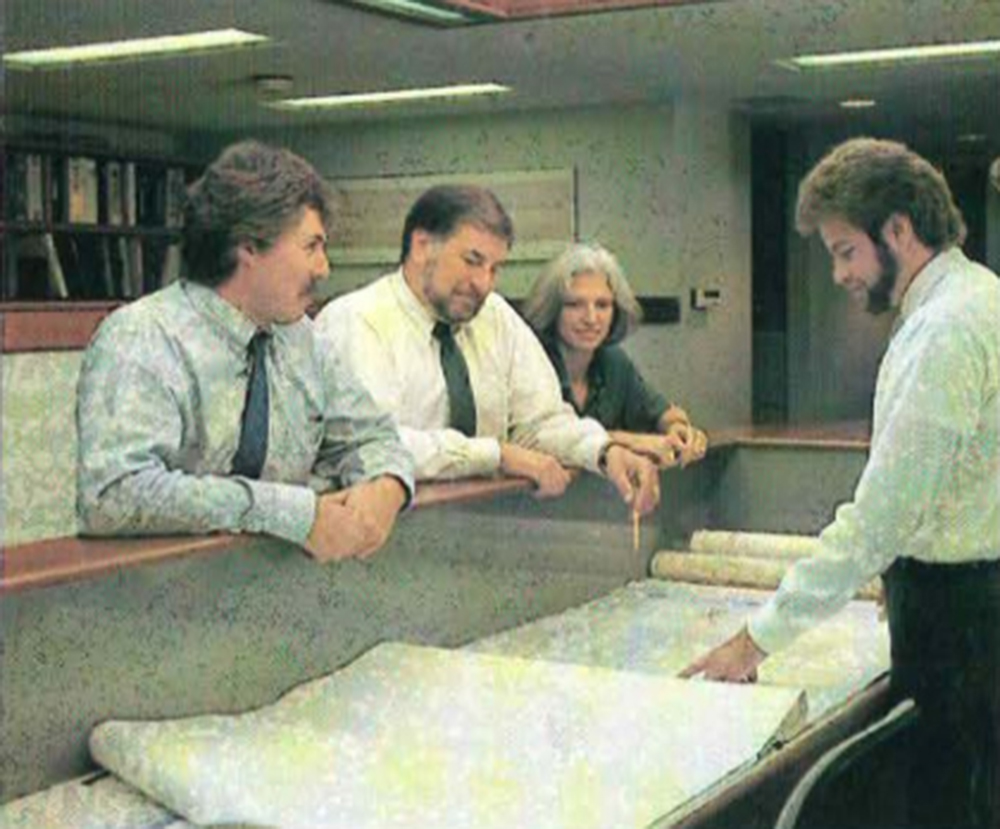
Brookline, MA When Ken and Cathy Kaplan started Kaplan Construction in 1976, the company was about as far from a 50-year-old construction firm as it could be. There was a table saw, a used filing cabinet, and a third bedroom in their Brookline apartment, which served as the company office for the first two years. One of Kaplan’s earliest projects was for a local cheese shop, where the company received part of its payment in cash and the rest in goods from the store’s inventory. It was a modest beginning, but it established something that would remain central to Kaplan for the next five decades: a willingness to make things work and a personal connection to its clients.
As the company began to grow, so did its need for space. There were some big changes – moves to a couple of different rented office spaces and the purchase of Kaplan’s first computer, an early sign of just how much the tools of the construction business would change over the decades ahead. By 1986, Kaplan was ready to put down more permanent roots. The company purchased and renovated 116 Harvard St. in Brookline, establishing the headquarters it still occupies today. The address has remained the same for more than 40 years, even as nearly everything around it – the company, its projects, and the construction industry itself – has continued to evolve.
Kaplan’s early work mirrored the Boston area itself: historic rehabilitations, multi-family housing, and commercial spaces. Projects such as the Henderson Carriage Building in Cambridge and the Exeter Street Theatre in Boston helped establish Kaplan’s early reputation for historic rehabilitation and adaptive reuse.

It was also a time when Kaplan was small enough that everyone knew everyone, and when the distinction between “office” and “job site” was considerably less defined. That close-knit feeling never went away, and it became particularly important during difficult economic periods. Rather than simply shrinking the workforce, Kaplan’s employees found ways to stay together, sometimes adjusting schedules and compensation while continuing to develop their skills and certifications. Some of those employees are still with Kaplan today, with several surpassing 20, 30, and even 40 years of tenure. That kind of longevity has become one of the more recognizable threads running through the company’s history.
The company gradually expanded beyond its early residential and commercial work into increasingly complex institutional, academic, healthcare, life science, and house of worship projects. Along the way, construction tools and building technology evolved, buildings became more sophisticated, and the expectations placed on construction teams grew with them.
For much of its history, the company operated with two project managers. In 2013, Kaplan hired its first female project manager. At the same time, Ken and Cathy were preparing for the company’s next chapter, putting into motion a succession plan that had been years in the making. Their daughter, Jane Kaplan Peck, and her husband, Nathan Peck, both project managers at Kaplan, had gained experience outside of Kaplan before joining the family business. Today, Jane serves as chief operating officer and Nate as president. Under their leadership, Kaplan has integrated new technologies, earned its Women Business Enterprise (WBE) certification, added dedicated operations and scheduling managers, tripled its project management staff, and been named a Best Place to Work by the Boston Business Journal four times.
Over the years, Kaplan has celebrated milestone projects such as Washington Mill Lofts in Lawrence. The adaptive reuse of the historic mill into housing was a much larger expression of work Kaplan had been doing since its earliest decades: taking an existing building, preserving its distinctive features, and adapting it to meet an entirely new purpose. The evolution continued with 2147 Washington St. in Roxbury, one of the largest projects in Kaplan’s history. The nearly 100,000 s/f mixed-use development represented years of preconstruction, pricing, and value analysis before construction began and reflected increasingly ambitious sustainability goals in the industry. Built to PHIUS Passive House standards and designed to achieve LEED Silver certification, 2147 Washington St. illustrates just how far the technical demands of Kaplan’s work have progressed over five decades.
For all the geographic growth and increasingly complex work, Kaplan has never moved far from where it started. Brookline remains home, not only to the company’s headquarters but also to a long list of Kaplan projects, including the Brookline Teen Center, Congregation Kehillath Israel, and Trust Early Learners. Kaplan has also supported local organizations through pro bono construction work and financial contributions, maintaining a connection to the community that has been part of the company’s identity for 50 years.
The small business that once accepted cheese as payment has become a multigenerational company with a portfolio that reflects the changing needs of Greater Boston. And yet, the basic premise has not changed much. “Build carefully,” says Nathan Peck, president of Kaplan Construction. “Solve problems when they arise. Take care of the people doing the work. Stand behind what gets built.”
As Kaplan celebrates its 50th anniversary, another milestone is close at hand: the company is expected to begin its 1,000th project before the end of the year.
KAPLAN CONSTRUCTION TIMELINE OF COMPANY MILESTONES
1976 Ken and Cathy Kaplan found Kaplan Construction and completed their first project, a local wine and cheese shop in Brookline
1980s Kaplan gets its start with residential renovations and commercial projects, quickly expanding to tech and healthcare clients
1986 Kaplan establishes its permanent home at 116 Harvard St. in Brookline
1990s Kaplan expands its technical expertise through increasingly specialized healthcare, life science, academic, and house of worship projects
1994 Kaplan becomes a founding member of the ABC Massachusetts Workers’ Compensation Self-Insurance Group (SIG)
1998 Kaplan receives its first ABC STEP Award for safety excellence
2000s Mission-driven work and mixed-income housing become a significant portion of Kaplan’s portfolio
2013 Kaplan hires its first female project manager
2014 Kaplan transitions to its second generation of family ownership, passing the company to Jane Kaplan Peck and Nathan Peck, and becomes certified as a Women Business Enterprise (WBE)
2015 Kaplan is named a BBJ Best Place to Work for the first time
2018 Kaplan further expands its company-wide safety program, including dedicated safety leadership
2026 Kaplan celebrates 50 years of business