



News:
Spotlight Content
Posted: May 16, 2025
ReyCon selected to lead first phase of Jackson Sq. redevelopment project
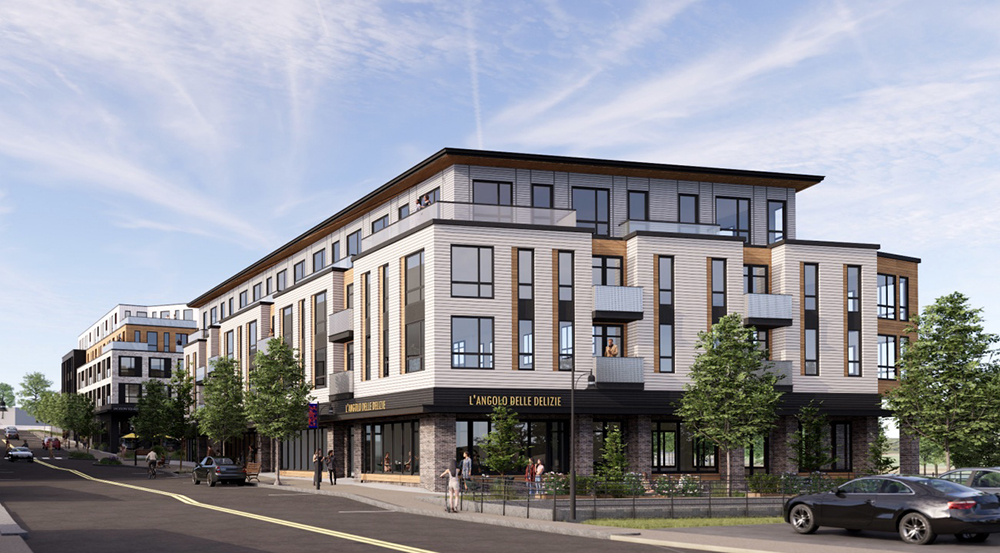
Weymouth, MA ReyCon Construction Management (ReyCon), a full-service construction management firm headquartered in Plymouth, has been selected to oversee the ground-up construction of the transformative Jackson Sq. redevelopment project.
This major redevelopment initiative is being spearheaded by renowned local restaurateur Eric Papachristos. Designed by EMBARC, the project blends the neighborhood’s historical charm with modern architectural elements and sustainable practices, aiming to transform an underutilized commercial area into a vibrant live/work/play destination.
Phase One of the development will introduce 42 new residential units featuring deluxe amenities including a state-of-the-art fitness center, flexible coworking space, multiple lounges, and expansive outdoor green areas. The larger plan calls for the demolition of ten existing structures and the construction of four new mixed-use buildings ranging from four to five stories in height. In total, the project will deliver approximately 200 new residential units – 20 of which will be permanently affordable – alongside 11,000 s/f of commercial space and ample off-street parking.
“This is a wonderful and important project, and ReyCon is honored to be entrusted with bringing it to life,” said Michael Reynolds, president of ReyCon “From our first conversations, we felt a strong working chemistry with Eric – his passion for revitalizing Jackson Sq. is infectious. We’re also thrilled to collaborate once again with the talented team at EMBARC to help realize this bold vision – reimagining the area while preserving Weymouth’s distinctive small-town character.”
Tags:
Spotlight Content
MORE FROM Spotlight Content

New England Real Estate Journal's 2026 Women in Commercial Real Estate Spotlight
NEREJ's Women in CRE Spotlight celebrates the women making an impact across commercial real estate and the companies that recognize, support and champion them.







 (1).gif)
Columns and Thought Leadership

Shallow-bay wins on 495/128: A renewal-driven market with a thin pipeline - by Nate Nickerson
The Boston industrial market entered mid-2025 in a bifurcated state. Large-block vacancy remains elevated, while shallow-bay along the 495/128 corridor continues to prove resilient. Fieldstone’s focus on this geography positions us squarely in the middle of a renewal-driven, supply-constrained

How do we manage our businesses in a climate of uncertainty? - by David O'Sullivan
These are uncertain times for the home building industry. We have the threat of tariffs mixed with high interest rates and lenders nervous about the market. Every professional, whether builder, broker, or architect, asks themselves, how do we manage our business in today’s climate? We all strive not just to succeed, but

As legacy names recalibrate, new entrants are moving in with fresh capital, new technologies, and business models tailored to today’s supply-chain needs - by Michael Harrington
Southern New Hampshire’s industrial market has always punched above its weight. For decades, the region has attracted a mix of advanced manufacturing, beverage and food producers, logistics operators, and specialty

Limited supply fuels landlord‑friendly conditions in Rhode Island’s industrial market - by Julie Freshman and George Paskalis
As we enter the spring of 2026, the Rhode Island industrial real estate market stands on stable footing, following several years of resilience fueled by constrained supply, steady demand, and dynamic economic conditions.
