


 (1).gif)
News:
Finance
Posted: September 10, 2015
The "cap rate" - Insight from an appraiser's perspective
You may hear the term "cap rate" in discussions or articles involving commercial real estate. Even if you already have an understanding of what the term means, here is a little more insight from an appraiser's perspective.
Simply put, a "cap" rate is used to convert income into value. To derive a cap rate directly from the market, all you have to do is take the stabilized net operating income (NOI) of the property at the time it sold, and divide that by the confirmed, cash equivalent sale price. The result is a "cap rate." For those of you with a mathematical inclination, the formula is I ÷ V = R, where I is income; V is value (or price); and R is the rate. Seems simple enough that anyone could do that math, so what's the big deal?
But wait...you did stabilize the income... didn't you? Stabilized income means: "Income at that point in time when abnormalities in supply and demand or any additional transitory conditions cease to exist and the existing conditions are those expected to continue over the economic life of the property; projected income that is subject to change, but has been adjusted to reflect an equivalent, stable annual income." (The Dictionary of Real Estate Appraisal, Fifth Edition, Page 185)
So, just where did you get that property income from? Were you given actual signed leases to review? Is any of the rental income at above or below market rates? (and how would you know?) Were there any significant variations in reported expense items over time? Extraordinary events that impact the amount of income or expense should be questioned. Are you sure that the operating expenses provided to you are current and include all applicable charges for the property?
Some common problems include reliance on outdated expenses for real estate taxes, insurance, and/or utilities - to name but a few. Perhaps even more common is the omission of any "management" expense whatsoever. Don't kid yourself, properties don't manage themselves. Even if you were willing to do such work for free, you are not being fair to the property value or to yourself if you omit such expense item. The same goes for the exclusion of "replacement reserves." These are to fund significant capital expense items that arise at different points in time over a property's economic life, and that are not part of typical repairs and maintenance. OK, so let's assume you have arrived at a stabilized level of NOI. Now, all you have to do is divide that by the confirmed, cash equivalent sale price to get the cap rate.
But wait...you did confirm the sale price... didn't you? The actual price paid may not be what someone told you, or what was reported on the declaration of value form. This document is designed to state what the buyer and seller declare the value of the real estate only was in a given transaction. The price declared may be an allocation only and impacted by related transfer tax implications, and thus not accurately reflect the total consideration paid. Oh yeah, did I mention there was also some owner-financing involved at below market rates and terms? The seller also gave the buyer a credit (refund) at the closing to help with some needed property repairs. You don't suppose these had any impact on the price paid do you
In closing, some market participants throw cap rates around like candy on Halloween. "That property traded at an 8% cap," or "I can't believe that buyer paid a 7% cap rate for that property!" My point is this - whatever the reported cap rate appears to be on the surface, applying that rate to the wrong income is also just as wrong. It also does not mean that all seemingly similar properties should now trade at that same cap rate. In order to derive and/or apply a reliable cap rate from the market, one should take the time and effort to understand, verify, and stabilize the appropriate levels of both income and expense for the property to be valued.
Mark Plourde, MAI is the managing partner of Maine Valuation Company, Gorham, ME.
MORE FROM Finance
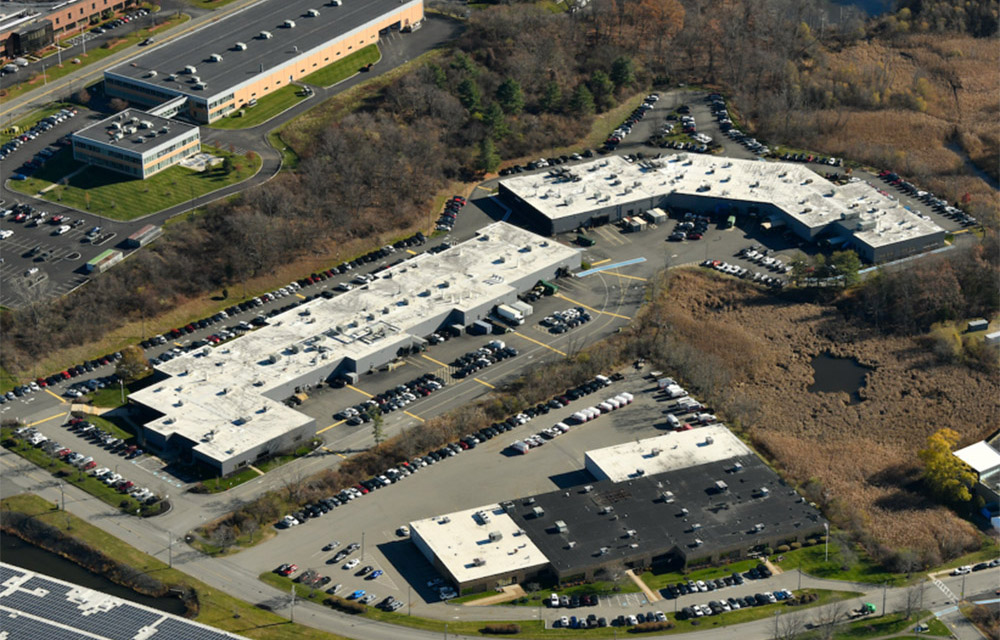
Northwest Bank finances Luzern Associates’ $47.75m acquisition
Danvers, MA Northwest Bank provided $34.5 million in financing to support Luzern Associates LLC’s $47.75 million acquisition of the Cherry Hill industrial portfolio, a three-building campus totaling 200,000 s/f.




 (1).gif)



.png)
Columns and Thought Leadership

Massachusetts real estate transfers over $1 million face new tax rules as of November 1st - by Daniel Meyer
Attention to owners of real estate in the Commonwealth (and the title companies and other professionals who advise them), the Massachusetts Department of Revenue (the “DOR”) recently adopted a new “millionaire’s tax” via 830 CMR 62B.2.4

Reverse exchanges and the challenges of a competitive real estate market - by Michele Fitzpatrick
Our current, highly competitive real estate market poses specific challenges for investors who are considering taking advantage of a tax-deferred 1031 exchange. In this market, investors will have no problem selling their current property if priced properly, but they may find it difficult to find a suitable replacement property

The focus on price per s/f compared to the comparable sales used in the appraisal report - by Dennis Chanski
Over the past several weeks, I have completed appraisal assignments for private clients. Interestingly, after submitting these appraisals, I received several phone calls – not to question the value, content, or any incorrect information, but rather to discuss the price per s/f compared to the comparable sales used in the report.

Are appraisers on the same page as the assessor? - by Richard Seman
The purpose of this article is to address problematic or confusing issues which may help assessors and appraisers to better understand how to value real estate for tax assessment purposes.
