


 (1).gif)
News:
Finance
Posted: January 16, 2026
The impact of income limit changes in Connecticut - by Brian Royce

The U.S. Department of Housing and Urban Development (HUD) implemented geographic area definitions as determined by the Office of Management and Budget for the 2025 income limits. While most of the geographic area definitions had minimal impact on income limits nationally, there were significant changes in the State Connecticut that will have an impact for an extended period.
The State of Connecticut officially abolished its county governments in 1960, transitioning them from political entities to purely geographical regions, with functions like courts, jails, and liquor licenses absorbed by state or local governments. Instead, Connecticut has 169 municipalities and uses nine planning regions (Councils of Governments or COGs) as county-equivalents for federal and statistical purposes, handling planning, economic development, and shared services, but these are not traditional governments. In 2019 the State of Connecticut recommended to the federal government that the federal government recognize nine regional councils to replace the previous eight counties. This was approved by the U.S. Census Bureau in 2022 and implemented by HUD in 2025.
HUD’s implementation of redefined geographic areas in Connecticut directly impacts the calculation and application of Area Median Income (AMI), the midpoint income for a specific geographic area, determined annually by HUD, representing the income level where half of the households earn more and half earn less. Connecticut’s planning regions do not line up exactly with the old counties. Each region is made up of a group of towns, and some of those towns used to belong to different counties. For example, the Naugatuck Valley Planning Region includes towns that were once part of either New Haven County or Litchfield County. The goal is to provide more accurate income data for specific housing markets, better addressing local needs.
In addition to the nine planning regions, there are also metropolitan statistical areas (MSAs) that cover multiple planning regions. HUD typically publishes income limits on an MSA basis for metropolitan areas and a county basis for non-metropolitan areas. In certain cases; however, HUD will divide an MSA into a smaller area for their calculation purposes called HUD Metropolitan Fair Market Rent Areas (HMFAs). Connecticut has four MSAs and two non-metro planning areas.
If HUD published income limits on a county basis for non-metropolitan and an MSA basis for metropolitan – there would be six income limit areas for 2025. HUD has published income limits for 42 areas for 2025. This large number of areas is mainly caused by HUD’s application of their caps and floors. HUD’s caps and floors limit how much income limits for an area can increase or decrease in a given year. The caps and floors come into play when a town is in a different area from 2024 to 2025. If a town moves to a lower income area, the town may have a large decrease in its income limit, which would directly impact the maximum allowable rents a landlord is able to collect at properties with income restrictions, thereby reducing the property’s income potential.
For example, the City of Shelton was recategorized from the Bridgeport, CT Metro Area to the Naugatuck Valley Planning Region, which resulted in a drop in AMI from $117,100 to $110,000 from 2024 to 2025, a decrease of approximately 6.0%. Calculating the maximum allowable two-bedroom rent at 60% AMI and utilizing an estimated monthly utility allowance of $250 yields a lower monthly rent by $75± per unit month or $900 per unit year in 2025 as compared to 2024. For a 100-unit property, this results in a reduction in annual income of $90,000, which could impact debt service coverage and limit funds available for capital repairs. If we were to utilize a 6.0% capitalization rate on the resulting lower net operating income, this results in a drop in market value of $1.5 million, which impacts ownership’s return on their investment and limits borrowing potential.
It appears that the Stamford – Norwalk – Greenwich HUD metro area, particularly Greenwich, saw the most significant drop in HUD Area Median Income (AMI) in Connecticut from 2024 to 2025. HUD expanded the geographic boundaries of this metro area, which reduced the median income levels. To compensate, local boards in Greenwich effectively re-based the HUD AMI benchmark to 150% of the State Median Income instead of the higher-published HUD AMI, because the new HUD-calculated AMI was significantly lower – dropping from approximately $180,500 in 2024. It is likely that other impacted municipalities will explore similar action to limit the negative impact of decreasing AMIs.
It is worth noting that existing projects financed through Low Income Housing Tax Credits (LIHTC) are regulated under HUD’s Multifamily Tax Subsidy Project (MTSP) Income Limits, which include a Hold-Harmless provision from the Housing and Economic Recovery Act of 2008 (HERA). This policy prevents any reduction to income and rent limits for properties already in service – even if the regional AMI declines. Nonetheless, newer developments, or those yet to be placed in service, must build to the current MTSP limits, which may be lower in certain exception areas.
Section 8 properties rely on Section 8 Income Limits tied to 50% of Area Median Income (AMI), not the MTSP or HERA-adjusted limits used for LIHTC. Therefore, Section 8 limits do not include hold-harmless protections, so when AMI decreases, income eligibility thresholds fall accordingly. As a result, maximum qualifying income for voucher applicants dropped, potentially removing eligibility for families near previous thresholds.
In areas of CT where the applicable AMI dropped notably, developers of 8-30g (Connecticut General Statute 8-30g, the state’s Affordable Housing Land Use Appeals Procedure) and inclusionary zoning projects may be forced to reduce the scope of their proposed projects in response to reduced income potential associated with income-restricted units. Developers must recalculate the required number of affordable units based on new, lower AMI benchmarks. This often forces creation of smaller total unit counts or shifting to deeper affordability levels to comply with zoning and subsidy requirements. Further, they may need to reconsider capital stacks – including tax credits, debt, and equity – to offset lower rent ceilings. These considerations may lead developers to favor locations within the state that are unaffected by AMI decreases in order to maintain higher revenue potential.
Connecticut is already facing a severe shortage of affordable housing. According to the Connecticut Housing Finance Authority (CHFA), there is a shortage of approximately 93,000 units for low-income individuals within the State of Connecticut. The decrease in AMI has the potential to expand the existing undersupply by further tightening income thresholds and reducing developer confidence and/or ability to deliver financially viable projects in lower-income markets.
While the changing AMI landscape poses challenges in Connecticut, it also highlights an urgent need for stronger municipal policy coordination (e.g., zoning reform, localized income indexing), expanded state gap financing and other incentive tools for developers and operators and greater alignment with economic development objectives to support workforce housing.
The interaction of lowered AMI thresholds, strained supply, public policy and evolving finance dynamics will define Connecticut’s affordable housing environment in the years ahead.
Brian Royce, MAI, MRICS, is Executive Director, Valuation & Advisory at Cushman & Wakefield, Stamford, Conn.
MORE FROM Finance
Northwest Bank finances Luzern Associates’ $47.75m acquisition
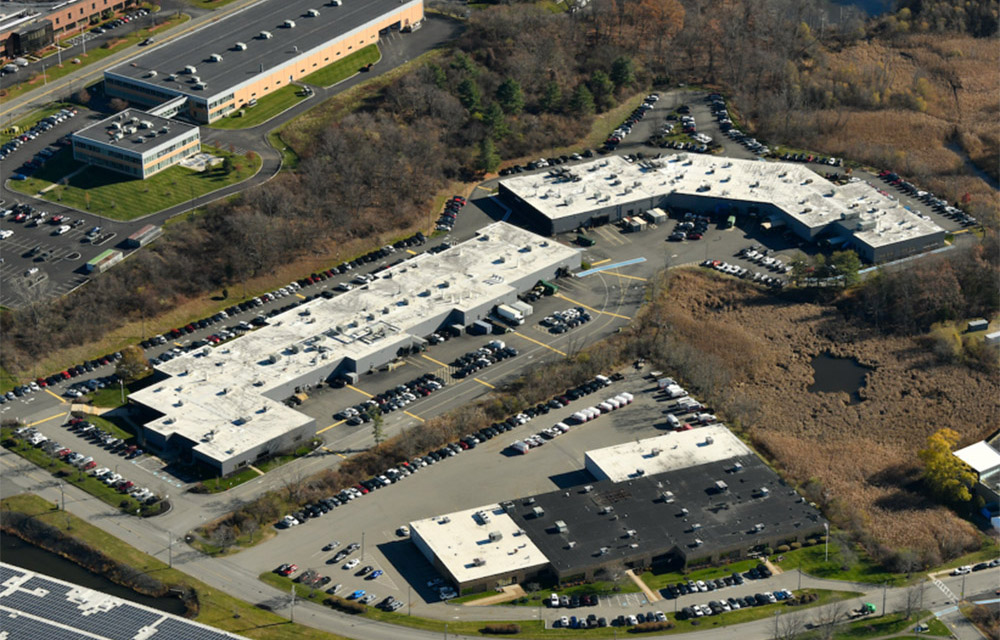
Danvers, MA Northwest Bank provided $34.5 million in financing to support Luzern Associates LLC’s $47.75 million acquisition of the Cherry Hill industrial portfolio, a three-building campus totaling 200,000 s/f.




 (1).gif)




Columns and Thought Leadership

Massachusetts real estate transfers over $1 million face new tax rules as of November 1st - by Daniel Meyer
Attention to owners of real estate in the Commonwealth (and the title companies and other professionals who advise them), the Massachusetts Department of Revenue (the “DOR”) recently adopted a new “millionaire’s tax” via 830 CMR 62B.2.4

Reverse exchanges and the challenges of a competitive real estate market - by Michele Fitzpatrick
Our current, highly competitive real estate market poses specific challenges for investors who are considering taking advantage of a tax-deferred 1031 exchange. In this market, investors will have no problem selling their current property if priced properly, but they may find it difficult to find a suitable replacement property

The focus on price per s/f compared to the comparable sales used in the appraisal report - by Dennis Chanski
Over the past several weeks, I have completed appraisal assignments for private clients. Interestingly, after submitting these appraisals, I received several phone calls – not to question the value, content, or any incorrect information, but rather to discuss the price per s/f compared to the comparable sales used in the report.

Are appraisers on the same page as the assessor? - by Richard Seman
The purpose of this article is to address problematic or confusing issues which may help assessors and appraisers to better understand how to value real estate for tax assessment purposes.
