


 (1).gif)
News:
Finance
Posted: September 8, 2017
VRBO or Airbnb: User versus neighbors - by Daniel Calano

If any of you have used rental options such as VRBO or Airbnb, you would probably agree that you had a pleasant, homey experience at a price significantly lower than a hotel, in a vacation area of your choice. A large majority of people, who are now using these hotel alternatives in greater numbers and more frequently across the country, would agree. It is a good thing…unless you are a neighbor or live down the hallway.
Because of the growth in this entrepreneurial business, where property owners are able to make a significant amount of extra income, sometimes tax-free, there is also a growing pushback from neighbors who are not benefitted, and are simply becoming more annoyed. Across the country, from San Francisco to Denver to New York and abroad to Paris, municipalities have started to crack down on these rental programs. Case law is increasing, and since I am not an attorney, I will not dwell on these precedents. However, from a real estate perspective, we should be aware that municipalities, condominium associations, and neighborhood groups are increasingly regulating this rental practice.
VRBO type use of property becomes sticky when some of the typical situations arise:
• When rental use appears to be inconsistent with zoning of the property, for example where short term rentals look more like bed and breakfast or even hotel.
• When non-regulated VRBO situations are more noxious or intense than licensed and regulated bed and breakfast or inns.
• When public safety issues arise such as traffic congestion, difficulty of fire and police access.
• Where building and health codes are not met and unknowledgeable strangers are exposed to unsafe conditions.
• Where co-ops, condo boards, or municipalities have had enough aggravation.
Property owners would argue that people can do what they want with their properties. However, we in real estate know that the “bundle of rights” in property ownership is limited by such things as zoning, building codes, health codes, and an age old covenant known as a grantee’s right to quiet enjoyment of property. This is where neighbors, whether individuals or municipalities, weigh in.
In a recent article by Realtor Magazine, entitled “Airbnb is crashing the neighborhood” the author first points out appropriately that zoning was created in order to separate various types of building and building uses for the mutual benefit of everyone. While the article agrees that people should have the right to rent their homes, it also points out that short term rentals, without owners on premises, can lead to difficult situations for neighbors. They assert “When someone has purchased in a single family zone, they have accepted the rules of zoning. They do not have the right to turn their home into a motel, a restaurant, …”
The issue seems to boil down to the presence of strangers in a neighborhood, turning over frequently as short term rentals or STRs. When residential dwellings are over-utilized as in short term rentals, a type of commercial business is being created, typically creating more traffic, more noise, more public nuisance than was anticipated in the formation of a quiet residential zone.
Though it is all a gray area, and there may not be a single solution, it is clear to this author at least that VRBO creates an economic benefit to a property owner at the potential expense of neighbors, neighborhoods, and municipalities who never anticipated the level and intensity of use being created. It is also clear that there can be financial damage foisted upon neighbors through simple things like loss of sleep affecting job proficiency, all the way up the scale to loss of home value when home owners try to sell. There will undoubtedly be more news to come regarding this conflict in the future.
Daniel Calano, CRE, is the managing partner and principal of Prospectus, LLC, Cambridge, Mass.
MORE FROM Finance
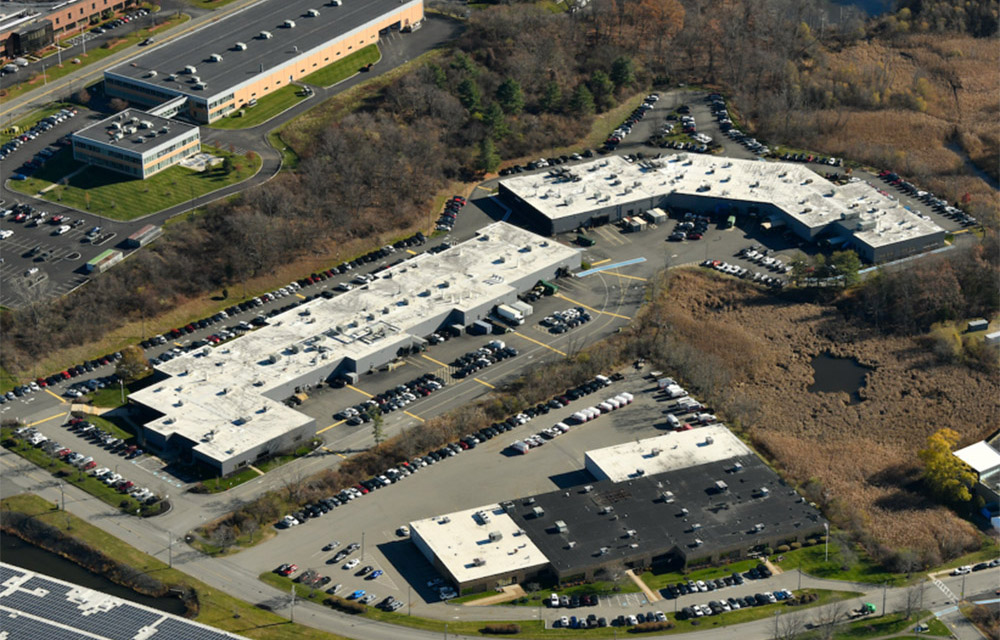
Northwest Bank finances Luzern Associates’ $47.75m acquisition
Danvers, MA Northwest Bank provided $34.5 million in financing to support Luzern Associates LLC’s $47.75 million acquisition of the Cherry Hill industrial portfolio, a three-building campus totaling 200,000 s/f.



 (1).gif)


Quick Hits

.png)
Columns and Thought Leadership

The focus on price per s/f compared to the comparable sales used in the appraisal report - by Dennis Chanski
Over the past several weeks, I have completed appraisal assignments for private clients. Interestingly, after submitting these appraisals, I received several phone calls – not to question the value, content, or any incorrect information, but rather to discuss the price per s/f compared to the comparable sales used in the report.

Massachusetts real estate transfers over $1 million face new tax rules as of November 1st - by Daniel Meyer
Attention to owners of real estate in the Commonwealth (and the title companies and other professionals who advise them), the Massachusetts Department of Revenue (the “DOR”) recently adopted a new “millionaire’s tax” via 830 CMR 62B.2.4

Reverse exchanges and the challenges of a competitive real estate market - by Michele Fitzpatrick
Our current, highly competitive real estate market poses specific challenges for investors who are considering taking advantage of a tax-deferred 1031 exchange. In this market, investors will have no problem selling their current property if priced properly, but they may find it difficult to find a suitable replacement property

Are appraisers on the same page as the assessor? - by Richard Seman
The purpose of this article is to address problematic or confusing issues which may help assessors and appraisers to better understand how to value real estate for tax assessment purposes.
