


 (1).gif)
News:
Finance
Posted: July 11, 2008
Real estate as an effective hedge against inflation
Real estate has traditionally been an effective hedge against inflation. Because of its limited liquidity, real estate has historically been held for long term investment. The impact of the economic or business cycle on real estate has varied somewhat historically; however, the job dependency of demand for real estate does bind them. The Federal Open Market Committee (FOMC) met on June 24th-25th and voted to maintain target for the federal funds rate at 2%, the pause as expected, because of: the increased upside risks to inflation and inflation expectations; and the expected moderate growth over time resulting from substantial easing of monetary policy and ongoing measures to foster liquidity. The FOMC is worried about inflation but will monitor economic and financial markets to promote economic growth and price stability. Does this mean real estate is a good and timely investment? Yes. Maybe for a lot of reasons.
The recent, cumulative 20% decline in the domestic and a handful of global securities markets are blurring the vision of most investors. This is a major correction and, at a decline of 20% or more, qualifies officially as a bear market. The debt markets continue to carry the burden of the credit crunch which has sidelined many market participants and caused others to pause, which has frustrated pricing and liquidity in a variety of instruments and completely closed some markets. Real estate property markets depend on the capital markets for liquidity and pricing. Capital cycles have become as important to real estate investing as economic cycles and property cycles. The real estate capital market has demonstrated similar characteristics, with lower capital volumes impacting liquidity and pricing in the local property markets.
Increasing commodity prices have driven construction and replacement costs up dramatically in all property and geographic markets. The outlook is for continued gains in commodity pricing, with the possible exception of oil and its derivatives, because of global demand. Real estate is an inflation hedge because the cost of replacement rises over time, and, over time, real estate prices are driven by the cost of replacement. Real estate investors have been using cost methodologies as collateral support for acquisitions throughout the recent period of low-cost capital. Of course, troughs in economic and/or property cycles can temporarily depress properties below replacement costs. Commercial real estate market fundamentals have been strong, with moderate job gains gradually pushing occupancy rates and now rents.
The strength in fundamentals, balanced supply and demand, places most property geographic markets in the recovery and expansion phases of the property cycle in the first quarter of 2008 based Dividend Capital's Cycle Monitor. Exceptions include several retail submarkets and the multifamily/condominium markets in Florida, southern California and Phoenix. Boston property markets are all characterized, in Cycle Monitor, by increasing rents, rising to cover increasing costs, and decreasing vacancies. Locally, new construction is occurring in all property categories in spite of the moderating economy and credit crunch. Vacancies are forecast to stabilize or edge upward without easing rents.
So the economic cycle waves a flat contraction or growth recession. Property markets might weaken while sustaining fundamentals, keeping upward pressure on rents; and inflation can be expected to add upward pressure to costs and operations. These market dynamics were apparent in The Mid-Year Market Roundup on June 24th sponsored by NAIOP and SIOR. When the counselors meet in Boston on October 31st - November 3rd, the program will follow the topical theme of The Revolution in Real Estate - Tea Party or Massacre? ; and we will all have an opportunity reflect pensively on these interesting times.
David Kirk is principal and founder of Kirk & Company, Real Estate Counselors of Boston, Mass.
MORE FROM Finance
Kozlowski of Newmark Capital Markets secures $115.6 million financing for two properties in CT
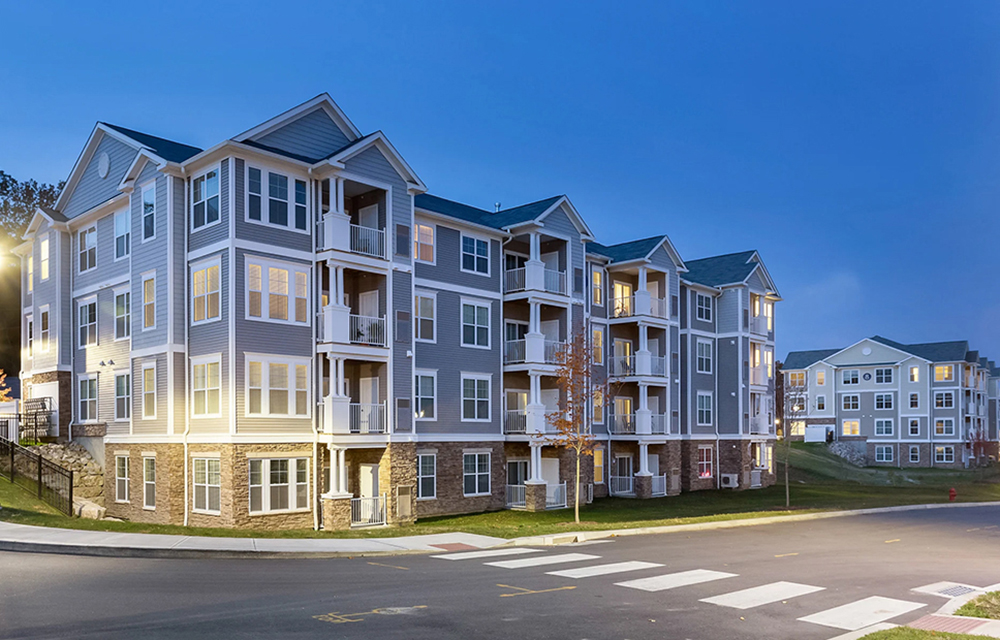
East Lyme, CT Newmark has arranged $115.6 million in financing on behalf of the sponsor to refinance The Cove at Gateway Commons and Sound at Gateway Commons. Newmark Capital Markets Strategies managing director Avi Kozlowski secured the financing through Freddie Mac.



 (1).gif)




Columns and Thought Leadership

Massachusetts real estate transfers over $1 million face new tax rules as of November 1st - by Daniel Meyer
Attention to owners of real estate in the Commonwealth (and the title companies and other professionals who advise them), the Massachusetts Department of Revenue (the “DOR”) recently adopted a new “millionaire’s tax” via 830 CMR 62B.2.4

Are appraisers on the same page as the assessor? - by Richard Seman
The purpose of this article is to address problematic or confusing issues which may help assessors and appraisers to better understand how to value real estate for tax assessment purposes.

The focus on price per s/f compared to the comparable sales used in the appraisal report - by Dennis Chanski
Over the past several weeks, I have completed appraisal assignments for private clients. Interestingly, after submitting these appraisals, I received several phone calls – not to question the value, content, or any incorrect information, but rather to discuss the price per s/f compared to the comparable sales used in the report.

Reverse exchanges and the challenges of a competitive real estate market - by Michele Fitzpatrick
Our current, highly competitive real estate market poses specific challenges for investors who are considering taking advantage of a tax-deferred 1031 exchange. In this market, investors will have no problem selling their current property if priced properly, but they may find it difficult to find a suitable replacement property
