


 (1).gif)
News:
Finance
Posted: August 12, 2010
Sustainability in commercial real estate
Cash and credit in the short term have secured a high priority in collateral analysis for real estate lending. However, sustainability has been used traditionally to underwrite long term investments in commercial real estate. Location is an essential component. The quality and durability of improvements are together another independent component. The suitability or marketability of the combination of the location and improvements determine sustainability. Both supply and demand in commercial real estate have degrees of sustainability.
Location is a dynamic characteristic of commercial real estate. Recycling improved sites and repositioning or adaptive reuse of existing well located improved properties are strategies for recapturing centrality and accessibility in markets where the inventory of sustainable locations appears to be exhausted. Changes in transportation from highway to mass transit including fixed rail and vehicular, and even air, can create newly sustainable locations. Newly developed housing and nodes for services and shopping can enhance the sustainability of locations.
Sustainable development has been used recently to characterize environmentally friendly development. Energy efficiency has always been an objective in development, sometimes compromised by cost objectives. Newly highlighted by environmentally friendly and green initiatives, cost-effective, energy efficiency alternatives have been improved with production and technology and are tested for air quality as well as traditional performance measures. These new alternatives in design, systems and materials are applicable to asset upgrades and repositioning, tenant improvements, and adaptive reuse as well as new development; and LEEDS handbooks for most property types include strategies for a variety of improvements.
The demand characteristics can also be used to define sustainability, such as sustainable performance in terms of occupancy and income. Economists wonder about the sustainability of this recovery, the sustainability of economic growth, the sustainability of job gains. Demand for local commercial real estate is, like supply, examined for sustainable qualities. Healthcare, education, finance and technology have combined to establish a sustainable local economic base. Indeed, the metropolitan Boston economy has outpaced the nation in durability and sustainability. Massachusetts recorded second quarter economic growth of 6.4%, more than double the national GDP of 2.4%. Most economists give our local economy and our commercial real estate portfolio high marks in sustainability. The investment community is demonstrating its confidence in the sustainability of local demand by bidding aggressively for local commercial real estate.
The local marketplace will change during this recession and recovery. Some changes will be superficial or transient, and some will be paradigm shifts. Analyzing these patterns of change as new development emerges, such as downsizing and accessorizing apartments, will be important. Demand will record these changes in absorption and rental patterns. Sustainability will be tested and redefined.
The second quarter of 2010 was in many ways a disappointment in local property markets because of its gradual pace of improvement. However, economic growth for the commonwealth and job growth have further convinced economists of the sustainability of this recovery. The remaining summer still promises to be a busy one for commercial real estate markets. Enjoy!
David Kirk, CRE, MAI., FRICS, is principal and founder of Kirk & Company, Real Estate Counselors of Boston.
MORE FROM Finance
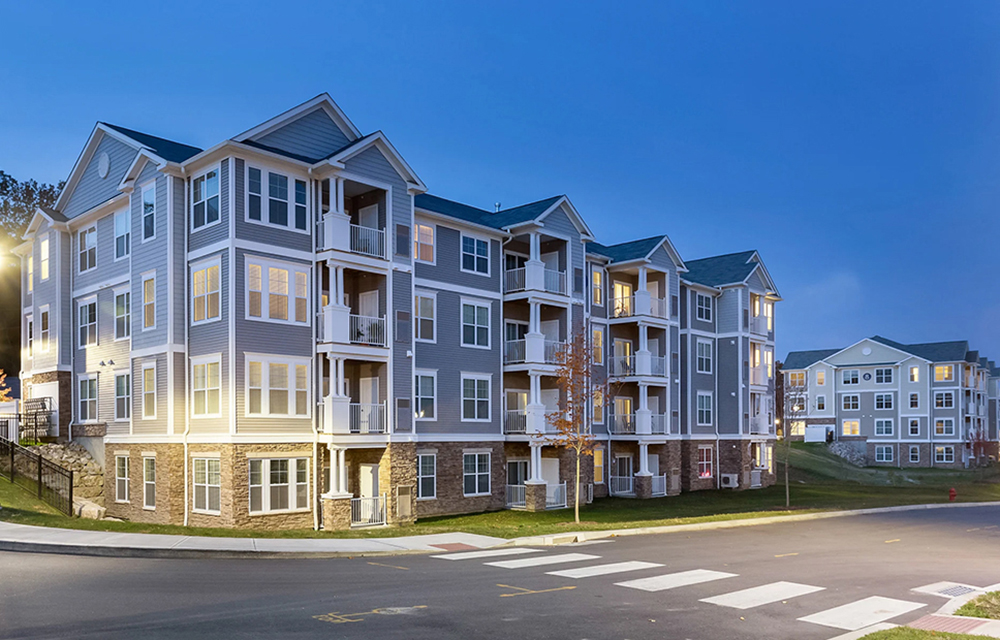
Kozlowski of Newmark Capital Markets secures $115.6 million financing for two properties in CT
East Lyme, CT Newmark has arranged $115.6 million in financing on behalf of the sponsor to refinance The Cove at Gateway Commons and Sound at Gateway Commons. Newmark Capital Markets Strategies managing director Avi Kozlowski secured the financing through Freddie Mac.



 (1).gif)


Quick Hits


Columns and Thought Leadership

The focus on price per s/f compared to the comparable sales used in the appraisal report - by Dennis Chanski
Over the past several weeks, I have completed appraisal assignments for private clients. Interestingly, after submitting these appraisals, I received several phone calls – not to question the value, content, or any incorrect information, but rather to discuss the price per s/f compared to the comparable sales used in the report.

Reverse exchanges and the challenges of a competitive real estate market - by Michele Fitzpatrick
Our current, highly competitive real estate market poses specific challenges for investors who are considering taking advantage of a tax-deferred 1031 exchange. In this market, investors will have no problem selling their current property if priced properly, but they may find it difficult to find a suitable replacement property

Are appraisers on the same page as the assessor? - by Richard Seman
The purpose of this article is to address problematic or confusing issues which may help assessors and appraisers to better understand how to value real estate for tax assessment purposes.

Massachusetts real estate transfers over $1 million face new tax rules as of November 1st - by Daniel Meyer
Attention to owners of real estate in the Commonwealth (and the title companies and other professionals who advise them), the Massachusetts Department of Revenue (the “DOR”) recently adopted a new “millionaire’s tax” via 830 CMR 62B.2.4
