News:
Connecticut
Posted: August 19, 2010
How can BIM make your firm more responsive, accurate and successful?
Building Information Modeling - or BIM - is a hot topic in the construction industry right now. Lately, it seems that every training session, seminar, or panel presentation is about computer-based BIM and its role in the future of construction. But what does it really entail? What are the benefits and what are the drawbacks? How can BIM make your firm more responsive, accurate, and, ultimately, successful?
On the east coast especially, BIM is still in its infancy in terms of broad acceptance and awareness. The process has been around for at least a decade, but it's only now coming to the forefront on local construction projects. Yet, even as knowledge of BIM is growing, there are still many in the industry that have not even heard of it. Many of us are climbing the learning curve together and, as such, it's important to know the challenges and benefits of using BIM.
What is BIM?
BIM is a layered, 3-dimensional, electronic model that represents exactly how the real building will be built in the field - with structual, plumbing, electrical, and HVAC components laid out in precise detail.
Benefits of BIM
One of the major benefits of creating the building electronically first is clash detection. Each subcontractor is responsible for building a single electronic model for his particular trade. Once each trade is done, the individual models are "federated," or combined together, to create a complete model of the building. When that is done, the coordinator can run a clash detection to see if there are any problem areas. For example, if the plumbing subcontractor has laid out piping in the same space as the electrician's conduit, the clash detection will catch that interference and allow for a fix to the plans before it becomes a problem in the field. The ultimate goal of BIM is to create a model that's so accurate and reliable, that there are no field Requests For Information (RFI) during the project because the model eliminated all of the issues beforehand.
Utilizing BIM saves time and money on a project by making the process of building a building more efficient. BIM models weed out problems and issues electronically before construction begins - creating a faster schedule with limited changes throughout.
Everyone involved in the project benefits from that, but there are individual benefits that each team member reaps as well.
* Benefits to the Owner - At the end of the project, the owner receives the completed BIM model, which serves as an electronic as-built. The owners can hyperlink the building's systems to have a real working database of the building, which will help with future maintenance. At the onset of the project, the BIM model also gives the owner a better visual understanding of what the completed structure will look like.
* Benefits to the Subcontractors - Doing the work up front helps subcontractors become faster in the field because the kinks have been worked out beforehand. Also, the accuracy of the BIM model greatly increases their ability to prefabricate, allowing them the flexibility of sending fewer workers to the job site. This yields a more profitable project for them and a faster schedule for all.
* Benefits to the Architect - The federated BIM model will show exactly what the building will look like before it's built, so if the aesthetics on screen don't match the architect's or owner's vision, there is time to fix it before it becomes too costly and time-consuming to the project.
* Benefits to the Construction Manager - For construction managers, the greatest benefit that BIM offers is the ability to avoid Requests for Information and change orders once the project has started. A seamless construction experience with few to no delays because of problems in the field decreases project costs and increases a CM's credibility and trust with the owner and the architect.
Eric Greene is the regional manager of Erland Construction's western region branch office in East Windsor, Conn.
Tags:
Connecticut
MORE FROM Connecticut
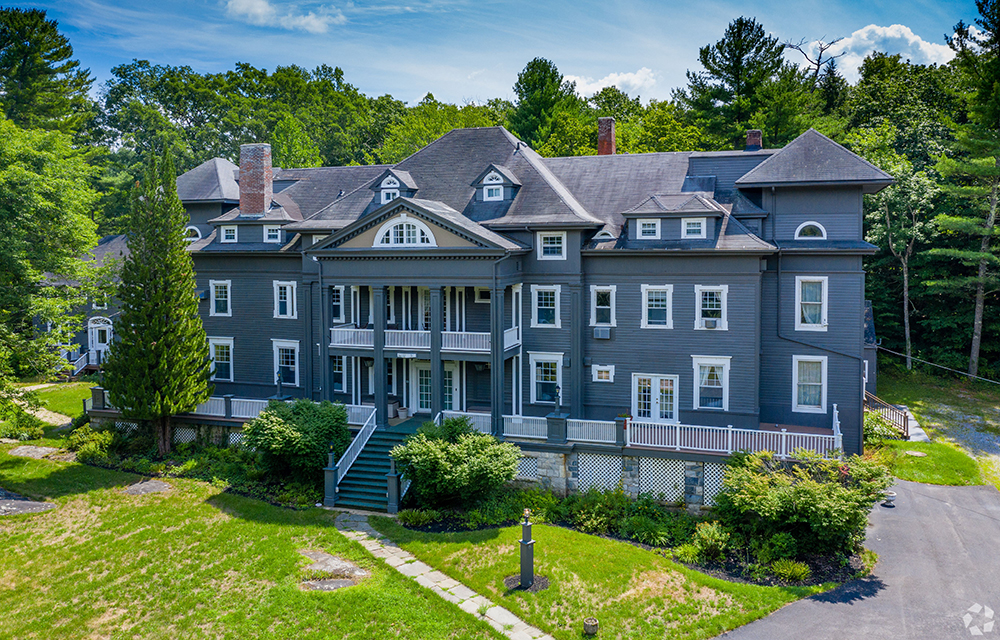
Galton of Houlihan Lawrence sells 15,800 s/f Wake Robin Inn for $3.5m
Lakeville, CT Houlihan Lawrence Commercial, a division of Houlihan Lawrence, a real estate firm serving Connecticut and New York City’s northern suburbs, has brokered the sale for $3.5 million of the Wake Robin Inn, a 15,800 s/f historic inn located on 11.52 acres at 106 Sharon Rd.




Quick Hits