News:
Connecticut
Posted: September 2, 2010
Demystifying PCR probable costs - What are they?
When a bank or other lender evaluates a Property Condition Report (PCR) a key item is "Probable Costs". These are consultants' opinions of likely costs required to remedy material physical deficiencies observed during a property inspection. They do not include routine and normal repairs or improvements. Typically the lender will require a financial mechanism to assure funds are available to correct these deficiencies.
Probable costs are separated into two categories:
* Immediate repairs, replacement and deferred maintenance - critical items for continued use of the property such as code violations or deterioration of a critical feature.
* Capital replacement reserves - items that wear out over time such as a parking lot or HVAC unit.
How are Probable Costs determined?
* They are estimates in terms of both costs and quantity - hence actual costs and quantities may vary.
* Since typically not every aspect of an entire site is observed, a consultant may extrapolate their representative observations to conditions deemed as highly probable.
* Basis of costs include a variety of sources such as standard tables, historical experience, third parties (ex: vendors, contractors, suppliers) and other sources determined appropriate by the consultant.
* Typically the component (ex: roof, HVAC unit, etc.) is not specifically tested, rather an Expected Useful Life (EUL) or Remaining Useful Life (RUL) of the component based on standard accepted life expectancies is utilized.
These opinions of Probable Costs are provided within the PCR by line item along with approximate quantities and units. If in the consultant's reasonable opinion a physical deficiency is too complex or difficult to develop a cost using the quantity and unit method, a lump sum can be applied.
Probable Costs are commensurate with the complexity of the subject property and should not be minor or insignificant items. Typically costs less than $3,000 are omitted from a PCR. However exceptions for more than four separate items each below the $3,000 individual item threshold requirement, but collectively totaling over $10,000, can be included. Additionally life-safety and building code violations should be included regardless of cost.
Opinions of Probable Costs should be limited to construction related costs or those types of costs commonly provided by contractors who would perform the work. Excluded are business related, design, management fees, and other indirect costs.
Particular physical deficiencies or suggested remedies sometimes warrant further study/research, testing and/or design which are outside the scope of a PCR; the cost table should include a line item to provide funding for these additional studies.
In summary Probable Costs are estimated opinions to correct deficiencies that lenders take into consideration when establishing loan terms and conditions.
Bradley Korth, PE is the owner of Korth Engineering, LLC. Marlborough, Conn.
Tags:
Connecticut
MORE FROM Connecticut
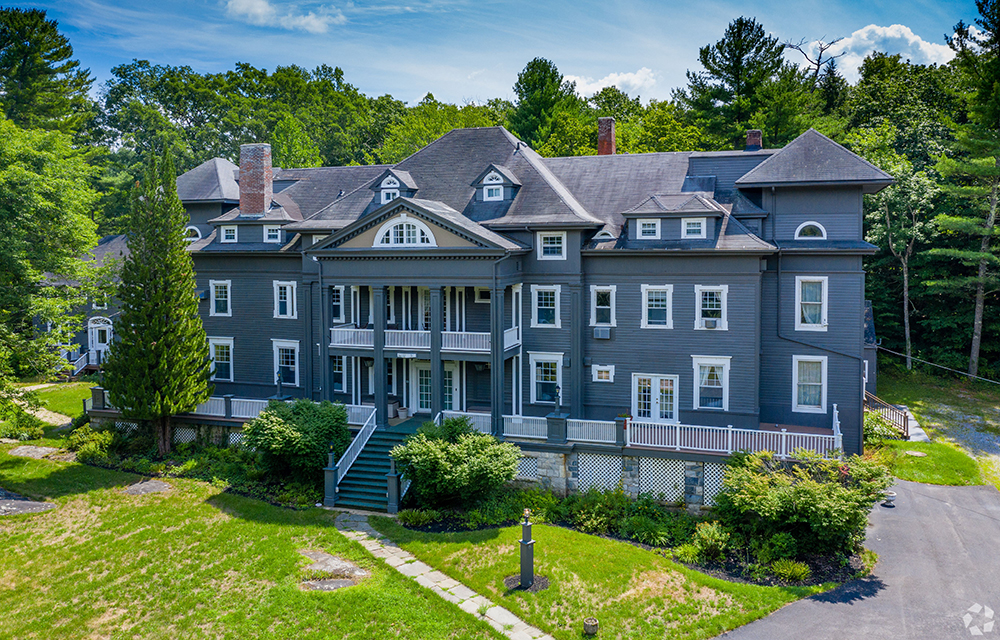
Galton of Houlihan Lawrence sells 15,800 s/f Wake Robin Inn for $3.5m
Lakeville, CT Houlihan Lawrence Commercial, a division of Houlihan Lawrence, a real estate firm serving Connecticut and New York City’s northern suburbs, has brokered the sale for $3.5 million of the Wake Robin Inn, a 15,800 s/f historic inn located on 11.52 acres at 106 Sharon Rd.