



News:
Spotlight Content
Posted: March 31, 2023
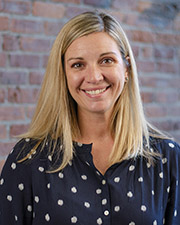
2023 Women in Construction: Flaviane Richard, Dacon Corporation

Project Manager
Dacon Corporation
What was your greatest professional achievement or most notable project in the last 12 months? Every project is exciting and challenging in its own way. However, the most notable project I helped on last year was the Edwards Vacuum facility. It was 135,000 s/f headquarters for semiconductor research and development. The facility recently won first place at the DBIA New England awards for vertical construction. We overcame many challenges including materials delays, workforce shortage, and a record-breaking wet winter. From walking on a complete swamp of mud, to seeing the completed project now, it makes me proud to be part of it and I value the power of teamwork and hard work more each day in this industry.
What made you interested in seeking a career in the AEC industry? The AEC industry envelops you physically and emotionally. There is excitement in creating and being innovative, while also uniting people to achieve the same goal. Every day, I am developing people and being developed myself. I was drawn to the AEC industry by my love for architecture, the art of changing the “old” into the “new,” and the various ways to build and re-build buildings.
Believe me, there is a new challenge every single day and you will never get bored in the construction field.
What tips or advice would you offer to other women who are considering entering the construction industry? My advice to you is: 1) Be knowledgeable in your field. 2) Get confidence in your ability. 3) Find a mentor. 4) Be fast, focused, and/organized. Know your value and never be afraid to say what you want. There is no limit to your growth in the construction field.
Tags:
Spotlight Content
MORE FROM Spotlight Content

New England Real Estate Journal's 2026 Women in Commercial Real Estate Spotlight
NEREJ's Women in CRE Spotlight celebrates the women making an impact across commercial real estate and the companies that recognize, support and champion them.






 (1).gif)
Columns and Thought Leadership

As legacy names recalibrate, new entrants are moving in with fresh capital, new technologies, and business models tailored to today’s supply-chain needs - by Michael Harrington
Southern New Hampshire’s industrial market has always punched above its weight. For decades, the region has attracted a mix of advanced manufacturing, beverage and food producers, logistics operators, and specialty

Shallow-bay wins on 495/128: A renewal-driven market with a thin pipeline - by Nate Nickerson
The Boston industrial market entered mid-2025 in a bifurcated state. Large-block vacancy remains elevated, while shallow-bay along the 495/128 corridor continues to prove resilient. Fieldstone’s focus on this geography positions us squarely in the middle of a renewal-driven, supply-constrained

How do we manage our businesses in a climate of uncertainty? - by David O'Sullivan
These are uncertain times for the home building industry. We have the threat of tariffs mixed with high interest rates and lenders nervous about the market. Every professional, whether builder, broker, or architect, asks themselves, how do we manage our business in today’s climate? We all strive not just to succeed, but
Limited supply fuels landlord‑friendly conditions in Rhode Island’s industrial market - by Julie Freshman and George Paskalis
As we enter the spring of 2026, the Rhode Island industrial real estate market stands on stable footing, following several years of resilience fueled by constrained supply, steady demand, and dynamic economic conditions.
