



News:
Spotlight Content
Posted: September 26, 2025
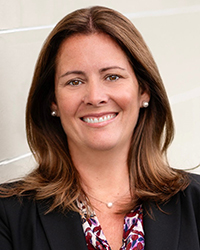
2025 Women in CRE: Laurel Bowerman, Washington Trust
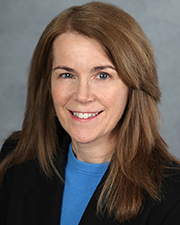
Vice President, CRE Group
Washington Trust
What drew you to commercial real estate, and what keeps you passionate? I started my career in a bank training program in which I rotated through all the banking departments. I was passionate about commercial real estate (CRE) from my first day of training in CRE. I loved being able to visit the real estate and “touch the tires” so to speak. I found it so much more exciting than funding working capital. The tangible elements are one of the most appealing aspects of this work.
What advice would you give to a woman considering a career in commercial real estate? If you have an affinity for commercial real estate, consider working for both developers and banks during your career. Experiencing both sides of the industry will help you find the niche that suits you best. This dual perspective will not just build your credibility, it will also deepen your understanding of how deals are structured and financed.
What’s a challenge you faced early in your career, and how did you overcome it? Everyday there are challenges. To overcome them, you must face them head on, work hard, and work smartly.
What has been the most rewarding project or deal you’ve worked on in your career, and why? While I enjoy funding all CRE asset types, the most unique project I financed was the adaptive reuse of the historic Pontiac Mills located in Warwick, RI. The property is a multi-building complex that was used to weave Union Army uniforms during the Civil War and later used as a Fruit of the Loom factory. Restoration of these brick and beam buildings into apartments, offices, a brewery, and other retail spaces created a visual representation of our history and highlighted our ability to adapt and re-purpose historic properties.
Tags:
Spotlight Content
MORE FROM Spotlight Content
Southern New Hampshire commercial real estate: A new era of manufacturing and innovation - by Michael Harrington
I’m optimistic that Southern New Hampshire is no longer waiting for the next industrial cycle. It may already be in it. Two announcements in September 2026, United Therapeutics’ purchase of the former Anheuser-Busch campus and






Quick Hits

.png)
Columns and Thought Leadership
How do we manage our businesses in a climate of uncertainty? - by David O'Sullivan
These are uncertain times for the home building industry. We have the threat of tariffs mixed with high interest rates and lenders nervous about the market. Every professional, whether builder, broker, or architect, asks themselves, how do we manage our business in today’s climate? We all strive not just to succeed, but
As legacy names recalibrate, new entrants are moving in with fresh capital, new technologies, and business models tailored to today’s supply-chain needs - by Michael Harrington
Southern New Hampshire’s industrial market has always punched above its weight. For decades, the region has attracted a mix of advanced manufacturing, beverage and food producers, logistics operators, and specialty

Shallow-bay wins on 495/128: A renewal-driven market with a thin pipeline - by Nate Nickerson
The Boston industrial market entered mid-2025 in a bifurcated state. Large-block vacancy remains elevated, while shallow-bay along the 495/128 corridor continues to prove resilient. Fieldstone’s focus on this geography positions us squarely in the middle of a renewal-driven, supply-constrained
Limited supply fuels landlord‑friendly conditions in Rhode Island’s industrial market - by Julie Freshman and George Paskalis
As we enter the spring of 2026, the Rhode Island industrial real estate market stands on stable footing, following several years of resilience fueled by constrained supply, steady demand, and dynamic economic conditions.
