


 (1).png)
News:
Owners Developers & Managers
Posted: August 25, 2017
Albis hired as executive director of the Connecticut Green Building Council
Greens Farms, CT James Albis has been hired as the new executive director of the Connecticut Green Building Council (CTGBC). Albis has served as a state representative in the Connecticut General Assembly since 2011 and has a master of environmental management from the Yale School of Forestry & Environmental Studies.
“I am excited to take on this new opportunity with the CT Green Building Council,” said Albis. “The CTGBC plays a vital role in promoting sustainable building practices throughout our state, and I look forward to furthering the notion that green buildings are both good for the environment and good for the economy.”
Mr. Albis became interested in building issues when East Haven was slammed with Tropical Storm Irene in 2011 and Superstorm Sandy in 2012, recognizing the need for resilient building along the coast. He furthered his interest in the environment and sustainability as chairman of the Shoreline Preservation Task Force and Environment Committee in the state legislature, and obtaining his Masters degree in 2016. Mr. Albis is a LEED Green Associate.
“We are thrilled to have James on-board as Executive Director of our chapter. James was selected from a highly qualified slate of candidates. He brings great enthusiasm and strong leadership to our organization which will serve well as we expand our presence and impact in the Connecticut Green Building Community” according to Brian Dwyer, CTGBC Chairman.
The CTGBC is a chapter of the US Green Building Council (USGBC) which covers the State of Connecticut. The CTGBC is committed to transforming the way buildings are designed, constructed and operated through LEED — the top third-party verification system for sustainable structures around the world. Every day USGBC is helping advance spaces that are better for the environment and healthier for us to live, work and play in.
MORE FROM Owners Developers & Managers
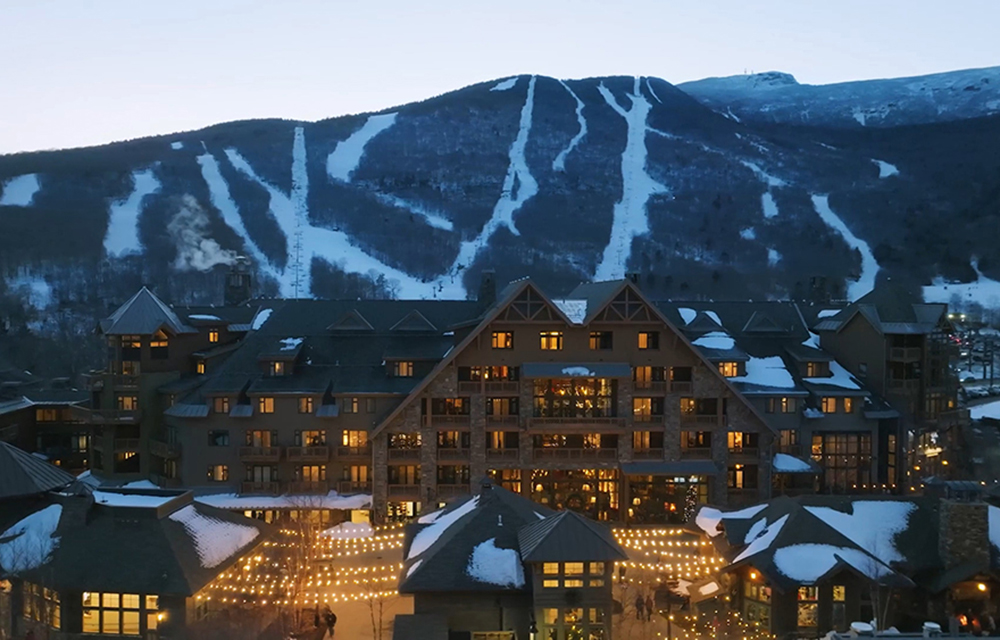
The Lodge at Spruce Peak recognized with Condé Nast Traveler’s 2026 Readers’ Choice Award - #3 in New England
Stowe, VT Condé Nast Traveler revealed the results of its annual Readers’ Choice Awards, with The Lodge at Spruce Peak recognized as the #3 U.S. Resort in New England.




Quick Hits
 (1).png)

Columns and Thought Leadership

Revitalized Town Centers: Retail??? - by Carol Todreas
It is now widely accepted that customers want to shop in person at physical stores. Brands know that they do better business in a physical store than just on line so they want to open stores. Demand for retail space by digital merchants, local entrepreneurs, and newly developed national chains

The legislature has spoken: New Hampshire doubles down on housing in commercial zones - by John Sokul
Last year, the New Hampshire Legislature enacted HB 631, a landmark housing measure requiring municipalities to permit multifamily housing in commercially zoned districts. The law generated

IREM president’s message: Our new reality - Staying ahead of supply chain delays - by Yoany Vargas
Supply chain delays are slowing construction, ratcheting up operating costs, and extending turnover timelines across Greater Boston, directly reducing revenue and increasing the workload for multifamily and

Retail infill strategy to activate Pawtucket’s Conant Thread District - by Gaetan Kashala
Until recently, the Conant Thread District consisted of approximately 150 acres of underutilized industrial land spanning Pawtucket and Central Falls. Today, the area is one of the most significant