


 (1).gif)
News:
Finance
Posted: October 21, 2016
Appraiser shortage: There is no end in sight - by Maria Hopkins
 Maria Hopkins, Maria Hopkins Associates
The pipeline is still full of refinance loans with everyone trying to refinance before the election at which time everything is uncertain. The sales market is also still very active with many areas of Massachusetts still appreciating, with homes selling very quickly and sometimes over asking price. The appraisers are enjoying (hopefully) the highest volume of business in many years. The appraisal profession has always been called a graying profession due to the fact that most appraisers are getting older with few new people coming into the field. It won’t be long before the gray will become white and something needs to be done to ease the barrier to entering the field. Getting a trainee license is relatively easy but it is uphill from there. Very few appraisers want to spend the time or money to train new appraisers because they know the high volume usually doesn’t last very long. If it does they may also be training people that will become a competitor later, although very few of those who go out on their own after licensing make it long term. Anyone can get work when it’s busy but the slow down periods can go on for years and it becomes difficult to stay profitable. None of the lenders will allow a trainee to sign as the appraiser with a supervisory appraiser also signing, even though that is how the licensing board set it up to enable new appraisers to become licensed. The lenders now don’t even want to use fully licensed appraisers unless they have the higher certified level of licensure. The higher license is also required to do VA/FHA work. And the biggest, most recent requirement to have a college degree to get that license has made the barrier to entry even higher.
Something has to give eventually and I really think the college degree requirement should be changed to some specific college level classes that are relevant to the profession. Some say the degree makes appraising more of a profession. Quality education with continuing education is more than adequate. If an individual is not professional to begin with it’s like putting lipstick on a pig as they say. There will always be good and bad appraisers as there is with every other profession. With lenders adding more and more requirements every year to an appraisal assignment, with no increase or very little increase in fees, the profit margin is not very high to begin with for the hours that go into each assignment. Most appraisers are finally demanding to be paid a reasonable and customary fee and with the shortage of appraisers, they are getting it. There is talk of appraisers charging ridiculously high fees for some assignments especially rush requests, but I would adamantly say that it is a rare occurrence in Massachusetts and is being very over exaggerated. When there was a shortage of work and too many appraisers, AMC’s (Appraisal Management Companies) and many lenders were often underpaying the appraisers for their work, forcing them to take ridiculously low fees for the ever increasing requirements if they wanted to continue to receive assignments. So naturally now that the shoe is on the other foot so to speak, they are sometimes complaining the appraisers want too much money. But I would say that most of them know the increases have been a long time coming and are much fairer for all that appraisers are expected to do.
After 31 years, I am still passionate about the appraisal profession. I love training my new appraisers into the field. I appreciate the dedicated appraisers who have worked for me for years. I’ve been working 7 days a week for months to keep up with the volume. However, I am looking forward to the day that it slows down enough where I can take a day off and sleep.
Maria Hopkins, SRA, RA, is president of Maria Hopkins Associates, Spencer, Mass.
MORE FROM Finance
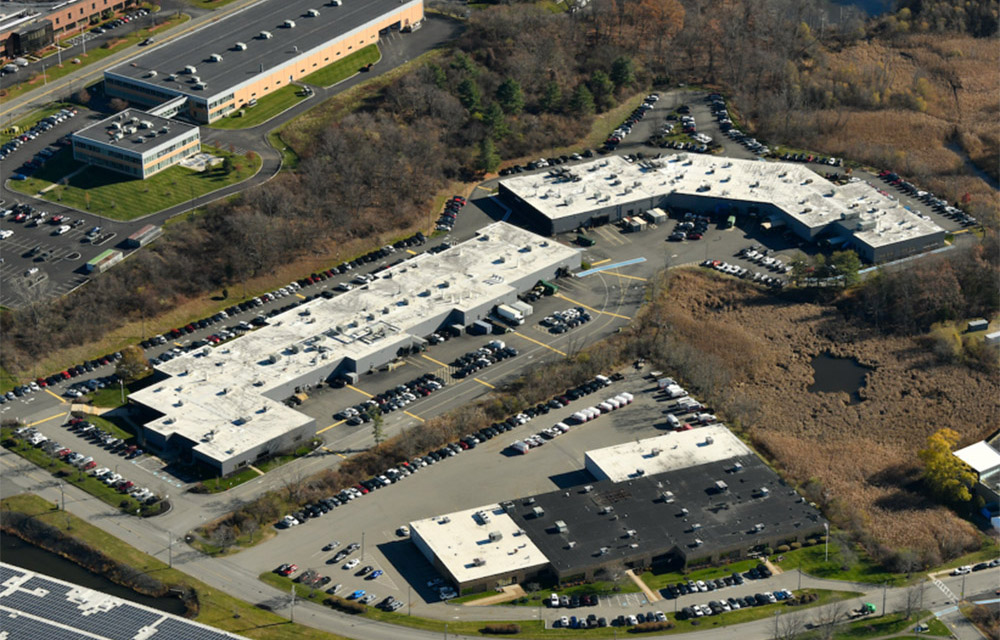
Northwest Bank finances Luzern Associates’ $47.75m acquisition
Danvers, MA Northwest Bank provided $34.5 million in financing to support Luzern Associates LLC’s $47.75 million acquisition of the Cherry Hill industrial portfolio, a three-building campus totaling 200,000 s/f.



 (1).gif)


Quick Hits

.png)
Columns and Thought Leadership

Massachusetts real estate transfers over $1 million face new tax rules as of November 1st - by Daniel Meyer
Attention to owners of real estate in the Commonwealth (and the title companies and other professionals who advise them), the Massachusetts Department of Revenue (the “DOR”) recently adopted a new “millionaire’s tax” via 830 CMR 62B.2.4

Are appraisers on the same page as the assessor? - by Richard Seman
The purpose of this article is to address problematic or confusing issues which may help assessors and appraisers to better understand how to value real estate for tax assessment purposes.

Reverse exchanges and the challenges of a competitive real estate market - by Michele Fitzpatrick
Our current, highly competitive real estate market poses specific challenges for investors who are considering taking advantage of a tax-deferred 1031 exchange. In this market, investors will have no problem selling their current property if priced properly, but they may find it difficult to find a suitable replacement property

The focus on price per s/f compared to the comparable sales used in the appraisal report - by Dennis Chanski
Over the past several weeks, I have completed appraisal assignments for private clients. Interestingly, after submitting these appraisals, I received several phone calls – not to question the value, content, or any incorrect information, but rather to discuss the price per s/f compared to the comparable sales used in the report.
