


 (1).gif)
News:
Finance
Posted: June 9, 2011
Commercial and multifamily mortgage originations 89% higher than last year
First quarter 2011 commercial and multifamily mortgage originations were 89% higher than during the same period last year and 25% lower than during the fourth quarter of 2010, according to the Mortgage Bankers Association's (MBA) Quarterly Survey of Commercial/Multifamily Mortgage Bankers Originations. The decrease from fourth quarter 2010 reflects the industry's usual push to finalize deals before the end of the year, and subsequent drop-offs in first quarter numbers.
"The pace of commercial and multifamily mortgage lending continued to increase in the first quarter of this year," said Jamie Woodwell, MBA's VP of commercial real estate research.
"Commercial/multifamily mortgage origination volumes for the first three months of 2011 were the highest of any first quarter since 2002, and were nearly double the volume seen during the first quarter of 2010."
First Quarter 2011 Originations Increased 89% Over First Quarter 2010
The 89% overall increase in commercial/multifamily lending activity during the first quarter of 2011 over the same period in 2010 was driven by increases in originations for all property types. When compared to the first quarter of 2010, this included a 465 % increase in loans for hotel properties, a 194% increase in loans for industrial properties, a 104% increase in loans for multifamily properties, a 92% increase in loans for office properties, a 91% increase in loans for health care properties, and a 13% increase in loans for retail properties.
Among investor types, first quarter 2011 originations for conduits for CMBS increased 391% compared to last year's first quarter. There was also a 126% increase in loans for life insurance companies, a 73% increase in loans for commercial bank portfolios, and a 59% increase for the Government Sponsored Enterprises (GSEs), Fannie Mae and Freddie Mac.
First Quarter 2011 Originations Decreased 25% From Fourth Quarter 2010
First quarter 2011 commercial/multifamily mortgage originations were 25% lower than originations in the fourth quarter of 2010. This includes an 83% decrease for health care properties, a 48% decrease for retail properties, a 44% decrease for hotel properties, a 28% decrease for multifamily properties, and a 15% decrease for office properties. Originations for industrial properties increased 12%.
Among investor types, first quarter 2011 originations for conduits for CMBS decreased 58% compared to the fourth quarter of 2010. There was also a 45% decrease for GSEs and a 15% decrease for life insurance companies. Originations for commercial bank portfolios increased by 21%.
To view the report, please visit the following Web link:
http://www.mortgagebankers.org/files/Research/CommercialOriginations/1Q11CMFOriginationsSurvey.pdf.
For members of the news media who want more information from or about the study, contact Matt Robinson at mrobinson@mortgagebankers.org or 202-557-2727.
The Mortgage Bankers Association (MBA) is the national association representing the real estate finance industry, an industry that employs more than 280,000 people in virtually every community in the country. Headquartered in Washington, D.C., the association works to ensure the continued strength of the nation's residential and commercial real estate markets; to expand homeownership and extend access to affordable housing to all Americans. MBA promotes fair and ethical lending practices and fosters professional excellence among real estate finance employees through a wide range of educational programs and a variety of publications. Its membership of over 2,200 companies includes all elements of real estate finance: mortgage companies, mortgage brokers, commercial banks, thrifts, Wall Street conduits, life insurance companies and others in the mortgage lending field. For additional information, visit MBA's Web site: www.mortgagebankers.org.
Tags:
Finance
MORE FROM Finance
Berkeley Garbe secures $35.4 million debt financing with MetLife Investment Management
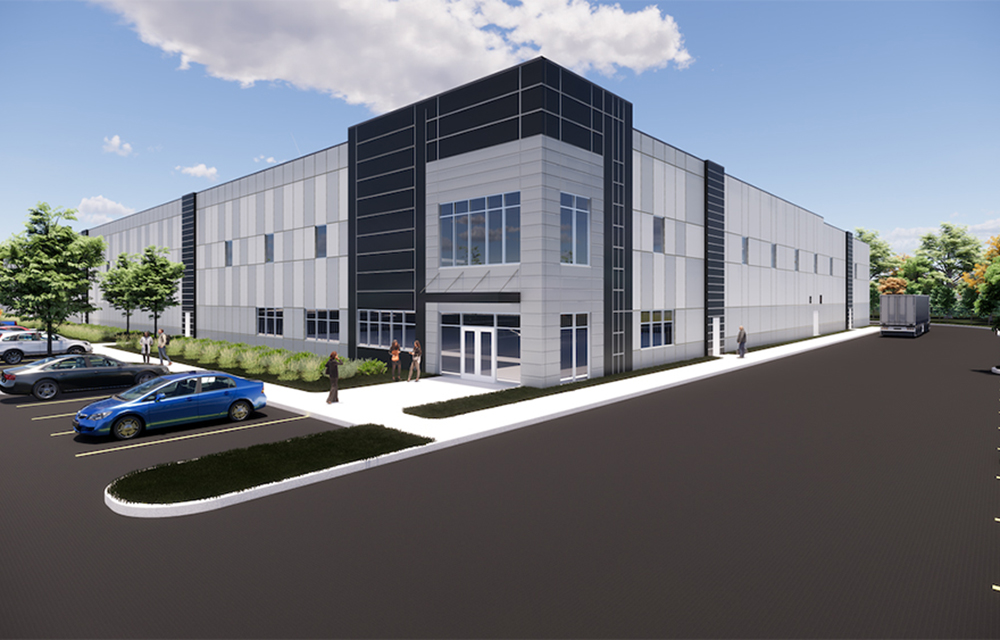
Billerica, MA Berkeley Garbe has secured a $35.4 million financing package for 161 Concord Rd., a new advanced manufacturing and innovation hub that is 30% complete following the start of construction in June. The project is on track to be completed in April 2027.

 (1).gif)


Quick Hits
Columns and Thought Leadership

Reverse exchanges and the challenges of a competitive real estate market - by Michele Fitzpatrick
Our current, highly competitive real estate market poses specific challenges for investors who are considering taking advantage of a tax-deferred 1031 exchange. In this market, investors will have no problem selling their current property if priced properly, but they may find it difficult to find a suitable replacement property

The focus on price per s/f compared to the comparable sales used in the appraisal report - by Dennis Chanski
Over the past several weeks, I have completed appraisal assignments for private clients. Interestingly, after submitting these appraisals, I received several phone calls – not to question the value, content, or any incorrect information, but rather to discuss the price per s/f compared to the comparable sales used in the report.

Are appraisers on the same page as the assessor? - by Richard Seman
The purpose of this article is to address problematic or confusing issues which may help assessors and appraisers to better understand how to value real estate for tax assessment purposes.

Massachusetts real estate transfers over $1 million face new tax rules as of November 1st - by Daniel Meyer
Attention to owners of real estate in the Commonwealth (and the title companies and other professionals who advise them), the Massachusetts Department of Revenue (the “DOR”) recently adopted a new “millionaire’s tax” via 830 CMR 62B.2.4
