


 (1).png)
News:
Owners Developers & Managers
Posted: October 30, 2026
Lets copy malls and fix town centers - by Carol Todreas

Surprise, surprise! Malls are back — and they are quite different from the malls we knew, with decayed department-store anchors, food courts and rows of chain stores that made them all look alike.
Today’s malls have become a major attraction for Gen Z, the generation born roughly between the mid-1990s and 2010. They are the first generation to grow up with, as some say, “a phone in their hand,” with Amazon and online shopping as part of everyday life. Yet they are not just hanging out in malls; they are making purchases.
Why? The mall has become a “third place” — somewhere that is neither home nor work or school, but a place to relax, socialize and be part of a community. For Gen Z, the mall offers something the internet cannot: a physical place to be with other people. And importantly, they are actually buying things while they are there.
The new mall has essentially become a town center, with a very different tenant mix. Dining and entertainment are major attractions, complemented by health, wellness and daily services, along with offices, hotels and residential uses. There are often lawns, plazas and spaces for outdoor games and relaxation, as well as highly curated specialty retail.
One of the most interesting additions is digitally native retail. These stores began online and have learned how to make a physical store an inviting experience. There is a salesperson to greet you, little or no back-room inventory, and space to try out the merchandise. Bonobos and Warby Parker are two examples found in Boston-area malls.
The result is a dramatically different kind of mall. It looks remarkably like an old-fashioned town center: a mixed-use neighborhood with stores, restaurants, medical clinics, fitness and wellness, sports, education, recreation and entertainment. The difference is that the new mall is fresh, carefully designed, actively managed and promoted — and it has parking.
Interestingly, the new malls bear a striking resemblance to our existing urban squares and neighborhood commercial centers. Our historic town centers already have what the new malls are trying to create: human scale, interesting architecture, established pedestrian environments and, most often, proximity to public transportation. They are also embedded in existing residential neighborhoods.
So why not use the mall industry’s redevelopment model to update these places?
The shopping center industry has figured out that today’s market responds to mixed uses, good design, a pleasant indoor/outdoor environment, parking and a sense of security. It has spent years experimenting with how to bring people back to places that had lost their appeal.
There is no reason this approach cannot be adapted to historic small downtowns and neighborhood commercial centers. In fact, they may be an even better proposition because so much is already in place.
Reusing these centers is environmentally positive, and much of the infrastructure already exists. It is not a total no-brainer, but much of the work has already been done — and proven — by the shopping center industry.
What is needed is determination, public-private cooperation and savvy developers.
Why replace existing town centers with large, unfriendly buildings and impractical spaces when we could build on what we already have?
What are we waiting for?
Carol Todreas is a retail real estate consultant and principal of The Todreas Group, Cambridge, Mass., and is a mentor at MIT’s Venture Mentoring Service.
MORE FROM Owners Developers & Managers
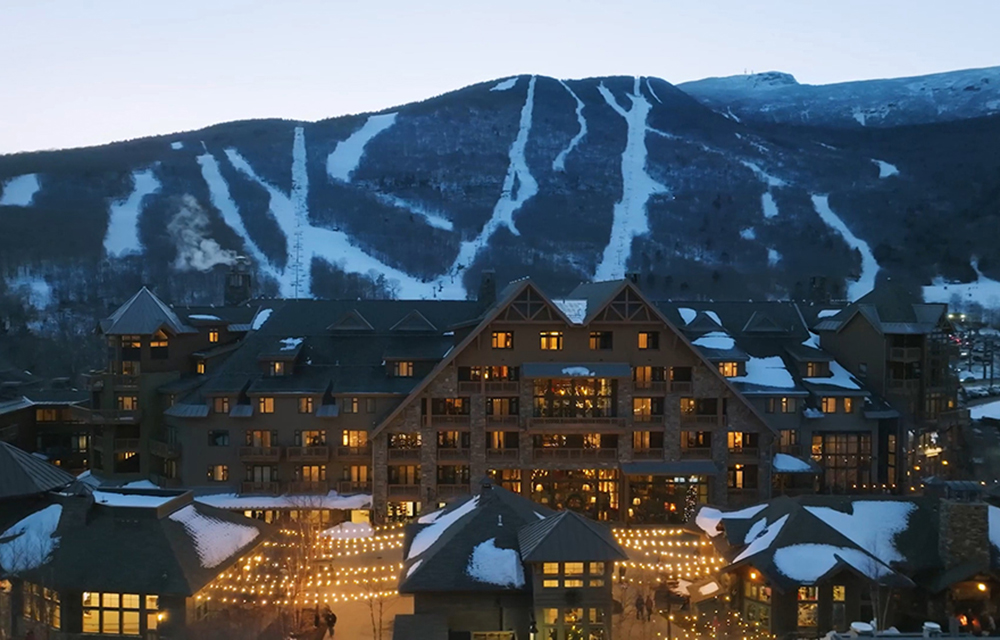
The Lodge at Spruce Peak recognized with Condé Nast Traveler’s 2026 Readers’ Choice Award - #3 in New England
Stowe, VT Condé Nast Traveler revealed the results of its annual Readers’ Choice Awards, with The Lodge at Spruce Peak recognized as the #3 U.S. Resort in New England.




Quick Hits
 (1).png)

Columns and Thought Leadership

IREM president’s message: Our new reality - Staying ahead of supply chain delays - by Yoany Vargas
Supply chain delays are slowing construction, ratcheting up operating costs, and extending turnover timelines across Greater Boston, directly reducing revenue and increasing the workload for multifamily and

Revitalized Town Centers: Retail??? - by Carol Todreas
It is now widely accepted that customers want to shop in person at physical stores. Brands know that they do better business in a physical store than just on line so they want to open stores. Demand for retail space by digital merchants, local entrepreneurs, and newly developed national chains

Retail infill strategy to activate Pawtucket’s Conant Thread District - by Gaetan Kashala
Until recently, the Conant Thread District consisted of approximately 150 acres of underutilized industrial land spanning Pawtucket and Central Falls. Today, the area is one of the most significant

The legislature has spoken: New Hampshire doubles down on housing in commercial zones - by John Sokul
Last year, the New Hampshire Legislature enacted HB 631, a landmark housing measure requiring municipalities to permit multifamily housing in commercially zoned districts. The law generated