


 (1).png)
News:
Owners Developers & Managers
Posted: March 5, 2015
Community solar emerges as a new way to benefit from renewable energy
The concept of community farming has been around for a while, but it's the concept of community solar that's really starting to catch fire in Massachusetts. Community solar is a model where third-party residents or businesses receive allocations of energy generated from a "community owned" solar project and receive net metering credit on their electricity bills. Community solar is emerging as an efficient way for people and businesses to have access to renewable energy when circumstances don't allow them to install solar systems on their own property -- whether due to issues of orientation and shading, problems with roof quality or roof angles, issues with available capital or even because they rent their property instead of own.
Community solar projects can be built as roof-based systems or as land-based arrays. They're attractive to both landowners and building owners because community solar projects qualify for the most-beneficial SREC-II factor of 1.0. This means that for every 1000 kWh produced from a community solar project, a full SREC (Solar Renewable Energy Certificate) is awarded.
On the other side of the equation, community solar is attractive to off-takers who are interested in solar but cannot host a system themselves for one or more of the reasons listed above. Community solar is linked to a customer's bill through a process called virtual net metering, which credits the customer with a prorated share of the array's production based on the share of the power generated. The array does not need to be at the same site as the customer's electricity meter; in fact, it can be dozens of miles away.
Other customers of community solar include businesses that have already installed a solar system but have run out of space to host additional solar panels, and want to offset a larger portion of their energy consumption. These customers already understand the economic benefits of solar, including the lower cost of energy and the ability to better control their operating costs against the rising price of electricity from the grid.
According to a study from the Mass. Department of Energy Resources (DOER), there are two optimal scenarios under which community solar will work best in Massachusetts:
* Participant ownership model: A private entity, such as an LLC, is formed by organizing participants for the purposes of developing a community solar project. A private entity owns or leases property on which the solar system will be installed. Participants realize a return on investment and benefit from net metering credits generated by the system.
* Public lease model: The public entity leases property to a private entity for the installation of the community solar project. A private entity owns and operates the solar system. Participants benefit from net metering credits generated by the system.
Community solar projects have the ability to benefit communities, businesses, and residents within those communities who want to reduce their carbon footprint. An experienced solar project developer can help you learn more.
Craig Huntley is principal and chief development officer of Solect Energy Development, Hopkinton, Mass.
MORE FROM Owners Developers & Managers
Rubin Rudman to establish headquarters at Tishman Speyer’s One Federal St.
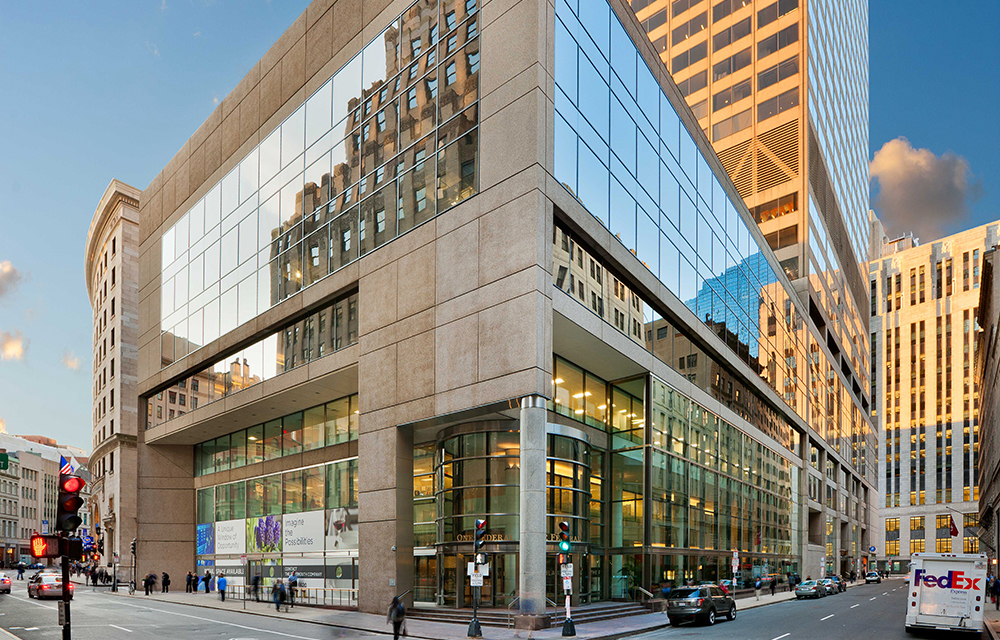
Boston, MA Tishman Speyer has secured a new headquarters lease with Rubin Rudman at One Federal St., its 38-story, 1.1 million s/f tower in the Financial District. Under a 15-year lease, Rubin Rudman’s new headquarters will span 57,844 s/f across One Federal’s entire 23rd and 24th floors and a portion of the 25th floor.





Quick Hits


Columns and Thought Leadership

Revitalized Town Centers: Retail??? - by Carol Todreas
It is now widely accepted that customers want to shop in person at physical stores. Brands know that they do better business in a physical store than just on line so they want to open stores. Demand for retail space by digital merchants, local entrepreneurs, and newly developed national chains

IREM president’s message: Our new reality - Staying ahead of supply chain delays - by Yoany Vargas
Supply chain delays are slowing construction, ratcheting up operating costs, and extending turnover timelines across Greater Boston, directly reducing revenue and increasing the workload for multifamily and

The legislature has spoken: New Hampshire doubles down on housing in commercial zones - by John Sokul
Last year, the New Hampshire Legislature enacted HB 631, a landmark housing measure requiring municipalities to permit multifamily housing in commercially zoned districts. The law generated

Retail infill strategy to activate Pawtucket’s Conant Thread District - by Gaetan Kashala
Until recently, the Conant Thread District consisted of approximately 150 acres of underutilized industrial land spanning Pawtucket and Central Falls. Today, the area is one of the most significant