


 (1).png)
News:
Owners Developers & Managers
Posted: January 16, 2026
Creating a lasting tenant community, one amenity at a time - by Gable Clarke

What makes an office feel like more than just a place to work? Often, it’s the sense of belonging to something larger – a community that’s lively, connected, and engaging. While sleek façades and prime locations can create striking first impressions, the true measure of a property’s value lies in its ability to retain tenants. According to a survey by Cove, 85% of tenants now expect landlords to offer amenities and services beyond the basics, including comfortable common areas, community events, wellness programs, and coffee bars, underscoring how long-term success comes from creating experiential workplaces that people choose to be part of, not just work in.
Amenities That Cultivate Community
Organizations typically gravitate to buildings that support their workflow and culture, and the right amenities make that possible. Communal spaces such as lounges, outdoor terraces, and cafés, encourage serendipitous encounters among employees and even cross-tenant engagement. These informal touchpoints become incubators of ideas and relationships, where different organizations and industries naturally intersect.
Health and wellness amenities are equally vital when it comes to staff satisfaction. Today’s workplaces benefit from spaces that support both active recharge (movement-based activities like fitness rooms or stretching areas) and passive recharge (quiet wellness rooms, meditation spaces, or relaxation zones). Game rooms or casual break areas can spark light social interaction, while quiet wellness spaces allow employees to decompress without stepping outside the building. These settings give teams options to reset based on their personal preferences and work rhythms.
Many properties also activate these amenities through curated programming. Common spaces become flexible, multipurpose environments that can shift from co-working zones to workshops, social events, or wellness activities. This adaptability encourages groups to mingle, participate in the building’s community, and serve as a backdrop for achievement, innovation, and connection.
Complementing these indoor wellness areas, outdoor amenities further contribute to this sense of balance. Patios, gardens, and plazas provide restorative spaces where employees can step away from their desks and recharge. The right mix of amenities offers tenants meaningful ways to interact and collaborate.
Maximizing the Effect of Amenities Through Design
Amenities are most impactful when paired with intentional design. Human-centric layouts that prioritize ease of navigation, intuitive circulation, and opportunities for engagement help employees feel more immersed in the building’s energy. A thoughtful mix of settings, including varied seating, distinct acoustic zones, and lighting and color strategies that differentiate active and quiet areas, supports different work modes and comfort levels.
The introduction of micro-communities – small, carefully designed zones within a larger building – helps teams feel rooted even in expansive environments. This is especially important when designing for neurodiversity and wellness. Sensory-friendly zones, quiet rooms, visual wayfinding, and predictable circulation paths help reduce cognitive load and create environments where all users feel supported. These elements not only enhance comfort but also ensure that amenities are accessible and enjoyable for a wider range of people.
The ROI on Connection
Ultimately, the value of amenities is reflected in tenant satisfaction and in lease longevity. By embedding wellbeing and purposeful design into every aspect of a building, from the lounge in the lobby to the rooftop terrace, these investments become strategic differentiators that drive retention, and position the property as a hub of ongoing professional and social activity. As a result, the property can support daily routines and interactions while strengthening lasting financial and operational outcomes.
Gable Clarke, LEED AP, NCIDQ is the president of interior design and partner of SGA, Boston, Mass.
MORE FROM Owners Developers & Managers
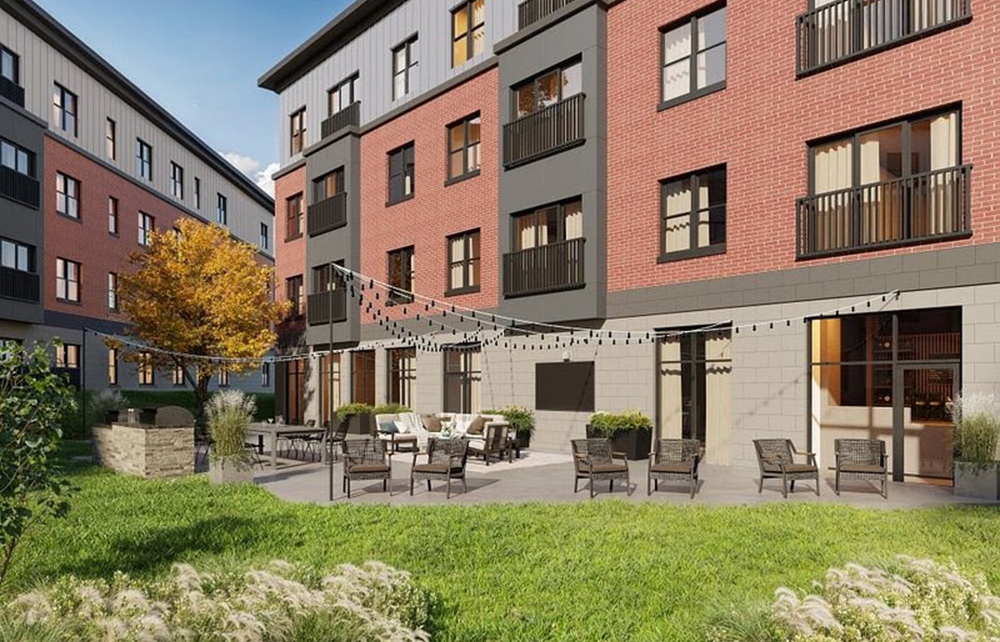
Cathartes and Tidemark set to open first phase of Marlo on Mill Pond
Portsmouth, NH According to Cathartes and Tidemark, the first of new luxury waterfront apartment homes will become available this fall in the city’s West End. Located at 75, 85 and 95 Addorio Way, Marlo on Mill Pond will feature 151 studio,



 (1).png)

Columns and Thought Leadership

Revitalized Town Centers: Retail??? - by Carol Todreas
It is now widely accepted that customers want to shop in person at physical stores. Brands know that they do better business in a physical store than just on line so they want to open stores. Demand for retail space by digital merchants, local entrepreneurs, and newly developed national chains

Retail infill strategy to activate Pawtucket’s Conant Thread District - by Gaetan Kashala
Until recently, the Conant Thread District consisted of approximately 150 acres of underutilized industrial land spanning Pawtucket and Central Falls. Today, the area is one of the most significant

The legislature has spoken: New Hampshire doubles down on housing in commercial zones - by John Sokul
Last year, the New Hampshire Legislature enacted HB 631, a landmark housing measure requiring municipalities to permit multifamily housing in commercially zoned districts. The law generated

IREM president’s message: Our new reality - Staying ahead of supply chain delays - by Yoany Vargas
Supply chain delays are slowing construction, ratcheting up operating costs, and extending turnover timelines across Greater Boston, directly reducing revenue and increasing the workload for multifamily and