


 (1).png)
News:
Owners Developers & Managers
Posted: May 25, 2018
Environmental insurance: What to consider before buying - by William Squires

Before investing in commercial real estate, parties should be aware of potential environmental liabilities and should carefully consider options for minimizing their exposure to such liabilities. One approach for minimizing environmental liability exposure is to obtain environmental insurance.
Although environmental insurance does not eliminate the statutory liability of owners and operators of contaminated property, it is a potential vehicle to minimize exposure to such risk. Environmental insurance can be used as a supplement to, or in place of the contractual allocation of liability between buyers and sellers of real property. One major advantage of obtaining environmental insurance for newly acquired real property is that policies are issued by insurers with deep pockets that are sometimes backed by state insolvency funds, whereas environmental indemnification agreements are often backed by entities or individuals whose assets may be limited to the proceeds from the sale of the real property in question.
The most common environmental insurance policies for owners of real property are typically referred to as Pollution Legal Liability (PLL) policies. PLL policies can provide coverage for a range of environmental risks, from releases of hazardous materials into the environment to the presence of mold in buildings. A PLL policy can be underwritten for a single property or for a portfolio of properties.
The types of coverage offered in PLL policies vary somewhat between insurers, but typical coverage options can include:
• On-site and off-site cleanup of pre-existing and conditions;
• Third party claims for personal injury and property damage;
• Business interruption; and
• Liability for transportation and off-site disposal of hazardous waste.
Other key considerations when selecting a PLL policy include policy limits, policy term, self-insured retention amount (similar to a deductible) and premium. More mundane provisions can also shape the scope of coverage. The insured should carefully review the language of each coverage section as well as the extensive exclusions, limitations, conditions and restrictive definitions in the PLL policy to evaluate how they impact the scope of coverage.
Another critical step before the insurer binds coverage is to disclose all reports, documents and data pertaining to the environmental condition of the insured property. Failure to disclose material environmental reports can void coverage in most PLL policies. If environmental reports identify contamination or other potential environmental issues on the subject property, insurers will typically exclude or limit coverage for such matters under a PLL policy. Although limited coverage can sometimes be negotiated for certain known pollution conditions under PLL policies, the basic policy form is intended to provide coverage for unknown or known and fully resolved pollution conditions.
In light of these complexities, it is important for a party seeking environmental insurance coverage to work with a broker and counsel who are experienced in negotiating environmental insurance policies and, ideally, who also have experience asserting or defending against coverage claims under such policies.
William Squires is a partner in Hinckley Allen’s real estate practice, Boston.
MORE FROM Owners Developers & Managers
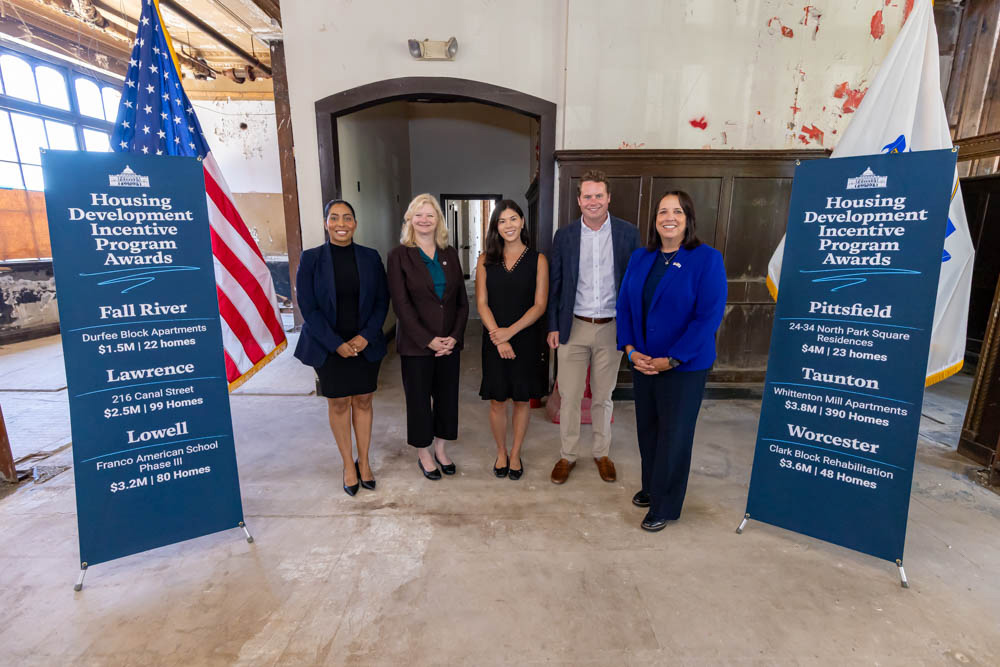
$3.8 million Housing Development Incentive Program award advances Greystarts Whittenton Mills modular housing development
Taunton, MA Greystar has received a $3.8 million Housing Development Incentive Program (HDIP) award from the Massachusetts Executive Office of Housing and Livable Communities to support the





Quick Hits
 (1).png)

Columns and Thought Leadership

IREM president’s message: Our new reality - Staying ahead of supply chain delays - by Yoany Vargas
Supply chain delays are slowing construction, ratcheting up operating costs, and extending turnover timelines across Greater Boston, directly reducing revenue and increasing the workload for multifamily and

Retail infill strategy to activate Pawtucket’s Conant Thread District - by Gaetan Kashala
Until recently, the Conant Thread District consisted of approximately 150 acres of underutilized industrial land spanning Pawtucket and Central Falls. Today, the area is one of the most significant

Florida ruling raises bar for condo terminations and buyouts - by Michael Karsch
On October 14, 2025, in a landmark decision with significant implications for the Florida real estate market, the Supreme Court of Florida formally denied Two Roads Development’s (TRD Biscayne LLC) petition for review in its long-running case against unit owners of Biscayne 21,

Revitalized Town Centers: Retail??? - by Carol Todreas
It is now widely accepted that customers want to shop in person at physical stores. Brands know that they do better business in a physical store than just on line so they want to open stores. Demand for retail space by digital merchants, local entrepreneurs, and newly developed national chains