


 (1).png)
News:
Owners Developers & Managers
Posted: March 29, 2012
Exemptions from local real estate taxation
The Massachusetts Appeals court in the 2009 case of Mary Ann Morse Healthcare Corp. v. Framingham has clarified the law of charitable exemptions for real estate. By statute, to be tax exempt, a parcel of real estate in Massachusetts must be both owned and occupied by a charitable entity.
The court determined that when a charitable entity owns a building which is occupied by the residents as well as by the employees of the charitable entity, the property will be tax exempt.
The court said that, as long as the occupancy was shared with the employees of the non-profit entity, the occupancy requirements of Massachusetts law were met.
The relevant law exempts from local taxation "real estate owned by or held in trust for a charitable organization and occupied by it or its officers for the purposes for which it is organized...or by another charitable organization or organizations or their officers for the purposes of such other charitable organization or organizations."
The Appeals Court in the Morse case correctly ruled that the occupancy test does not require exclusive occupancy by the employees of the charity. The occupancy test is satisfied as long as the residents and employees of the charity share the building.
This is extremely important for the many buildings throughout Massachusetts which are financed through the HUD 202 program and leased to low income elderly tenants.
Such buildings become tax exempt under the Morse case. The charity and the municipality can, of course, enter into a plan for payment in lieu of taxes (PILOT) but this does not affect the fact that the assessment of the property should be zero and that the property should be tax exempt.
Saul Feldman is a real estate attorney with Feldman & Feldman, P.C., Boston, Mass.
MORE FROM Owners Developers & Managers
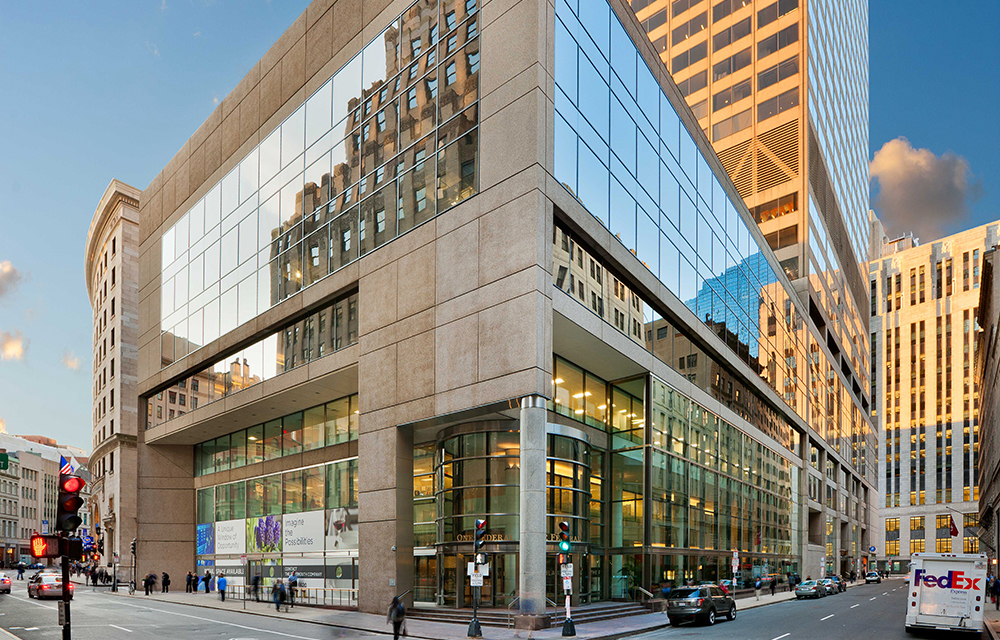
Rubin Rudman to establish headquarters at Tishman Speyer’s One Federal St.
Boston, MA Tishman Speyer has secured a new headquarters lease with Rubin Rudman at One Federal St., its 38-story, 1.1 million s/f tower in the Financial District. Under a 15-year lease, Rubin Rudman’s new headquarters will span 57,844 s/f across One Federal’s entire 23rd and 24th floors and a portion of the 25th floor.







Columns and Thought Leadership

Revitalized Town Centers: Retail??? - by Carol Todreas
It is now widely accepted that customers want to shop in person at physical stores. Brands know that they do better business in a physical store than just on line so they want to open stores. Demand for retail space by digital merchants, local entrepreneurs, and newly developed national chains

The legislature has spoken: New Hampshire doubles down on housing in commercial zones - by John Sokul
Last year, the New Hampshire Legislature enacted HB 631, a landmark housing measure requiring municipalities to permit multifamily housing in commercially zoned districts. The law generated

IREM president’s message: Our new reality - Staying ahead of supply chain delays - by Yoany Vargas
Supply chain delays are slowing construction, ratcheting up operating costs, and extending turnover timelines across Greater Boston, directly reducing revenue and increasing the workload for multifamily and

Retail infill strategy to activate Pawtucket’s Conant Thread District - by Gaetan Kashala
Until recently, the Conant Thread District consisted of approximately 150 acres of underutilized industrial land spanning Pawtucket and Central Falls. Today, the area is one of the most significant