



News:
Brokerage
Posted: October 23, 2014
From bricks & mortar to clicks & mortar, a major move for CRE: Amazon opens first bricks & mortar store
In speaking with my friend, Scott Moriyama of Salvatore Capital Partners over a pumpkin spice beverage, we got on the topic of clicks and mortar, a term that may not be mainstream yet but was brought to mind after learning of Amazon's first venture from online to opening a bricks and mortar store. If Amazon, the Mecca of online shopping could do it and be successful, could many other online stores adapt this model soon?
The Wall Street Journal earlier this month announced that Amazon will be opening its first bricks and mortar store at 7 West 34th St. in New York City, across from the Empire State Building in midtown. The physical store will give Amazon the face-to-face experience of a traditional retailer, offer consumers even more convenience as they will be able to pick-up orders in person and be able to easily make returns and exchanges. In my eyes, the primary reason for the opening is the branding exposure at street level. Amazon clearly sees the advantage of the bricks and mortar model and knows that in order to be completely omni-channel they need the physical location in order to compete in all ways, marketing its brand across all mediums and having those mediums all work together for the sale. I believe this movement of going from online to "clicks and mortar" is a trend we'll be seeing more of.
This got me thinking, had Caldor, Ames, and other deceased "department stores" started online then opened a physical location, could they have survived?
Social Media Fun Fact: The most popular Halloween costumes of 2014 (on Amazon) are Maleficent and Bavarian.
Diana Podaski is VP - marketing and social media at Linear Retail Properties, Burlington, Mass.
MORE FROM Brokerage
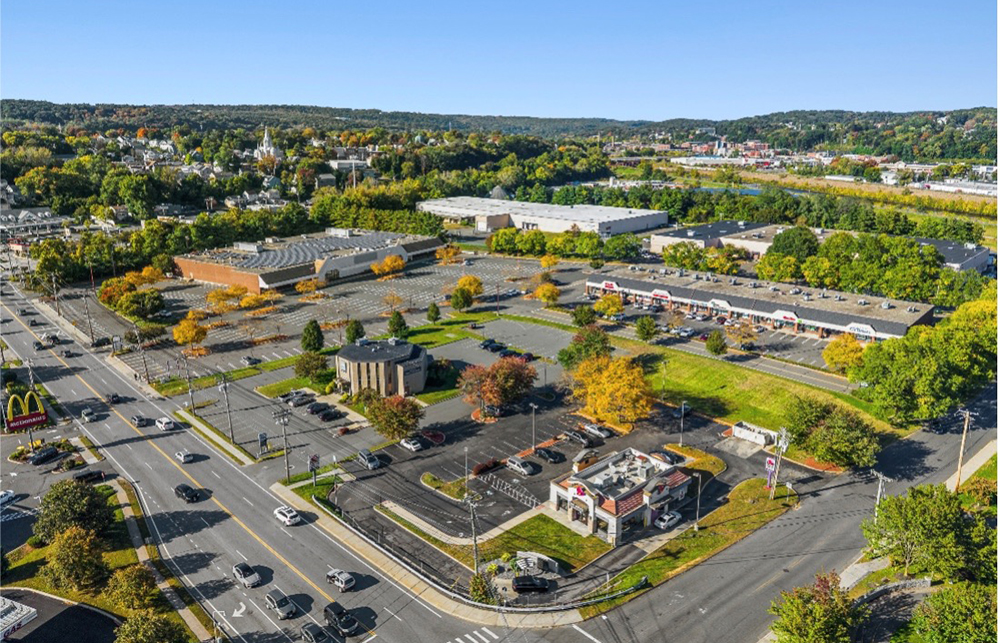
Saugatuck Commercial Real Estate brokers $8.3m sale of Ansonia Landing Shopping Center
Ansonia CT Saugatuck Commercial Real Estate (SCRE) represented Investor Michael Berkowitz in the $8.3 million purchase of Ansonia Landing Shopping Center from a KIMCO-led Partnership. The 91,447 GLA shopping center is located at 100-172 Division St.





Columns and Thought Leadership

End of the year retail thoughts - by Carol Todreas
Now what? As the year comes to a close, the state of retail is always in the news. The answers vary greatly depending on who in the various related industries you ask, each offering a unique lens on the challenges and opportunities ahead.

The rise of AI in CRE - And what it means for every skilled profession - A broker & appraiser weighs in - by Bryan Plourde
This may seem self-serving, and I’ll be the first to admit it. But unlike some of the artificial intelligence tools now reshaping our industry, I am fully aware of my own bias. So, hear me out. The rise of AI in commercial real estate is not a distant threat or a speculative headline.
