


 (1).png)
News:
Owners Developers & Managers
Posted: May 14, 2015
Is Boston overtaxing the Back Bay area?
Boston real estate is booming again. In its recent assessment for fiscal year 2015, the city valued taxable real estate holdings at more than $110 billion, up 10% from 2014.
With the increase in assessments, of course, comes an increase in taxes. Fortunately for the taxpayers, Proposition 2 ½ caps any year-over-year increase at 2.5%. Unfortunately for some, the cap is not applied on a per-property basis, but to the city-wide tax levy as a whole. For FY 2015, the capped increase is $44.5 million.
Many property owners in the Back Bay feel that the increased levy may have been applied disproportionately to them. Commercial and residential owners in the Back Bay are facing an average tax increase of 18.4% compared to a city-wide increase of only 5.7%.
A number of commercial property owners on Newbury and Boylston Sts. received letters from the city in January advising them that their taxes are increasing by more than 55% this year. For tenants required to pay their share of such increases, this news can be catastrophic. Smaller shops and restaurants, which often operate at thinner margins than the chain retailers, are especially hard-hit.
There are grave concerns that the character of the Back Bay, and of Newbury St. in particular, are threatened. While the Back Bay is home to many high-end retailers, most of which should be able to adjust to these increases, 65% of the neighborhood is comprised of small, independent businesses.
Notwithstanding the outcry, there appears to be a general consensus among the property owners and brokers we polled that, although the tax increases are a contributing factor, the prime catalyst for change in the Back Bay has been the steady increase in base rents.
Nevertheless, the outcry may be justified if the Back Bay property owners have in fact been saddled with more of the tax increase than their counterparts in the Seaport, Downtown and Downtown Crossing.
Many of the landlords who filed applications for abatements in February are just now receiving the Assessor's decisions. Initial indications are that many of the applications have been denied. There is a ninety day appeal period, and it will be interesting to see if any owners, individually or together, will undertake the research and analysis to determine whether there is good cause for a claim that the Back Bay is overpaying.
For 2016 it is safe to assume that City will increase property taxes by the full amount permitted under the Proposition 2 ½, and many in the Back Bay will be watching to see whether its distribution among the main commercial neighborhoods will be the same as this year.
There is also increasing buzz about what might be the effect of an 18 to 55% tax increase in the Seaport, many parts of which are still under construction or just now stabilizing, or in Downtown Crossing, where the impact of the Millennium Tower and other projects is still hard to predict.
Valid though these concerns may be, these are boomtown problems and good problems to have. Though I have never known a property owner to be content with an increased assessment, I have also never heard one complain about its property value continuing to rise.
Sam Webb is partner at Posternak Blankstein & Lund, Boston, Mass.
MORE FROM Owners Developers & Managers
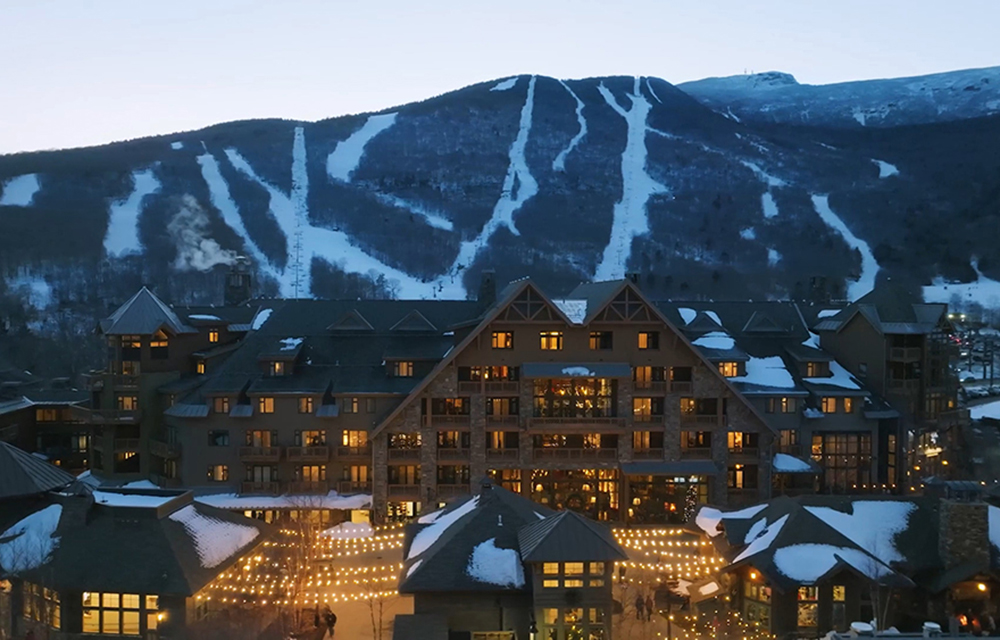
The Lodge at Spruce Peak recognized with Condé Nast Traveler’s 2026 Readers’ Choice Award - #3 in New England
Stowe, VT Condé Nast Traveler revealed the results of its annual Readers’ Choice Awards, with The Lodge at Spruce Peak recognized as the #3 U.S. Resort in New England.




Quick Hits


Columns and Thought Leadership

Revitalized Town Centers: Retail??? - by Carol Todreas
It is now widely accepted that customers want to shop in person at physical stores. Brands know that they do better business in a physical store than just on line so they want to open stores. Demand for retail space by digital merchants, local entrepreneurs, and newly developed national chains

IREM president’s message: Our new reality - Staying ahead of supply chain delays - by Yoany Vargas
Supply chain delays are slowing construction, ratcheting up operating costs, and extending turnover timelines across Greater Boston, directly reducing revenue and increasing the workload for multifamily and

The legislature has spoken: New Hampshire doubles down on housing in commercial zones - by John Sokul
Last year, the New Hampshire Legislature enacted HB 631, a landmark housing measure requiring municipalities to permit multifamily housing in commercially zoned districts. The law generated

Retail infill strategy to activate Pawtucket’s Conant Thread District - by Gaetan Kashala
Until recently, the Conant Thread District consisted of approximately 150 acres of underutilized industrial land spanning Pawtucket and Central Falls. Today, the area is one of the most significant