


 (1).png)
News:
Owners Developers & Managers
Posted: July 17, 2026
Kadima Industrial Ptrs. acquires shallow bay industrial facility
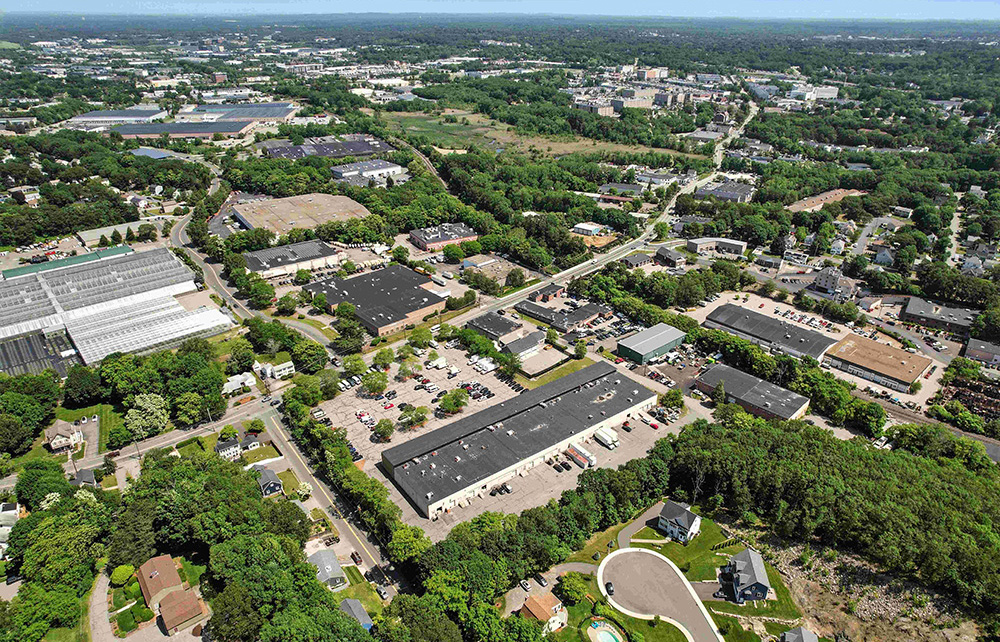
Woburn, MA JLL Capital Markets completed the sale and financing of 215 Salem St., a 62,155 s/f shallow bay industrial facility. JLL represented the seller in the sale to Kadima Industrial Partners. Working on behalf of the new owner, JLL also arranged the acquisition financing with Webster 5 Cent Savings Bank.
Built in 1984, the property is located in Greater Boston’s Rte. 128 North submarket, 11 miles north of downtown Boston. The facility benefits from direct access to interstates 93 and 95 and Rte. 3, providing connectivity to the region’s primary logistics networks and employment centers.
The property features 16 loading docks, 17-foot clear height, fully air-conditioned space, a 90-foot truck court, 125-foot building depth and ample parking across a five-acre site. The property serves eight tenants across multiple industries, including distribution, manufacturing and construction, with an average first-floor suite size of approximately 6,500 s/f. The facility’s functional layout and specifications position it to serve the diverse needs of last-mile distribution, light manufacturing and flex users seeking proximity to Boston’s dense labor pool and consumer base.
The JLL Capital Markets Investment Sales and Advisory team was led by director Tommy Hovey, senior director David Coffman and managing director Michael Restivo. Director Ryan Parker on JLL’s Debt Advisory team arranged the financing.
“The combination of last-mile access to Boston, multiple highway connections and a diverse tenant roster spanning logistics, manufacturing and service sectors made this an exceptionally compelling acquisition for Kadima,” Hovey said. “Properties of this size and configuration in established infill locations continue to attract substantial buyer interest as land constraints limit new development.”
“A key component of Kadima’s investment strategy is acquiring well-located small-bay industrial assets in supply-constrained markets with strong tenant demand,” said Aaron Malitzky, president of Kadima. “We continue to see tremendous value in the small-bay segment, which serves as critical infrastructure for local and regional businesses yet remains significantly underserved by new development. Assets like 215 Salem St. benefit from a diverse tenant base, smaller suite sizes that appeal to a broad range of users, and strong demand from companies seeking proximity to labor, customers and transportation networks.”
MORE FROM Owners Developers & Managers

The Lodge at Spruce Peak recognized with Condé Nast Traveler’s 2026 Readers’ Choice Award - #3 in New England
Stowe, VT Condé Nast Traveler revealed the results of its annual Readers’ Choice Awards, with The Lodge at Spruce Peak recognized as the #3 U.S. Resort in New England.




 (1).png)

Columns and Thought Leadership

The legislature has spoken: New Hampshire doubles down on housing in commercial zones - by John Sokul
Last year, the New Hampshire Legislature enacted HB 631, a landmark housing measure requiring municipalities to permit multifamily housing in commercially zoned districts. The law generated

IREM president’s message: Our new reality - Staying ahead of supply chain delays - by Yoany Vargas
Supply chain delays are slowing construction, ratcheting up operating costs, and extending turnover timelines across Greater Boston, directly reducing revenue and increasing the workload for multifamily and

Retail infill strategy to activate Pawtucket’s Conant Thread District - by Gaetan Kashala
Until recently, the Conant Thread District consisted of approximately 150 acres of underutilized industrial land spanning Pawtucket and Central Falls. Today, the area is one of the most significant

Revitalized Town Centers: Retail??? - by Carol Todreas
It is now widely accepted that customers want to shop in person at physical stores. Brands know that they do better business in a physical store than just on line so they want to open stores. Demand for retail space by digital merchants, local entrepreneurs, and newly developed national chains