



News:
Construction Design & Engineering
Posted: October 20, 2017
Kubik of Finegold Alexander Architects spearheads formation of disaster response network with support of BSA

Finegold Alexander Architects
Boston, MA Disaster, as we have seen from the recent Hurricanes Irma and Harvey, hits when you least expect it. Gail Kubik, architectural Ddesigner, Finegold Alexander Architects, was living and working in and around New York City and stepped up during the first days of the infamous Superstorm Sandy, which created a swath of disaster from New York City to the farthest reaches of the Jersey Shore and beyond. Due to her boundless energy, her architectural training and her quick wit, she eventually became an integral member of the team that helped communities rebuild their homes and businesses. Kubik is all about being prepared. “When I saw the destruction Sandy left in multiple communities, I knew it was going to be a long road before people could have a sense of normalcy again. That’s when I decided to leave my job and dedicate my time toward the recovery effort.”
After months performing building evaluations and leading a team to survey one of the most devastated communities in Queens, N.Y., Kubik connected with leaders of Architecture for Humanity, a non-profit organization dedicated to assisting communities affected by natural disasters. “Architecture for Humanity had a vision for restoring the neighborhoods of New York and New Jersey by utilizing smart design that was geared towards the people. Together, we were able to leverage resources to build back better.” Kubik quickly became a regional project coordinator for Architecture for Humanity’s new field office in New York City. “There were only three employees on staff but our potential to assist was boundless.” she said.
During her time as regional project coordinator, Kubik worked on many projects that had large-scale effects. She was able to collaborate with the NYC Department of City Planning to adjust the zoning ordinance so people could incorporate resilient strategies in the rebuilding process. Kubik also was a key member in the creation of a new program which would make necessary design services available to the people who needed them most. “We called it the Sandy Design Help Desk. At its essence, we provided an avenue for local architects to assist in the rebuilding effort where they otherwise would not be able due to liability concerns.” Kubik said “We established pop-up shops in neighborhoods throughout NYC where community members could stop by anytime and sit down to speak with a licensed architect to review how they specifically can rebuild their home or business.” The Sandy Design Help Desk was a success after it first opened its doors and Kubik continued to oversee the training of the volunteer architects to ensure they were fully conversant in flood resistant design.
Having transplanted herself to Boston from her home in Astoria, Queens two years ago, Kubik is now lending her incredible knowledge base to assist Bostonians in building and executing a Disaster Assistance plan. “I have personal experience with municipal emergency management practices from having worked on the Sandy Recovery Effort, in addition to knowledge of building materials and resilient design principles.”
Currently Kubik is a committee officer of the American Institute of Architect’s Disaster Assistance Communications Task Force. She is working in collaboration with the Boston Society of Architects (BSA) to create a Disaster Assistance Program which will house an Architects and Engineers for Emergency Response (AEER) Task Force.
The Boston Disaster Assistance Program will have the support of the American Institute of Architect’s nationally recognized Disaster Assistance Program, which has been helping architects prepare for and respond to disasters affecting the built environment since 1972. There are several states across the country with established Task Forces, however, Massachusetts does not have any current program in place.
“The AEER Task Force would be valuable to have in Massachusetts because the program is intended to help local governments perform facility and building safety evaluations in the aftermath of a natural disaster,” Kubik said. The services provided by AEER volunteers assist a community’s citizens and businesses in returning to normalcy and to secure business continuity. Kubik said, “AEER volunteers are ‘Second Responders,’ meaning they perform all preliminary damage assessments AFTER first responders have secured all emergency shelter and medical service needs.”
The establishment of an AEER Task Force allows local Architects and Engineers to support municipal emergency management teams by collecting the data necessary for the municipality to make an official declaration of assistance from the federal government. “With such a high demand on municipalities during the immediate aftermath of a natural disaster, the established AEER task force will be able to provide trained professional manpower to evaluate damaged infrastructure and structures when local institutions are unable to manage the assessments on their own,” said Kubik.
Due to the nature of establishing volunteers as second responders, the creation of an AEER program involves agreements between AIA National, AIA Mass., the Boston Society of Architects, the Mass. Emergency Management Agency, the various municipal building officials, the Boston Association of Structural Engineers, and the Boston Society of Civil Engineers. Kubik is currently in the process of reaching out to the various agencies and groups to establish these agreements, with the support of the BSA and BSA Foundation.
Building In Resilience
A unique aspect of resilience is how many commonly think it strictly pertains to climate science or Emergency Management, but in this era of open collaboration, resilience is also increasingly understood as having neighbors to count on, a responsive governing framework to rely on, and spaces in which people may come together during a time of need. Resilience can exist at the various scales of our communities and should establish a network of communication and collaboration that enriches our social, as well as urban, fabric.
“The practice of resilience-building extends beyond our built environments and entails identifying gaps within and strengthening the fragile systems that make up the communities we call home,” said Kubik.
This process limits their vulnerability to various impacts and stressors, enriching the lives of many while also enabling each community to develop new narratives of adaptation. Local, community-driven efforts are the makers of change important for advancing social innovation.
“The various building typologies and faces of our communities are the holistic components that build the identity of our urban centers,” she said. “Community-led adaptation efforts allow each of us to engage in a process of technical and creative self-management, which directly re-designs our government processes.”
Kubik believes that we all have resilience in us, “We all have the capacity to build resilience. When I collaborate with community organizations, planning professionals and municipal agencies, I’m simply instilling this message of how each one can be the agent for the changes they wish to see.”
Kubik serves as a committee officer for the mayor of Cambridge’s Special Advisory Committee for Neighborhood-based Resiliency. Kubik also serves as a conservation commission officer and officer for the Sustainability, Energy and Resilience Commission for the City of Salem, Mass.
MORE FROM Construction Design & Engineering
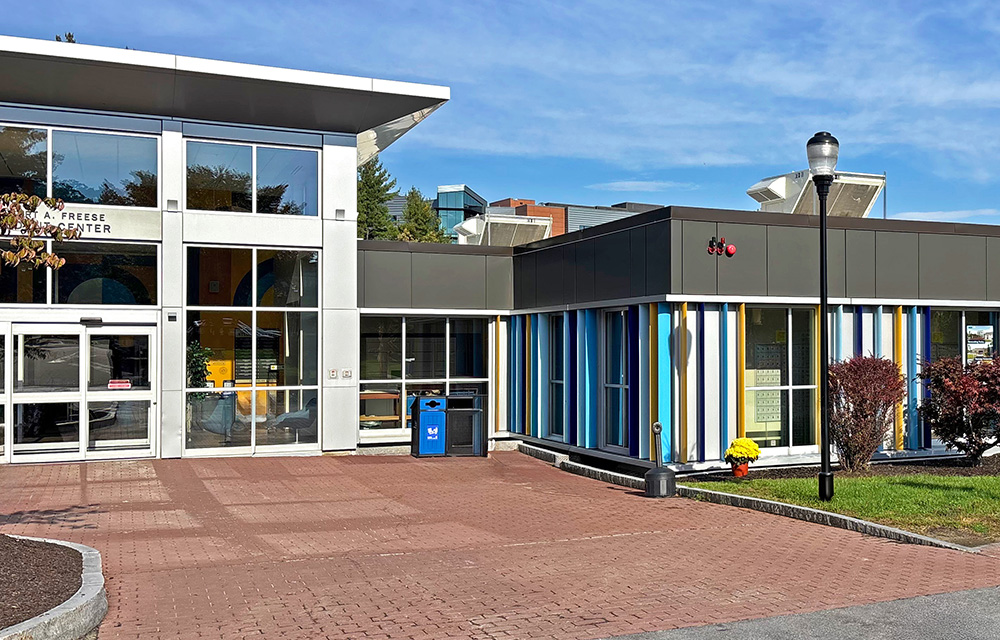
Chapman Construction/Design completes renovations to Freese Student Center at Southern N.H. University
Manchester, NH Chapman Construction/Design (Chapman) completed the second phase of renovations to Southern New Hampshire University’s (SNHU) Robert A. Freese Student Center. Chapman completed the project over two summer sessions,



Quick Hits


Columns and Thought Leadership

ABC-Mass. chairman’s message: Rent control isn’t the answer to our housing crisis - by Luiza Mills
As you may know, Massachusetts voters will be weighing in on a number of ballot initiatives in November. Among them is a proposal to impose the nation’s strictest statewide rent control policy. I’d like to tell you why the ABC MA Board

It’s time to lead: Confronting mental health in construction - by David Watts
As we close Mental Health Awareness Month, we must be clear: May isn’t just about ribbons, hashtags, or lunchtime mindfulness apps. It’s about responsibility to confront hard truths that linger in silence, and to challenge ourselves, as leaders in our industry, to do more.
Greenwood Credit Union City Hall Plaza nears completion - by Frank Picozzi
After several years of planning, construction, and anticipation, the community is eagerly awaiting the opening of the Greenwood Credit Union City Hall Plaza and outdoor skating rink later this month.

Navigating tariffs and material uncertainty in today’s construction market - by Karl Ginand and Tiffany Gallo
As headlines around tariffs seem to dominate the news daily, many considering construction projects have anticipated major cost escalations and widespread supply issues. While tariffs haven’t driven pricing spikes to the extent once feared, the lasting impact has been a new layer of uncertainty, affecting more than just budgets.
