


 (1).gif)
News:
Finance
Posted: June 12, 2008
Manage your exposure in an uncertain real estate market
Given the uncertainty of the real estate market, now might be a good time for business owners and developers with real estate mortgages to double check their mortgage covenants to see what obligations they might face should property values deteriorate. In a strong market, provisions in loan documents that address fluctuating real estate values may garner less attention. As property owners found out in the early 1990s, in a down market, those same provisions can cause expensive headaches.
In a real estate-based commercial loan, the "loan-to-value" ratio is a key financial covenant for the lender. Many lenders require this covenant in commercial real estate-based loans. The lender usually requires a ratio of less than one-to-one in most conventional commercial real estate loans. The two variables in this equation are the fair market value of the property and the principal balance of the loan. The covenant is usually expressed as a percentage - the principal balance of the loan divided by the fair market value of the property (e.g. 75% loan-to-value). Unfortunately, the only component of the equation that the borrower/property owner can control is the principal balance of the loan. If the ratio becomes higher than that permitted in the covenant, the borrower may be required to reduce the principal balance of the loan through an unscheduled pre-payment of principal (one cautionary note: if the loan documents contain a pre-payment penalty for partial prepayments of principal, a non-voluntary prepayment of principal to comply with a loan covenant should be specifically excluded from the penalty).
The equity cushion, the amount by which the property's fair market value exceeds the principal balance of the loan, is the lender's safety net should it have to resort to foreclosure to recoup sums due on a defaulted loan. Given the importance of the equity cushion, lenders want to guard against its erosion, or at least become aware of the problem as soon as possible. Even if the loan relationship is otherwise fine (no payment defaults), the lender may periodically want an update of the property's fair market value to determine if market conditions are adversely affecting its loan to value ratio. There are several approaches that borrowers should consider when negotiating appraisal covenants in the loan documents to avoid frequent and expensive appraisals.
A lender's standard language in such covenants often give the lender the right to order an appraisal as often as the lender deems it necessary or appropriate, and at the borrower's sole cost and expense. This exposes the borrower to a potentially large expense beyond his control. A borrower should always try to limit the lender's discretion regarding appraisals, e.g., by limiting the lender's ability to order an appraisal to periods when an event of default has actually occurred and is continuing, or by asking the lender to limit the number of times it may request an appraisal, absent a default, to not more than once every two years. The borrower should also seek some form of cost sharing of the appraisal expense (e.g. the lender pays for half the cost if it requires an appraisal more than once in a two year period), and to use an appraiser mutually agreeable to the borrower and lender.
A property's fair market value is the essential piece of information the lender needs to determine compliance with the loan-to-value loan covenant. Even if everything else in the loan relationship is going fine, the lender will need the ability, set forth in the loan documents, to obtain an appraisal at some point to verify compliance with that covenant. Through the negotiation of the loan covenants, the lender and the borrower should arrive at a reasonable solution where the lender has the ability to get such information when necessary, while imposing on the borrower a manageable expense.
John Blake, Jr. is an attorney at Tarlow, Breed, Hart & Rodgers, P.C., Boston, Mass.
Tags:
Finance
MORE FROM Finance
Northwest Bank finances Luzern Associates’ $47.75m acquisition
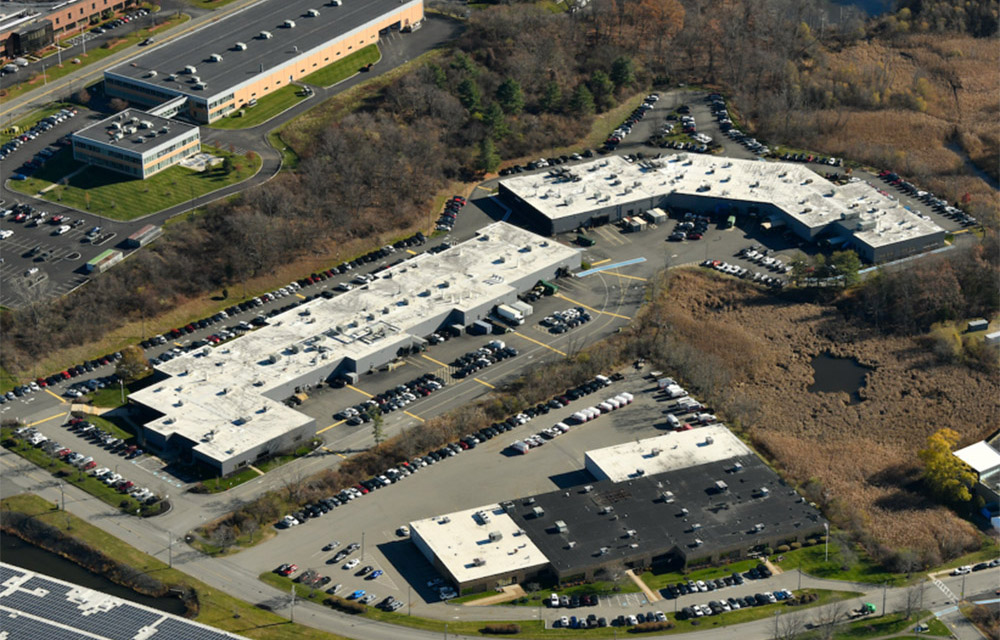
Danvers, MA Northwest Bank provided $34.5 million in financing to support Luzern Associates LLC’s $47.75 million acquisition of the Cherry Hill industrial portfolio, a three-building campus totaling 200,000 s/f.




 (1).gif)


Columns and Thought Leadership

Massachusetts real estate transfers over $1 million face new tax rules as of November 1st - by Daniel Meyer
Attention to owners of real estate in the Commonwealth (and the title companies and other professionals who advise them), the Massachusetts Department of Revenue (the “DOR”) recently adopted a new “millionaire’s tax” via 830 CMR 62B.2.4

Reverse exchanges and the challenges of a competitive real estate market - by Michele Fitzpatrick
Our current, highly competitive real estate market poses specific challenges for investors who are considering taking advantage of a tax-deferred 1031 exchange. In this market, investors will have no problem selling their current property if priced properly, but they may find it difficult to find a suitable replacement property

Are appraisers on the same page as the assessor? - by Richard Seman
The purpose of this article is to address problematic or confusing issues which may help assessors and appraisers to better understand how to value real estate for tax assessment purposes.

The focus on price per s/f compared to the comparable sales used in the appraisal report - by Dennis Chanski
Over the past several weeks, I have completed appraisal assignments for private clients. Interestingly, after submitting these appraisals, I received several phone calls – not to question the value, content, or any incorrect information, but rather to discuss the price per s/f compared to the comparable sales used in the report.
