


 (1).png)
News:
Owners Developers & Managers
Posted: November 19, 2008
New Boston Fund sponsors Thesis Award for Ctr. of Real Estate at MIT
Anthony Guma recently won this year's Thesis Award from the Alumni Association for the Center for Real Estate (AACRE) at MIT, sponsored by New Boston Fund, Inc., a real estate investment, development and management firm.
The annual scholarship is awarded to a graduating student whose thesis work exemplifies a high level of excellence, and has the potential for meaningful contributions to the MIT Center for Real Estate, the real estate industry, and society as a whole. Candidates are nominated by a faculty advisor and the winner is chosen by an outside nominating committee.
"The AACRE Thesis Award recognizes the innovative research being performed by students at MIT," said Jerry Rappaport, Jr., president and CEO of New Boston Fund. "New Boston Fund is honored to sponsor this scholarship that annually recognizes an individual who is an emerging leader in the real estate industry."
Guma's thesis titled, "A Real Options Analysis of a Vertically Expandable Real Estate Development," researches the value and feasibility of developing a given quantity of space initially on urban sites with the option to add more vertically in the future. Guma uses the Health Care Service Corp. headquarters in Chicago, Ill. as the basis for the analysis and to point to the potential value of vertical expansion. The existing building was built with the option to expand to almost twice its initial height.
"Anthony's compelling thesis on the value of flexibility in design clearly explains a topic -- real options valuation -- that is typically couched in financially complex language," said Richard de Neufville, professor of Engineering Systems and of Civil and Environmental Engineering as well as
Guma's thesis supervisor at MIT. "If companies can better understand the costs and advantages of the potential for future vertical expansion, they could weather market uncertainties more strategically and efficiently. Boston developers should take a good look at how Tufts University is now exercising its option on vertical expansion by doubling the height of its downtown Dental School."
Guma worked for six years at Foster Partners in London and Boston, an international architectural firm, where he was involved in the major expansion of Boston's Museum of Fine Arts. He has been a LEED Accredited Professional since 2006 and received his Master of Science in Real Estate Development (MSRED) from MIT in September where he also holds a Master of Architecture.
This is the second year that New Boston has sponsored this award.
MORE FROM Owners Developers & Managers
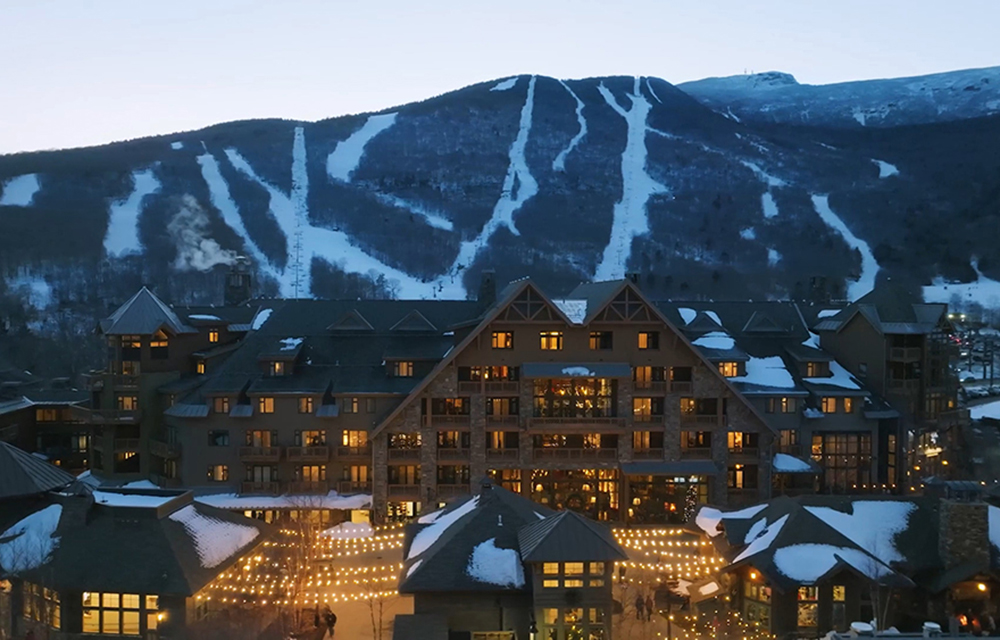
The Lodge at Spruce Peak recognized with Condé Nast Traveler’s 2026 Readers’ Choice Award - #3 in New England
Stowe, VT Condé Nast Traveler revealed the results of its annual Readers’ Choice Awards, with The Lodge at Spruce Peak recognized as the #3 U.S. Resort in New England.




Quick Hits
 (1).png)

Columns and Thought Leadership

Revitalized Town Centers: Retail??? - by Carol Todreas
It is now widely accepted that customers want to shop in person at physical stores. Brands know that they do better business in a physical store than just on line so they want to open stores. Demand for retail space by digital merchants, local entrepreneurs, and newly developed national chains

IREM president’s message: Our new reality - Staying ahead of supply chain delays - by Yoany Vargas
Supply chain delays are slowing construction, ratcheting up operating costs, and extending turnover timelines across Greater Boston, directly reducing revenue and increasing the workload for multifamily and

The legislature has spoken: New Hampshire doubles down on housing in commercial zones - by John Sokul
Last year, the New Hampshire Legislature enacted HB 631, a landmark housing measure requiring municipalities to permit multifamily housing in commercially zoned districts. The law generated

Retail infill strategy to activate Pawtucket’s Conant Thread District - by Gaetan Kashala
Until recently, the Conant Thread District consisted of approximately 150 acres of underutilized industrial land spanning Pawtucket and Central Falls. Today, the area is one of the most significant