


 (1).png)
News:
Owners Developers & Managers
Posted: April 12, 2024
Newmark completes $76.5 million loan transfer and
sale of 179 Lincoln St. to Synergy
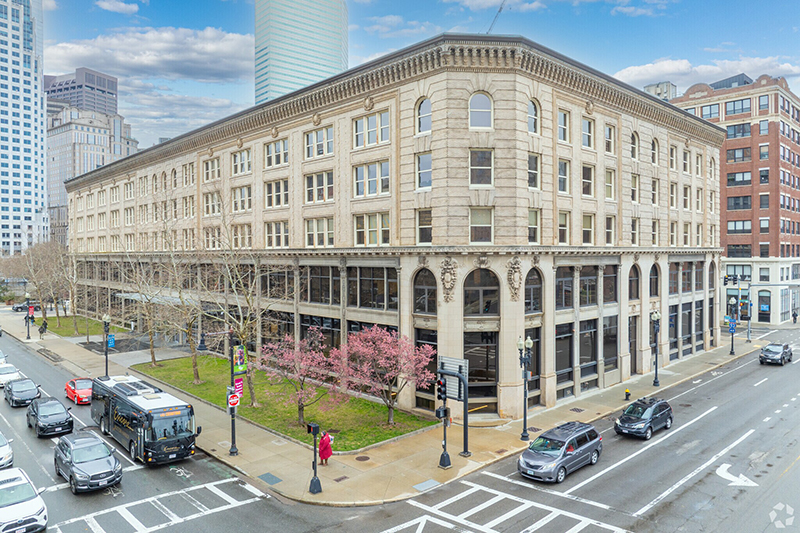
Boston, MA Newmark has completed the $76.5 million loan transfer and sale of 179 Lincoln St., a newly repositioned, 221,474 s/f office building that offers a “gateway” location in downtown.
Newmark co-head of U.S. Capital Markets Robert Griffin, executive vice chairman Edward Maher, vice chairmen David Douvadjian Sr. and Matthew Pullen, executive managing directors James Tribble and Timothy O’Donnell, senior managing director Samantha Hallowell and associate director William Sleeper of the firm’s Boston Capital Markets Group represented the undisclosed seller and procured the buyer, Synergy.
David Greaney, CEO of Synergy, said, “179 Lincoln St. offers a strategic location, combined with its rich history and modern amenities, making it an exceptional asset regarding the tenant experience. As we continue to expand our Boston portfolio, we look forward to continuing to deliver outstanding value to our tenants and stakeholders through this acquisition.”
179 Lincoln St.’s first-class repositioning merges its historical Beaux-Arts exterior and brick-and-beam interior with fully modernized tenant spaces, common areas and on-site amenities. Some of its most notable features include its reconstructed lobby and five-story atrium, expanded common areas, fitness center, 53 below-grade valet parking spaces and bicycle storage.
“179 Lincoln St. offers a unique environment as a first-class boutique brick-and-beam asset in a submarket dominated by high-rise towers,” said Maher. “Furthermore, its high-quality creative office profile is virtually unrivaled among Downtown Boston’s already-limited brick-and-beam sector.”
179 Lincoln St. is comprised of an entire city block along The Rose Fitzgerald Kennedy Greenway, the asset is located near South Station and directly across from on/off ramps for I-90 and 93.
MORE FROM Owners Developers & Managers
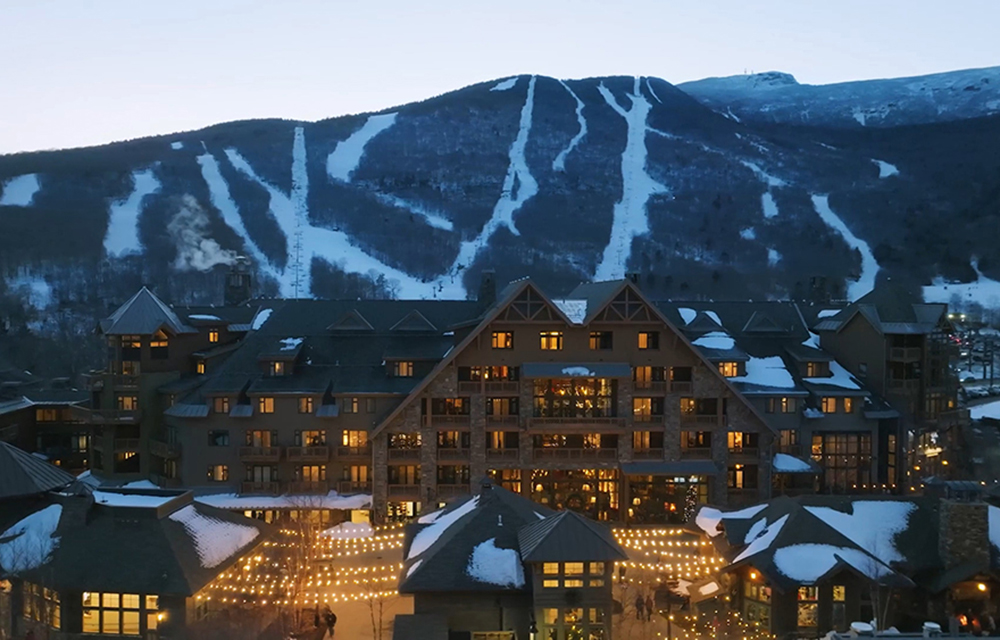
The Lodge at Spruce Peak recognized with Condé Nast Traveler’s 2026 Readers’ Choice Award - #3 in New England
Stowe, VT Condé Nast Traveler revealed the results of its annual Readers’ Choice Awards, with The Lodge at Spruce Peak recognized as the #3 U.S. Resort in New England.






Columns and Thought Leadership

IREM president’s message: Our new reality - Staying ahead of supply chain delays - by Yoany Vargas
Supply chain delays are slowing construction, ratcheting up operating costs, and extending turnover timelines across Greater Boston, directly reducing revenue and increasing the workload for multifamily and

Revitalized Town Centers: Retail??? - by Carol Todreas
It is now widely accepted that customers want to shop in person at physical stores. Brands know that they do better business in a physical store than just on line so they want to open stores. Demand for retail space by digital merchants, local entrepreneurs, and newly developed national chains

Retail infill strategy to activate Pawtucket’s Conant Thread District - by Gaetan Kashala
Until recently, the Conant Thread District consisted of approximately 150 acres of underutilized industrial land spanning Pawtucket and Central Falls. Today, the area is one of the most significant

The legislature has spoken: New Hampshire doubles down on housing in commercial zones - by John Sokul
Last year, the New Hampshire Legislature enacted HB 631, a landmark housing measure requiring municipalities to permit multifamily housing in commercially zoned districts. The law generated