

 (1).png)
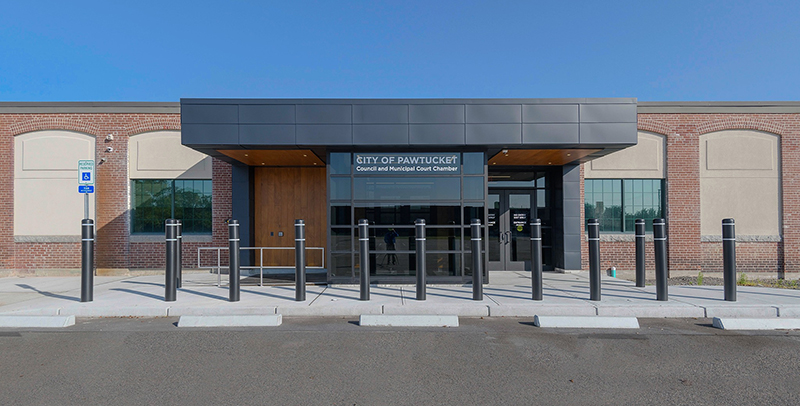
The city of Pawtucket is well-positioned to serve as a regional model for strategic, community-integrated development where housing and commercial investments connect to transportation, amenities, social infrastructure, and public spaces. The relocation of City Hall to 100 Freight St., formerly Tunstall America, brings that vision into focus, adapting an industrial property to improve public access and support municipal operations.
For The Pawtucket Foundation, the project demonstrates how existing real estate can advance economic development and quality of life. It also offers lessons for communities balancing aging public buildings, service needs, and competing capital priorities. The decision followed an evaluation of Pawtucket’s existing City Hall. Downes Construction initially assisted the city in assessing water infiltration, tower repairs, and broader renovation requirements. The cost and complexity of that work made continued use as City Hall difficult to justify financially.
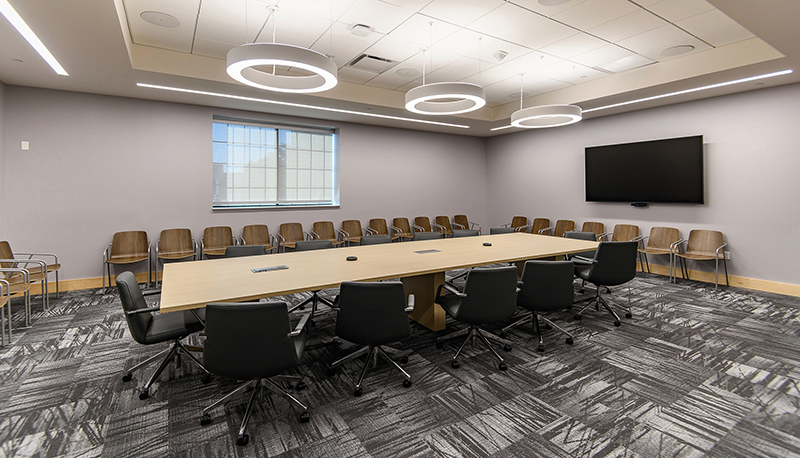
Operational challenges reinforced the case for relocation. Upper-floor meeting spaces depended on an elevator that experienced failures, while cooling relied on window units and supplemental systems. Updating circulation, restrooms, building systems, and records storage would have required extensive intervention. At 100 Freight St., an existing mill building offered approximately 62,000 s/f of potential municipal administrative space on one floor. Grade-level access, ample parking, and easier movement between departments provided a practical foundation for modernization.
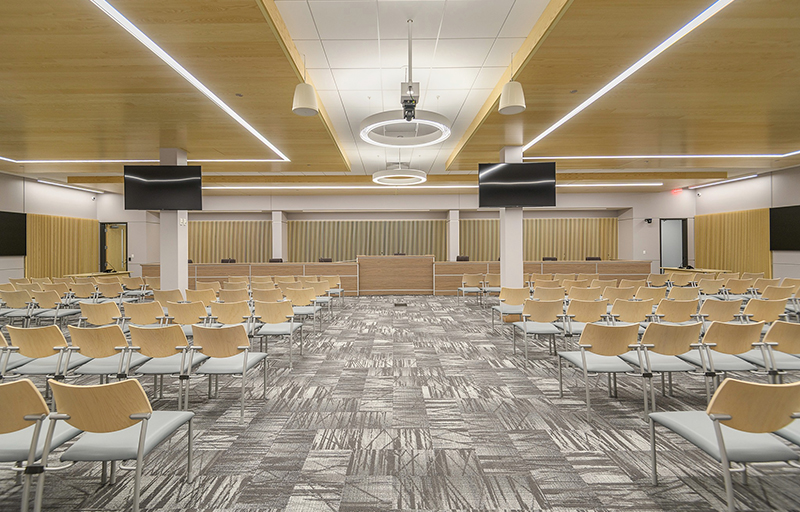
Downes Construction, serving as construction manager alongside JLC Design Studios and SJA Design, completed Phase I in approximately ten months. The work encompassed just under 20,000 s/f, including city council chambers and courtroom facilities, police records and traffic offices, conference rooms, and a credit union. The building already accommodates council meetings and probate court proceedings.
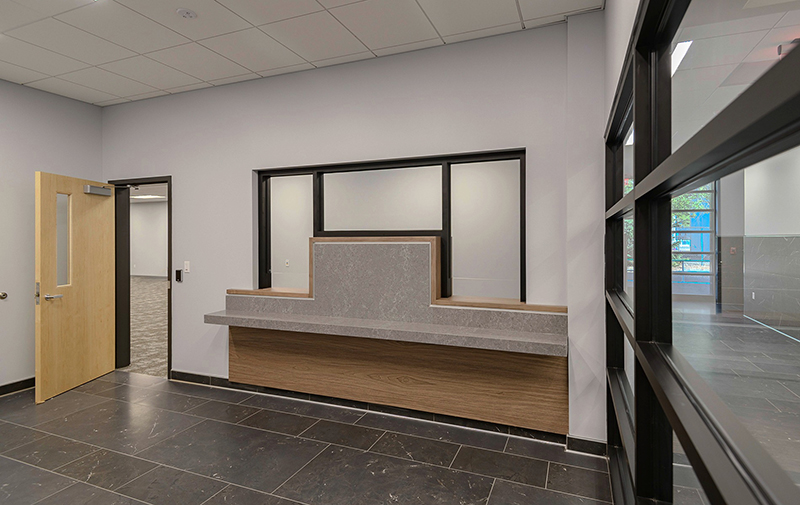
The project illustrates the value of selective infrastructure reuse. Existing restrooms and mechanical, electrical, and plumbing infrastructure were retained, adapted, or improved where appropriate. By evaluating what could support the new program, the team connected Pawtucket’s industrial heritage with contemporary civic needs while supporting disciplined capital planning. The planned Phase II would add approximately 42,000 s/f for the remaining administrative functions, including the city clerk, finance, tax assessment, purchasing, and mayor’s offices. Plans also call for climate-controlled records storage, updated technology and security, and space allowances reflecting anticipated needs over three to five years. Construction also supported the regional economy. Downes reported an average Phase I workforce of approximately 20, with peak staffing reaching 40 to 45. Local subcontractor participation extended the investment to Rhode Island businesses and skilled trades.
The project’s lasting value will be measured through everyday use. Accessible municipal facilities improve residents’ and employers’ interactions with local government, while coordinated departmental space supports employees delivering essential services.
For other municipalities, Pawtucket offers a practical principle: evaluate public assets against the functions they must serve. Through thoughtful building selection, selective reuse, and phased delivery, the city and its project partners are creating a more functional civic center. That investment strengthens the public infrastructure supporting Pawtucket’s continued reimagination.
Gaetan Kashala is the executive director of the Pawtucket Foundation, Pawtucket, R.I.



 (1).png)




Supply chain delays are slowing construction, ratcheting up operating costs, and extending turnover timelines across Greater Boston, directly reducing revenue and increasing the workload for multifamily and