


 (1).png)
News:
Owners Developers & Managers
Posted: June 12, 2026
Routine Properties acquires Bristol Business Park - 406,665 s/f industrial campus
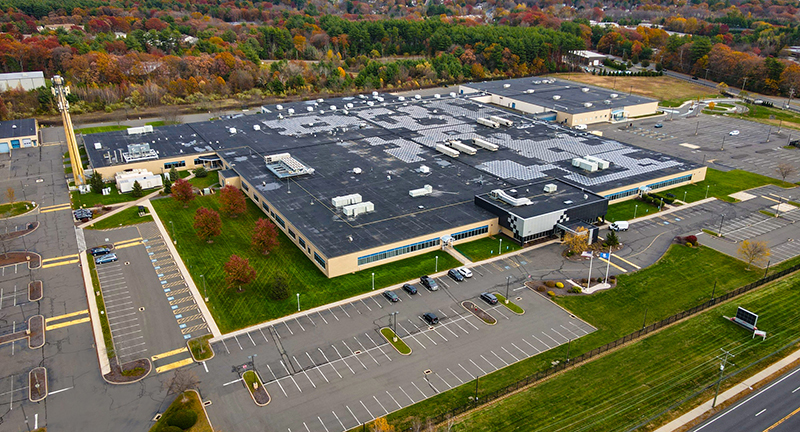
Bristol, CT Routine Properties, a boutique real estate development and investment firm specializing in industrial assets throughout the Northeast, has acquired the Bristol Business Park, a 406,665 s/f industrial campus located at 383 Middle St. The 37-acre site is situated within a well-established Central Connecticut industrial submarket with strong regional connectivity.
Routine Properties has commenced a comprehensive leasing program alongside a multi-million-dollar capital improvement plan designed to accommodate a broad range of industrial, flex, logistics, and manufacturing users.
The property currently offers up to 223,250 s/f available for lease, with flexible demising configurations and delivery options tailored to tenant requirements. Capital improvements include newly white-boxed interiors, upgraded LED lighting, new loading docks, and site improvements. The property is designed to support modern industrial operations, featuring up to 40 loading dock positions, drive-in loading capabilities, 17-ft. clear heights, and utility infrastructure. Additionally, the property offers more than three acres of paved, fenced, and lit outdoor storage and fleet parking. The property is eligible for significant tax incentive programs for qualified tenants.
Located within the Industrial Park (IP-1) zoning district, Bristol Business Park allows for a broad range of industrial use types, and provides convenient access to Rte. 72, I-84, and I-91.
“Bristol Business Park delivers large-scale, highly flexible industrial space in a supply-constrained market,” said Evan Goldfine, managing partner of Routine Properties. “We are investing significant capital to ensure the property meets the evolving operational needs of today’s industrial users, while providing tenants with a streamlined, partnership-driven experience.”
Leasing for 383 Middle St. is being led by Sentry Commercial Brokerage & Advisory, with active discussions already underway with prospective tenants.
MORE FROM Owners Developers & Managers
Rubin Rudman to establish headquarters at Tishman Speyer’s One Federal St.
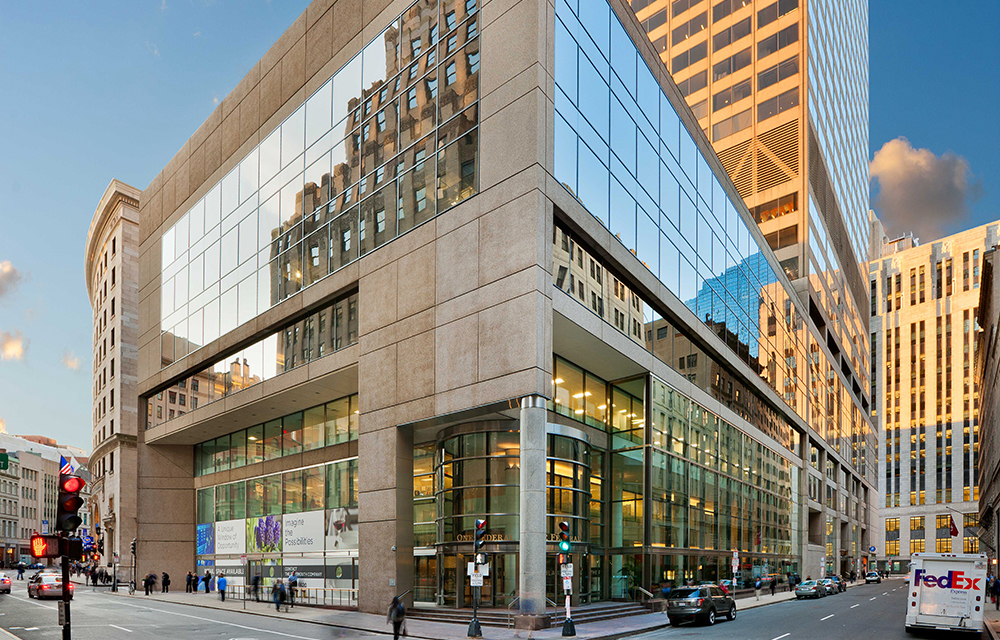
Boston, MA Tishman Speyer has secured a new headquarters lease with Rubin Rudman at One Federal St., its 38-story, 1.1 million s/f tower in the Financial District. Under a 15-year lease, Rubin Rudman’s new headquarters will span 57,844 s/f across One Federal’s entire 23rd and 24th floors and a portion of the 25th floor.





Quick Hits
 (1).png)

Columns and Thought Leadership

IREM president’s message: Our new reality - Staying ahead of supply chain delays - by Yoany Vargas
Supply chain delays are slowing construction, ratcheting up operating costs, and extending turnover timelines across Greater Boston, directly reducing revenue and increasing the workload for multifamily and

Revitalized Town Centers: Retail??? - by Carol Todreas
It is now widely accepted that customers want to shop in person at physical stores. Brands know that they do better business in a physical store than just on line so they want to open stores. Demand for retail space by digital merchants, local entrepreneurs, and newly developed national chains

The legislature has spoken: New Hampshire doubles down on housing in commercial zones - by John Sokul
Last year, the New Hampshire Legislature enacted HB 631, a landmark housing measure requiring municipalities to permit multifamily housing in commercially zoned districts. The law generated

Retail infill strategy to activate Pawtucket’s Conant Thread District - by Gaetan Kashala
Until recently, the Conant Thread District consisted of approximately 150 acres of underutilized industrial land spanning Pawtucket and Central Falls. Today, the area is one of the most significant