



News:
Brokerage
Posted: September 14, 2026
Six months later: How RBCRs are changing real estate transactions - by Louis Muratore

In February 2026, I wrote about Connecticut’s transition from the Connecticut Property Transfer Program (CPTP) to the Release-Based Cleanup Regulations (RBCRs), a landmark regulatory shift that fundamentally changed how environmental investigation and remediation obligations are triggered.
Now, more than six months after implementation, Connecticut’s real estate, development, and environmental communities have gained practical experience operating under the new regulatory framework. While the industry continues to navigate a learning curve, several important trends have emerged that are reshaping property transactions, redevelopment strategies, and environmental risk management across the state.
From Transaction-Driven to Risk-Driven Compliance
This shift from transaction-driven to release-driven regulation is already influencing how buyers, sellers, and developers evaluate environmental risk. Under the CPTP framework, environmental obligations were often triggered solely because a qualifying property changed ownership. The result was that many transactions became bogged down by environmental compliance requirements that had little relationship to current environmental risks.
Today, environmental liability is more directly associated with the actual presence and management of releases. Environmental conditions still require careful evaluation, but transactions are no longer automatically accompanied by CPTP filings, establishment determinations, and associated administrative requirements. This evolution is allowing stakeholders to focus more attention on risk assessment and due diligence rather than regulatory paperwork.
Phase I Environmental Site Assessments (ESAs) remain the foundational tool for identifying recognized environmental conditions, while Phase II investigations are increasingly being performed earlier in the acquisition process. Buyers understand that although the CPTP has been eliminated, environmental liability has not. The emphasis has shifted toward evaluating whether historical releases were properly reported, investigated, and remediated under the RBCRs.
Many purchasers are also requesting additional documentation regarding release reporting records, spill response actions, and Licensed Environmental Professional (LEP) oversight activities to verify compliance.
Property owners who proactively investigate environmental conditions and document RBCR compliance can reduce uncertainty for buyers, lenders, and investors. Well-characterized environmental conditions allow stakeholders to evaluate liabilities earlier, estimate remediation costs with greater confidence, and integrate environmental obligations into project planning and financing strategies
The RBCRs allow developers to identify environmental liabilities earlier, estimate remediation costs more confidently, and incorporate environmental obligations into project budgets and schedules. This predictability is particularly valuable for projects relying on multiple financing sources, including conventional lending, private equity, grants, tax incentives, or public-private partnerships.
Common Compliance Issues and Misconceptions
Although the overall reception to the new RBCRs has been positive, several recurring misunderstandings have emerged during the first year of implementation.
The elimination of the CPTP means fewer environmental responsibilities.
Under the RBCRs, compliance obligations remain largely the same — the trigger has simply changed. Rather than being driven by property transfer, environmental obligations are now tied to the identification and management of releases. Property owners remain responsible for reporting, investigating, and remediating contamination when required, and failure to comply can still result in significant regulatory and financial liability.
Historical releases no longer matter.
Historical releases are just as relevant as ever. Unresolved contamination can affect property value, financing, redevelopment potential, and future compliance obligations, making environmental history a key component of due diligence.
Phase I ESAs are less important.
Under the RBCRs, buyers, lenders, and investors can no longer rely on CPTP status as an indicator of environmental risk. As a result, Phase I ESAs remain a critical due diligence tool for identifying recognized environmental conditions, evaluating historical site uses, and assessing the potential for releases. Understanding of a property’s environmental history is more important than ever in making informed decisions and managing environmental risk pre-transaction.
Transactions will take longer to complete.
Early experience suggests many commercial and industrial transactions are moving more efficiently under the RBCRs. By eliminating CPTP filings and establishment determinations, buyers and sellers can focus on evaluating actual site conditions rather than transaction-triggered regulatory requirements.
Case Studies: Early Success Under the RBCRs
The provisions of the RBCRs have enabled smoother, more transparent transactions to the benefit of both buyers and sellers.
Buyer Success: A developer pursuing the redevelopment of a long-vacant commercial property into a mixed-use residential and retail project benefited from the increased predictability of the RBCRs. With environmental conditions identified and regulatory obligations clearly defined, the project team was able to focus on integrating necessary investigation and remediation activities directly into the development schedule.
Seller Success: A former manufacturing facility with documented historical releases was brought to market after the owner completed targeted environmental investigations under the RBCRs. By proactively characterizing site conditions and documenting the nature and extent of known impacts, the seller was able to provide prospective purchasers with a clear understanding of the property’s environmental profile.
The clear, uniform standards of the RBCRs allowed both of these clients to evaluate environmental liabilities, estimate redevelopment costs, and incorporate necessary remediation activities into project planning early in the due diligence process. Rather than facing uncertainty associated with potential CPTP obligations, the parties were able to focus on the actual environmental conditions at the site, increasing transparency, streamlining evaluations, and ultimately supporting more efficient transactions and accelerated redevelopment timelines.
Looking Ahead to the Future
While Connecticut’s real estate community is still adapting to the RBCRs, the first six months of implementation suggest that the transition is beginning to achieve some of its intended objectives. By shifting regulatory oversight from property transfers to environmental releases, the state has created a framework that better aligns environmental compliance with actual environmental risk while reducing some of the uncertainty that often complicated real estate transactions.
For Connecticut’s real estate market, the six months of release-based regulation have demonstrated that environmental stewardship and economic development do not have to be competing priorities. By providing a more transparent and risk-based approach to environmental management, the RBCRs are helping create opportunities for redevelopment, investment, and growth while continuing to advance the state’s environmental protection goals.
Louis Muratore, LEP, CHMM, is deputy director of environmental services – New England at H2M architects + engineers, Boston, Mass.
Tags:
Brokerage
Massachusetts
MORE FROM Brokerage
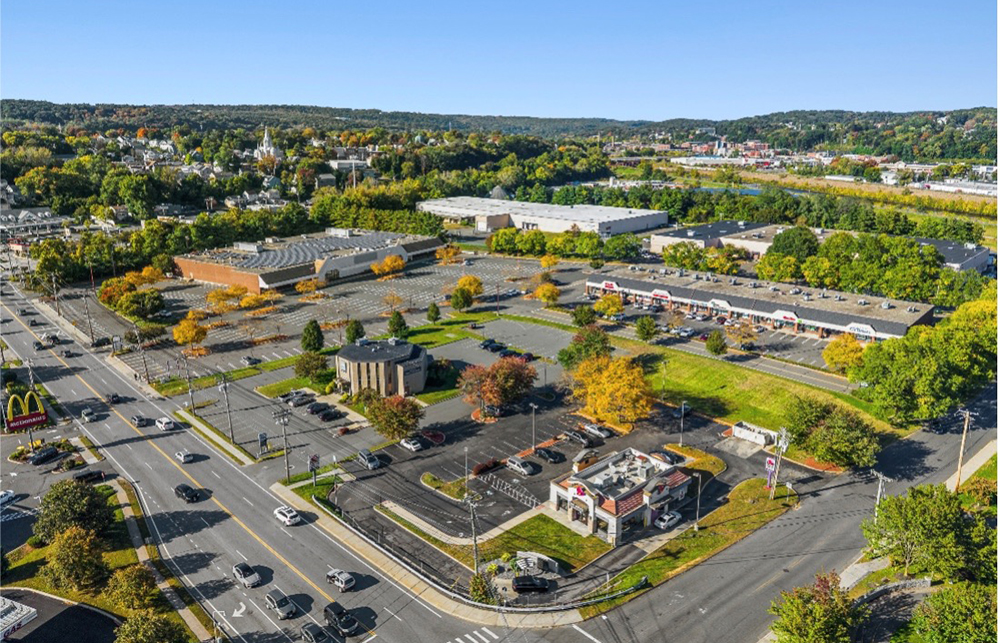
Saugatuck Commercial Real Estate brokers $8.3m sale of Ansonia Landing Shopping Center
Ansonia CT Saugatuck Commercial Real Estate (SCRE) represented Investor Michael Berkowitz in the $8.3 million purchase of Ansonia Landing Shopping Center from a KIMCO-led Partnership. The 91,447 GLA shopping center is located at 100-172 Division St.





.png)
Columns and Thought Leadership

The rise of AI in CRE - And what it means for every skilled profession - A broker & appraiser weighs in - by Bryan Plourde
This may seem self-serving, and I’ll be the first to admit it. But unlike some of the artificial intelligence tools now reshaping our industry, I am fully aware of my own bias. So, hear me out. The rise of AI in commercial real estate is not a distant threat or a speculative headline.

End of the year retail thoughts - by Carol Todreas
Now what? As the year comes to a close, the state of retail is always in the news. The answers vary greatly depending on who in the various related industries you ask, each offering a unique lens on the challenges and opportunities ahead.