


 (1).png)
News:
Owners Developers & Managers
Posted: June 22, 2018
The beat goes on - by Jonathan Avery

Avery Associates
The housing market continues on an historic run in the single-family sector. The 10 year recovery from the great recession continues. Not only have we recovered to pre-recession price levels in certain markets but significantly exceeded those levels in select markets. Sustaining this trend in many suburban markets is an excess demand in the face of a limited supply.
The April report from The Warren Group notes that the median price of a single-family home increased 8.7% in the last 12 months to $375,000. During that same period the median condominium price increased 12.8% to $373,000. This is particularly interesting as the traditional delta (at times as much as 20%) between the two disappears. There are many possible explanations – including lack of supply of single-family homes, changing tastes and the urban living trend of the Boomers. Certainly the production of luxury condos in Boston and surrounding cities has impacted the median condo price.
The recent S&P Corelogic Case-Schiller Home Price Index report also notes continued steady increases in home prices nationally. The 20 city composite shows a 6.8% increase in the last 12 months with Seattle leading the pack at 13%. The May report includes interesting statistics regarding the degree of recovery from the recession. Using 2006 as the pre-recession market peak, the National Home Price Index exceeds 2006 levels by 7.8%. With 2012 price levels as the trough, prices have recovered 48.5%.
These indicators make it clear that in most markets the recovery has occurred and even exceeded historic highs in some cases. So, are we in for a “bubble burst” or a market correction? A market correction is the more likely scenario in my option.
The mortgage market has not gone the way of 2005-2007. Yes, underwriting standards have loosened a bit but not to that extent. The level of interest rates is already having impact with some buyers being shut out because of higher mortgage rates resulting in higher monthly payments and higher home prices. This particularly impacting the first time buyer segment.
The Federal Reserve has implemented six rate increases since 2016. This policy seems to indicate an end to the ‘accommodative’ approach to interest rates supporting the economy. Some pundits believe that the Fed could reach a neutral level of rates in the near term meaning a conclusion that rates are at market levels, no longer requiring artificial support.
The bottom line – I don’t feel a market crash is at hand. A slowing of price increases – possibly a period of flat prices and extended marketing times are on the horizon but – hopefully – an easing of conditions not a steep drop in prices. Demand will continue and the supply will respond.
Jonathan Avery, MAI, CRE, is president of Avery Associates, Acton, Mass.
MORE FROM Owners Developers & Managers
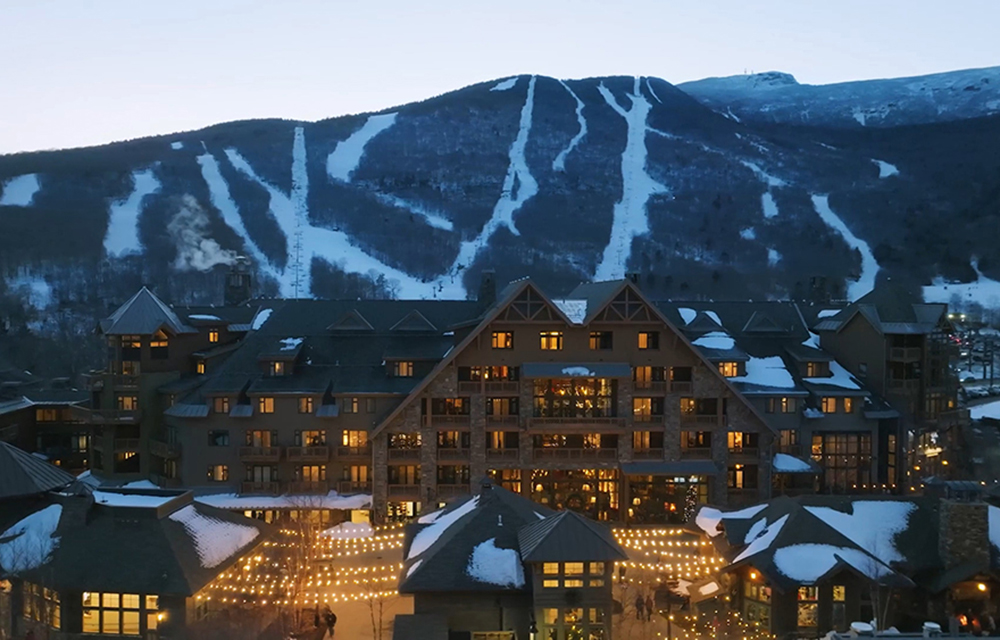
The Lodge at Spruce Peak recognized with Condé Nast Traveler’s 2026 Readers’ Choice Award - #3 in New England
Stowe, VT Condé Nast Traveler revealed the results of its annual Readers’ Choice Awards, with The Lodge at Spruce Peak recognized as the #3 U.S. Resort in New England.




Quick Hits


Columns and Thought Leadership

The legislature has spoken: New Hampshire doubles down on housing in commercial zones - by John Sokul
Last year, the New Hampshire Legislature enacted HB 631, a landmark housing measure requiring municipalities to permit multifamily housing in commercially zoned districts. The law generated

Revitalized Town Centers: Retail??? - by Carol Todreas
It is now widely accepted that customers want to shop in person at physical stores. Brands know that they do better business in a physical store than just on line so they want to open stores. Demand for retail space by digital merchants, local entrepreneurs, and newly developed national chains

Retail infill strategy to activate Pawtucket’s Conant Thread District - by Gaetan Kashala
Until recently, the Conant Thread District consisted of approximately 150 acres of underutilized industrial land spanning Pawtucket and Central Falls. Today, the area is one of the most significant

IREM president’s message: Our new reality - Staying ahead of supply chain delays - by Yoany Vargas
Supply chain delays are slowing construction, ratcheting up operating costs, and extending turnover timelines across Greater Boston, directly reducing revenue and increasing the workload for multifamily and